
Rail & Infrastructure
Cable Labelling on the London Underground: How Silver Fox® Keeps the Network Running
Discover why LSZH cable labels are essential for the Tube's safety-critical infrastructure, and how Silver Fox® labelling solutions help engineers maintain one of the world's busiest metro systems.
With its iconic roundel and intricate network spanning over 400 kilometres of track, the London Underground is one of the world's busiest and oldest metro systems. Operating since 1863, the Tube carries approximately five million passenger journeys every day. Behind the scenes, this complex system relies on thousands of cables and wires that power signals, ventilation, communications, and safety equipment.
Maintaining clear cable identification throughout this network is critical. In an environment where mislabelled or illegible components can cause delays, create safety hazards, or lead to costly repairs, the choice of cable labels is far more important than it might first appear.
1. The Challenge
Why Cable Labelling Matters Underground
The London Underground presents unique challenges for cable identification. Tunnels experience high humidity, temperature fluctuations between seasons, constant vibration from passing trains, and exposure to dust, brake particles, and electrical interference. Standard labelling solutions simply do not perform in these conditions.
More critically, any materials used in underground rail environments must address fire safety concerns. In the confined spaces of tunnels and stations, a fire produces smoke and toxic gases that can quickly become life-threatening for passengers and staff. Traditional cable label materials, including standard PVC, can release harmful chlorine gas and dense smoke when burned.
Environmental Conditions
High humidity, dust, vibration, and temperature swings from -10°C to +40°C challenge label adhesion and legibility over time.
Fire Safety Priority
In enclosed underground spaces, smoke and toxic fumes from burning materials pose immediate danger to thousands of passengers.
For these reasons, Transport for London (TfL) specifies strict requirements for all materials used on the network, including cable labels. Labels must not only withstand the physical environment but also meet fire performance standards that protect people in the event of an incident.
2. LSZH Explained
What Does Low Smoke Zero Halogen Mean?
Low Smoke Zero Halogen (LSZH) is a material classification for cables and labels that addresses two critical safety concerns. First, LSZH materials produce minimal smoke when exposed to fire, helping to maintain visibility for evacuation. Second, they contain no halogen elements such as chlorine, fluorine, or bromine, which means they do not release toxic or corrosive gases when burned.
The distinction between "low smoke" and "low smoke zero halogen" is important. As explained in our guide to the difference between low smoke and LSZH materials, some materials may reduce smoke but still contain halogens. Only true LSZH materials provide both benefits, which is why they are specified for safety-critical environments like the Underground.
Key LSZH Benefits for Rail
- Reduced smoke emission maintains evacuation visibility
- No toxic halogen gases released during combustion
- No corrosive by-products that damage sensitive equipment
- Compliance with LUL1-085 and EN 45545-2 standards
For cable labelling in rail environments, this means selecting labels manufactured from LSZH-compliant materials rather than standard PVC or polyester alternatives. The material must be tested and certified to appropriate standards before it can be approved for use on the London Underground network.
3. The Standard
Meeting LUL1-085 Fire Safety Requirements
LUL1-085 is the London Underground Limited standard that specifies fire safety performance requirements for materials used on the network. Any cable labels installed on Underground infrastructure must be tested and approved to this standard, which covers smoke emission, toxicity, and flame spread characteristics.
Achieving LUL1-085 approval requires rigorous independent testing. Labels must demonstrate low smoke density under BS 6853:1999 Annex D.8.3, acceptable toxic fume levels under BS 6853:1999 Annex B.1, and appropriate oxygen index ratings under BS EN ISO 4589-2:1999. Not all LSZH materials automatically meet these requirements, so specific product certification is essential.
Smoke Density
Tested to BS 6853:1999 Annex D.8.3 to ensure minimal smoke production during combustion.
Toxic Fumes
Tested to BS 6853:1999 Annex B.1 to verify absence of harmful gas emissions.
Oxygen Index
Rated under BS EN ISO 4589-2:1999 to confirm resistance to ignition and flame spread.
Beyond LUL1-085, rail projects may also need to consider EN 45545-2, the European standard for fire protection on railway vehicles. This standard applies to rolling stock and increasingly to fixed infrastructure, using a hazard level classification system to determine material requirements for different applications.
4. The Solution
Fox-Flo® Labels for Underground Applications
Silver Fox® has supplied the London Underground with cable labelling solutions for many years, understanding the specific demands of this challenging environment. At the core of our rail offering is Fox-Flo®, a premium LSZH tie-on cable label that has been extensively tested and approved to LUL1-085 requirements.
Fox-Flo® is manufactured from a special UV-stable LSZH material developed in-house by Silver Fox® to provide exceptional durability alongside fire safety compliance. The labels withstand the demanding conditions found throughout the Underground network, including exposure to moisture, vibration, temperature fluctuations, and the general wear and tear of a working rail environment.
For wire identification on smaller conductors, Silver Fox® also offers Legend™ LSZH Heatshrink markers. These provide a secure, permanent marking solution that conforms tightly to cables when heat is applied, making them particularly suitable for control panels, junction boxes, and other locations where space is limited. Like Fox-Flo®, the Legend™ LSZH range is manufactured from halogen-free, low smoke propagation material suitable for rail and metro applications.
5. In Practice
Time-Saving Labelling for Rail Projects
With thousands of cables running throughout the Underground system, efficiency in cable labelling is essential. Traditional methods such as hand-written tags or manually assembled ferrules are time-consuming and prone to inconsistency. Silver Fox® labelling solutions address this through rapid thermal printing combined with purpose-built software.
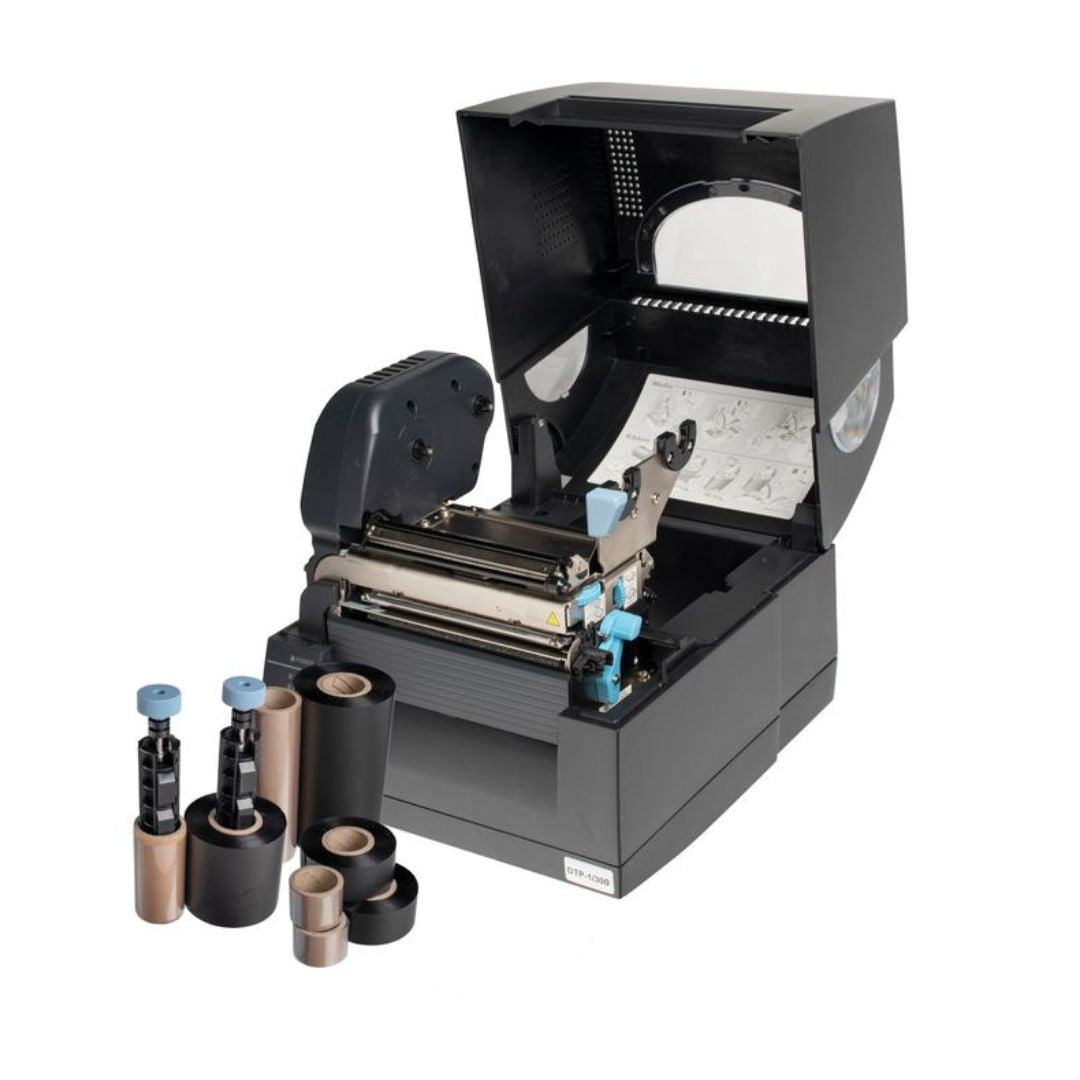
The Fox-in-a-Box® thermal printer system enables engineers to produce professional, durable labels on demand. Using the included Labacus Innovator® software, teams can import cable schedules directly from spreadsheets, design custom label layouts, and print entire batches in minutes rather than hours. The system operates on a "one software, one printer, one ribbon" principle, simplifying the labelling process across different label types.
-
1
Import Cable Schedule
Load your cable identification data directly from Excel or CSV files into Labacus Innovator® software.
-
2
Select Label Type
Choose Fox-Flo® tie-ons, Legend™ heatshrink, or other formats to match your application requirements.
-
3
Print and Apply
Print labels at speeds up to 100mm per second, then apply using cable ties or heat application.
For rail contractors working on tight project schedules, this efficiency translates directly into cost savings. Independent testing by Hertfordshire University found that Silver Fox® labelling methods can be up to 25 times faster than traditional manual approaches, without compromising on durability or compliance.
6. Broader Applications
LSZH Labels for Other Rail and Infrastructure
While the London Underground has specific requirements under LUL1-085, similar LSZH cable labelling needs exist across the wider rail industry and in other enclosed environments. Network Rail projects, light rail systems, airport terminals, shopping centres, and other public buildings increasingly specify LSZH materials for fire safety reasons.
Fox-Flo® labels also carry EN 45545-2 R22 certification for rail vehicle applications, making them suitable for rolling stock fitouts as well as fixed infrastructure. The same labels used in tunnel environments can be applied in train carriages, depot facilities, and trackside equipment, simplifying procurement and ensuring consistent quality across projects.
Other Applications for LSZH Labels
- Network Rail signalling and power infrastructure
- Light rail and tram systems
- Airport terminals and transport hubs
- Data centres and telecommunications facilities
- Marine vessels and offshore installations
For a deeper understanding of LSZH marking methods across different industries, our guide to wire marking in LSZH environments provides comprehensive guidance on material selection, application techniques, and compliance considerations.
Next Steps
Ready to Specify LSZH Labels for Your Rail Project?
Get Expert Support for Rail Cable Labelling
Whether you are working on London Underground upgrades, Network Rail projects, or other infrastructure requiring LSZH-compliant labels, our technical team can help you select the right solution. Silver Fox® offers free training and lifetime support with every Fox-in-a-Box® system.
Contact our team at [email protected] or call +44 (0) 1707 37 37 27 to discuss your requirements.