
Data Centre Labelling Guide
How to Label Ethernet Cables, Network Cables, and Data Centres
A practical guide to cable labelling in data centres and network environments, covering standards compliance, label selection, and best practices for efficient infrastructure management.
Cable labelling in data centres and network environments often seems straightforward until something goes wrong. A mislabelled patch cord can lead to hours of troubleshooting, while inconsistent labelling practices across a facility can turn routine maintenance into a time-consuming investigation. For engineers and technicians responsible for network infrastructure, proper cable labelling is not simply about organisation - it directly impacts operational efficiency, reduces downtime, and supports compliance with industry standards.
This guide covers the practical aspects of how to label ethernet cables, network cables, and data centre infrastructure effectively. Whether you are setting up a new server room, upgrading existing infrastructure, or establishing labelling standards for your organisation, understanding the fundamentals of cable identification will pay dividends throughout the lifecycle of your installation.
1. Foundation
Why Cable Labelling Matters in Data Centres
Data centre environments present unique challenges for cable management. With thousands of cables running through racks, trays, and conduits, the ability to quickly and accurately identify any connection becomes critical for day-to-day operations. Proper cable labelling supports three fundamental objectives: operational efficiency, error prevention, and regulatory compliance.
From an operational perspective, clear labelling dramatically reduces the time required for maintenance activities. When a technician can immediately identify a cable's origin, destination, and purpose, tasks that might otherwise take hours can be completed in minutes. This efficiency gain compounds across an organisation, particularly in larger facilities where multiple teams may be working on different aspects of the infrastructure.
Reduced Downtime
Clear identification enables rapid fault diagnosis and resolution, minimising service interruptions during maintenance or incident response.
Error Prevention
Consistent labelling reduces the risk of accidental disconnections or incorrect connections during moves, adds, and changes.
Standards Compliance
Meeting requirements such as ANSI/TIA-606-D demonstrates professional practice and supports audit requirements.
Knowledge Continuity
Well-labelled infrastructure preserves institutional knowledge, supporting handovers between staff and contractors.
The cost of poor labelling becomes apparent during incidents. When services are affected and engineers need to trace connections under pressure, inadequate or inconsistent labelling transforms a manageable situation into a crisis. As we explored in our guide on how efficient cable labelling helps meet data centre deadlines, organisations that invest in proper labelling practices consistently report faster project completion times and reduced maintenance costs.
2. Standards
Cable Labelling Standards and Compliance
Several industry standards provide guidance on cable labelling practices. While compliance is typically voluntary, following established standards ensures consistency, supports interoperability between different systems, and demonstrates professional practice to clients and auditors.
ANSI/TIA-606-D
The Telecommunications Industry Association's Administration Standard for Telecommunications Infrastructure (ANSI/TIA-606-D) is the primary reference for cable labelling in North America and is widely adopted internationally. Published in October 2021, it superseded ANSI/TIA-606-C and remains the current revision. Its scope covers telecommunications infrastructure within and between buildings, including commercial, industrial, residential, and data centre premises (Telecommunications Industry Association, 2021).
The standard defines four classes of administration, ranging from Class 1 (a premises served by a single equipment room) to Class 4 (a multi-campus or multi-site system). Each class specifies requirements for identifiers, records, and labelling appropriate to the complexity of the infrastructure. For more detail on how these requirements developed, see our guide to the ANSI/TIA-606 cable labelling standard, which traces the standard from the original 606-A revision through to the current edition.
Key ANSI/TIA-606-D Requirements
- Labels must be mechanically generated (not handwritten)
- Both ends of each cable must be identified
- Termination points must be clearly marked
- Labels must remain legible throughout the component's lifecycle
- Colour coding is recommended but not mandatory
European Standards: BS EN 50174
In the UK and Europe, the BS EN 50174 series provides guidance on cabling installation, including labelling requirements. BS EN 50174-1 addresses specification and quality assurance, while BS EN 50174-2 covers installation planning and practices inside buildings. These standards align broadly with TIA-606 principles while addressing European-specific requirements.
For data centre environments specifically, BS EN 50600-2-4 addresses telecommunications cabling infrastructure, referencing the EN 50173 and EN 50174 series for detailed implementation guidance.
3. Selection
Choosing the Right Label Type for Your Application
Selecting appropriate labels for your data centre or network environment depends on several factors: the physical characteristics of the cables, the environmental conditions, the information that needs to be displayed, and your printing and application workflow. Understanding the options available helps ensure your labelling system remains effective throughout the life of the installation.
Self-Laminating Wrap-Around Labels
Self-laminating wrap-around labels are particularly well-suited for ethernet and network cable identification. These labels wrap around the cable with a clear laminate portion that protects the printed area from abrasion, moisture, and handling. The Prolab® Laser Self-Laminating Wrap-Around Cable Labels can be printed using a standard office laser printer, making them accessible for organisations without specialised printing equipment.
For environments requiring thermal printing, the Prolab® Thermal Self-Laminating Wrap-Around Cable Labels offer the same protective characteristics with the speed and flexibility of on-demand thermal printing. This approach is particularly valuable in active data centre environments where labels need to be produced quickly during moves, adds, and changes.
Tie-On Cable Labels
Tie-on labels attach to cables using cable ties rather than adhesive, making them suitable for applications where wrap-around labels may not be practical - such as very large cable bundles or situations where cables may need to be re-labelled. The Legend™ Laser Tie-On Cable Labels provide a durable identification solution for data and telecommunications applications.
For environments with more demanding requirements, such as areas where low smoke zero halogen (LSZH) materials are specified, Fox-Flo® UV Stable, LSZH Tie-On Cable Labels offer exceptional durability along with compliance for safety-critical installations. These labels have been tested to withstand 8,000 hours of accelerated UV exposure and meet London Underground approval requirements.
Wrap-Around
Self-laminating protection for printed information. Ideal for individual ethernet and network cables.
Tie-On
Flexible attachment using cable ties. Suited to larger cables and bundles, or frequent re-labelling.
2-Part System
Tubing applied pre-termination, label inserted later. Offers maximum flexibility for changing requirements.
2-Part System Cable Markers
The Legend™ Laser 2-Part System Cable Markers offer a unique approach where clear tubing is slid onto the cable before termination, and the printed label can be inserted at any point afterwards. This flexibility is particularly valuable in data centre environments where cable identification requirements may evolve, or where different teams handle cable installation and labelling.
4. Patch Panels
How to Label Patch Panels Effectively
Patch panels represent a critical labelling point in any structured cabling system. Clear identification of each port enables technicians to quickly make connections, verify configurations, and troubleshoot issues. Effective patch panel labelling requires attention to both the physical labels and the information they contain.
Port identification on patch panels typically follows a straightforward numbering scheme, but the labels must also convey information about what each port connects to. Depending on your documentation approach, this might include the destination room or outlet, the cable run identifier, or both. The key is consistency - whatever scheme you adopt should be applied uniformly across all patch panels in the facility.
Dedicated Patch Panel Labels
Prolab® Patch Panel Labels are designed specifically for this application, with pre-cut sizes that fit common patch panel configurations. Made from durable polyester with a strong acrylic adhesive, these labels can be printed using any standard office laser printer and applied rapidly - a full sheet of 75 labels takes approximately 20 seconds to print.
For organisations requiring more flexibility, the Prolab® Patch Panel Module works with the Fox-in-a-Box® thermal printing system to create custom labels for any patch panel configuration. This approach is particularly valuable in data centres using equipment from multiple manufacturers, where standard label formats may not align perfectly with all panel designs. For a detailed walkthrough of this process, see our guide on how to label patch panels with the Prolab® Patch Panel Module.
-
1
Establish Your Naming Convention
Define a consistent identifier format that indicates location, panel number, and port. Document this convention for all team members.
-
2
Measure and Template
Verify the spacing and dimensions of your patch panel ports. Configure your label template to match exactly.
-
3
Print and Apply
Print labels using Labacus Innovator® software for consistent formatting. Apply labels carefully, ensuring alignment with ports.
-
4
Document and Verify
Update your cable management records and verify that labels match documentation before commissioning.
5. Fibre Optic
How to Label Fibre Optic Cables
Fibre optic cables present specific labelling challenges due to their physical characteristics and the high density of connections in typical installations. Unlike copper cables, fibre cables cannot be easily tested or traced using standard equipment, making clear identification even more critical.
For fibre optic applications, Prolab® Laser Fibre Optic Flag Labels provide a purpose-designed solution. The flag format allows labels to be visible even in densely packed fibre trays, while the durable polyester construction ensures long-term legibility. For a comprehensive approach to fibre labelling, our guide on how to label fibre optic cables covers the specific considerations for these installations.
When labelling fibre cables, consider including information about the fibre type (single-mode or multi-mode), the connector type, and the strand count in addition to standard location identifiers. This additional detail supports technicians who may need to verify compatibility before making connections.
6. Tools
Labelling Software and Printing Solutions
Effective cable labelling depends not only on choosing the right label materials but also on having appropriate tools for design and printing. Dedicated labelling software provides features that general-purpose applications lack: purpose-built templates, data import capabilities, barcode and QR code generation, and integration with testing and documentation systems.
Labacus Innovator® Software
Labacus Innovator® provides a comprehensive platform for label design across the full range of Silver Fox® label types. Available in Basic, Advanced, and Professional levels, the software offers capabilities appropriate to different project scales and requirements. The Professional level includes spreadsheet import functionality, barcode and QR code generation, and integration with cable testing systems.
For data centre applications, the ability to incorporate barcodes and QR codes into labels enables more sophisticated asset management workflows. As explored in our article on barcodes and QR codes in cable labelling, scannable labels can link physical infrastructure to digital documentation, streamlining maintenance processes and supporting compliance requirements.
The Fox-in-a-Box® System
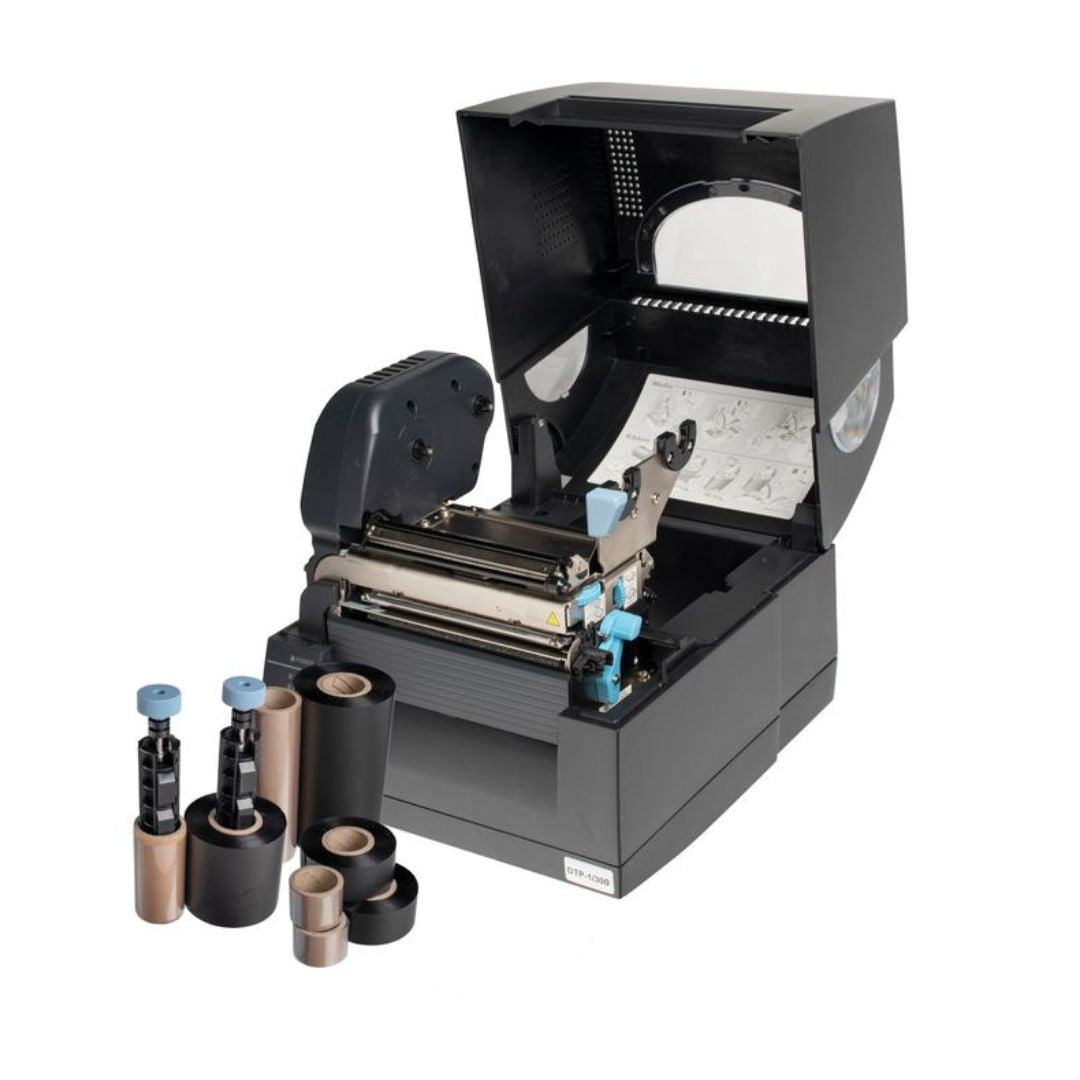
The Fox-in-a-Box® industrial label printer provides on-demand thermal printing capability for data centre environments. The system supports over 200 label variations using a single printer and ribbon combination, eliminating the complexity of managing multiple printing systems. For organisations handling significant labelling volumes, this approach reduces both equipment costs and training requirements.
The integration between Labacus Innovator® and Fox-in-a-Box® enables rapid label production during installation or maintenance activities. Labels can be designed, previewed, and printed in minutes, supporting the fast-paced workflows typical of data centre operations.
7. Best Practices
Cable Labelling Best Practices for Data Centres
Successful cable labelling requires more than just applying labels - it demands a systematic approach that encompasses planning, execution, and ongoing maintenance. The following practices help ensure your labelling system delivers lasting value.
Essential Labelling Practices
- Label both ends of every cable with identical or corresponding identifiers
- Position labels consistently - typically 50-100mm from connectors
- Use machine-printed labels rather than handwritten identification
- Ensure labels are visible during normal maintenance activities
- Select materials appropriate to the environmental conditions
- Maintain digital records that match physical labels
- Establish procedures for updating labels during changes
- Train all staff on the labelling system and its conventions
Consistency Is Critical
Perhaps the most important factor in effective cable labelling is consistency. A labelling scheme that is applied uniformly - even if it is not the most sophisticated approach - will always outperform an inconsistent system. Document your conventions clearly, ensure all team members understand them, and enforce adherence during both new installations and modifications.
Plan for the Future
Infrastructure changes over time, and your labelling system should accommodate this reality. Avoid schemes that encode information which may become outdated, such as specific equipment models or service names. Instead, focus on physical location identifiers that remain stable. Where additional context is needed, link labels to documentation systems that can be updated independently.
Regular Maintenance
Include label condition checks in your routine maintenance procedures. Labels can degrade over time, particularly in challenging environments, and early identification of issues allows for replacement before information is lost. During any infrastructure changes, verify that labels are updated to reflect the current configuration.
For detailed guidance on labelling cables after they have been terminated, our article on labelling terminated wires provides step-by-step instructions for different label types and applications.
8. FAQ
Frequently Asked Questions
How do I label ethernet cables effectively?
For ethernet cables, self-laminating wrap-around labels provide the best combination of durability and readability. Position labels consistently near connectors, include identifiers that indicate both source and destination, and ensure the laminate portion fully covers the printed area for protection against handling and environmental factors.
How do I label network cables in a data centre?
Start by establishing a consistent naming convention that aligns with your documentation system and, where applicable, standards such as ANSI/TIA-606-D. Label both ends of each cable, use machine-printed labels for legibility, and select materials appropriate to the data centre environment. For high-density installations, consider flag-style labels that remain visible even in congested cable runs.
How do I label cables for data centre compliance?
Review the requirements of applicable standards (ANSI/TIA-606-D in North America, BS EN 50174 in Europe) and establish labelling practices that meet or exceed their specifications. Key requirements typically include mechanical label generation, identification at both cable ends, clear termination point marking, and labels that remain legible throughout the installation's lifecycle.
Is ANSI/TIA-606-C still current?
No. ANSI/TIA-606-D was published in October 2021 and superseded the 606-C revision. Existing installations documented to 606-C do not usually need to be relabelled, but new specifications, tender documents, and internal labelling standards should reference 606-D as the current edition.
What is the best label material for data centre cables?
For most data centre applications, polyester-based labels with acrylic adhesive provide excellent durability and temperature resistance. Where LSZH materials are required for fire safety compliance, Fox-Flo® labels meet stringent safety standards including London Underground approval. Self-laminating labels offer additional protection for high-handling environments.
How do I label patch panels?
Use dedicated patch panel labels sized to match your panel configuration. Ensure port numbering aligns with your cable documentation, and consider including destination information where space permits. For multi-manufacturer environments, the Prolab® Patch Panel Module provides flexibility to create custom labels for any panel design.
Next Steps
Ready to Improve Your Cable Labelling?
Speak With Our Expert Team
With over 45 years of experience in cable and equipment labelling, Silver Fox® provides solutions trusted by data centre operators, telecommunications providers, and network engineers worldwide. Our team can help you identify the right labelling approach for your specific requirements, whether you are establishing standards for a new facility or upgrading existing infrastructure.
Contact us at [email protected] or call +44 (0) 1707 37 37 27 to discuss your project requirements.
References
Telecommunications Industry Association (2021) ANSI/TIA-606-D Administration Standard for Telecommunications Infrastructure. Arlington, VA: TIA.
British Standards Institution (2018) BS EN 50174-2:2018 Information technology - Cabling installation - Installation planning and practices inside buildings. London: BSI.
CENELEC (2019) EN 50600-2-4 Information technology - Data centre facilities and infrastructures - Part 2-4: Telecommunications cabling infrastructure. Brussels: CENELEC.
Blog post published 20/02/2024 & updated 21/09/2026