
Cable Labelling Guide
What Are Low Smoke Zero Halogen Cable Labels?
Understanding LSZH cable labels: why they matter for fire safety, where regulations require them, and how to choose the right solution for rail, marine, and enclosed environments.
In environments where fire safety is paramount, every material matters. This includes the cable labels that identify your electrical and data infrastructure. Traditional labelling materials can release dense smoke and toxic gases when exposed to fire, creating hazards for personnel trying to evacuate and potentially damaging sensitive equipment.
Low smoke zero halogen (LSZH) cable labels address these concerns directly. They are manufactured from specially formulated compounds that emit minimal smoke and contain no halogen elements such as chlorine, fluorine, or bromine. When exposed to heat or flame, LSZH materials char rather than burn freely, significantly reducing the volume of smoke produced and eliminating the release of corrosive, toxic halogenated gases.
1. Definition
What Does Low Smoke Zero Halogen Mean?
Low smoke zero halogen is a material classification that describes products meeting two distinct criteria. The term is often abbreviated to LSZH, LSOH, or LS0H, with all variations referring to the same material properties.
Low Smoke
When exposed to fire, these materials produce significantly less smoke than standard plastics such as PVC. This is critical in enclosed spaces where smoke can obscure evacuation routes and cause asphyxiation.
Zero Halogen
The material contains no halogen elements. When halogens burn, they produce hydrogen halide gases (such as hydrogen chloride) that are both toxic to humans and corrosive to electronic equipment.
It is worth noting that "zero halogen" and "low smoke zero halogen" are not interchangeable terms. A material can be halogen-free without meeting low smoke requirements. For safety-critical applications, specifying the full LSZH standard ensures both properties are present.
The science behind LSZH materials involves using thermoplastic or thermoset compounds that, when exposed to extreme heat, form a protective char layer. This char insulates the underlying material and reduces the oxygen available for combustion, limiting both flame spread and smoke production.
2. Fire Safety
Why Do LSZH Cable Labels Matter?
In a fire scenario, traditional PVC-based labels can become a significant hazard. The smoke and gases they produce create three distinct problems that LSZH materials specifically address.
Visibility
Dense smoke reduces visibility in evacuation corridors. LSZH materials emit far less smoke, helping personnel locate exits and emergency equipment.
Toxicity
Halogen gases are toxic when inhaled and can cause respiratory damage. LSZH labels eliminate this hazard by containing no halogen compounds.
Equipment Protection
Hydrogen chloride gas from burning PVC corrodes circuit boards and connectors. LSZH materials protect nearby electronics from secondary damage.
These factors become especially critical in environments with high-density cabling, such as data centres, telecommunications rooms, and electrical control panels. In these settings, even a small fire can involve substantial lengths of cable and associated labelling, multiplying the potential smoke and gas emission.
Beyond immediate fire response, using LSZH cable labels also supports faster recovery. Equipment exposed to corrosive gases often requires complete replacement, while equipment protected by LSZH materials may remain functional after cleaning and inspection.
3. Compliance
UK and European LSZH Regulations
Various UK and European standards govern the use of low smoke zero halogen materials in specific industries. Understanding which regulations apply to your project helps ensure you specify the correct cable labelling materials from the outset.
Rail and Metro Applications
EN 45545-2 is the European standard for fire protection on railway vehicles. It specifies requirements for materials based on their application and the type of vehicle. For cable labelling, the R22 requirement set (for electrical equipment) is typically applied. Materials must demonstrate acceptable performance in smoke density, toxicity, and flame spread tests.
In the UK, Network Rail and Transport for London have their own approval processes. The London Underground requirement LUL1-085 specifies fire safety performance criteria for materials used in stations and on rolling stock. Cable labels used on London Underground projects must hold this approval.
Marine and Offshore
The International Maritime Organisation (IMO) Fire Test Procedures Code (FTPC) governs materials used on ships and offshore installations. Part 2 covers smoke and toxicity testing, while Part 5 addresses surface spread of flames. Projects in the oil and gas sector, as well as commercial shipping, typically require labels meeting these IMO standards.
Buildings and Data Centres
While UK building regulations do not universally mandate LSZH labels, many specifiers include them in projects involving enclosed spaces, limited ventilation, or high occupancy. Data centres and telecommunications facilities frequently specify LSZH materials as part of their fire safety strategy. The UL 2043 plenum rating, though a North American standard, is often referenced for air-handling spaces.
Key Standards for LSZH Cable Labels
- EN 45545-2 R22 for European rail applications
- LUL1-085 for London Underground projects
- IMO FTPC Part 2 and Part 5 for marine environments
- UL 94 V-0 for vertical burn performance
- BS 6853 for UK rail smoke and toxicity requirements
4. Applications
Where Are LSZH Labels Required?
While regulations define minimum requirements, many industries have adopted LSZH cable labelling as standard practice due to the safety benefits. The following sectors commonly specify low smoke zero halogen labels.
- Rail and metro systems: Stations, tunnels, and rolling stock where evacuation routes are limited and passenger density is high.
- Marine and offshore: Ships, oil platforms, and coastal installations where enclosed spaces and difficult evacuation conditions exist.
- Aviation: Airports and aircraft where smoke density directly impacts emergency response.
- Data centres: High-value electronic equipment that could suffer extensive secondary damage from corrosive gases.
- Public buildings: Museums, concert halls, shopping centres, and other high-occupancy spaces where smoke control is critical.
- Healthcare facilities: Hospitals and care homes where patients may have limited mobility during evacuation.
- Industrial control rooms: Panel-building environments with dense cabling and expensive instrumentation.
Even in applications where LSZH is not strictly required, specifying these materials demonstrates a commitment to best practice and can simplify compliance if regulations change or if the installation is later modified for a more demanding application.
5. Selection
Choosing LSZH Cable Labels
When selecting low smoke zero halogen cable labels, fire safety compliance is the primary consideration, but it should not be the only factor. The labels also need to perform their core function: providing clear, durable identification throughout the life of the installation.
Material Durability
Many LSZH-required environments also involve challenging physical conditions. Rail applications may expose labels to grease, vibration, and temperature extremes. Offshore installations subject labels to salt spray and UV radiation. Your chosen labels should meet both the fire safety requirements and the environmental demands of the specific application.
For outdoor and marine applications, UV stability is particularly important. Labels that degrade under sunlight will become illegible, defeating their purpose. Look for labels tested to standards such as ISO 4892 for accelerated UV weathering.
Printing and Legibility
The printing method affects both initial legibility and long-term durability. Thermal transfer printing, when used with appropriate ribbons, produces permanent marks that resist chemicals, abrasion, and environmental exposure. The combination of label material and print technology must work together to maintain readability.
For demanding environments, Fox-Flo® labels offer a purpose-built solution. Manufactured from a proprietary LSZH material developed by Silver Fox®, these tie-on cable labels combine fire safety compliance with exceptional durability. They are approved to EN 45545-2 R22 for rail applications and hold London Underground approval to LUL1-085.
Beyond tie-on labels, Legend™ LSZH Heatshrink markers provide an alternative for applications where a shrink-fit solution is preferred. These halogen-free heatshrink markers conform tightly to cables, providing a secure and durable identification method suitable for rail, metro, and public building applications.
6. Printing
Printing LSZH Cable Labels
Having the right labels is only part of the solution. You also need an efficient way to print them on demand, particularly on projects where cable schedules evolve or where different identification requirements apply to different systems.
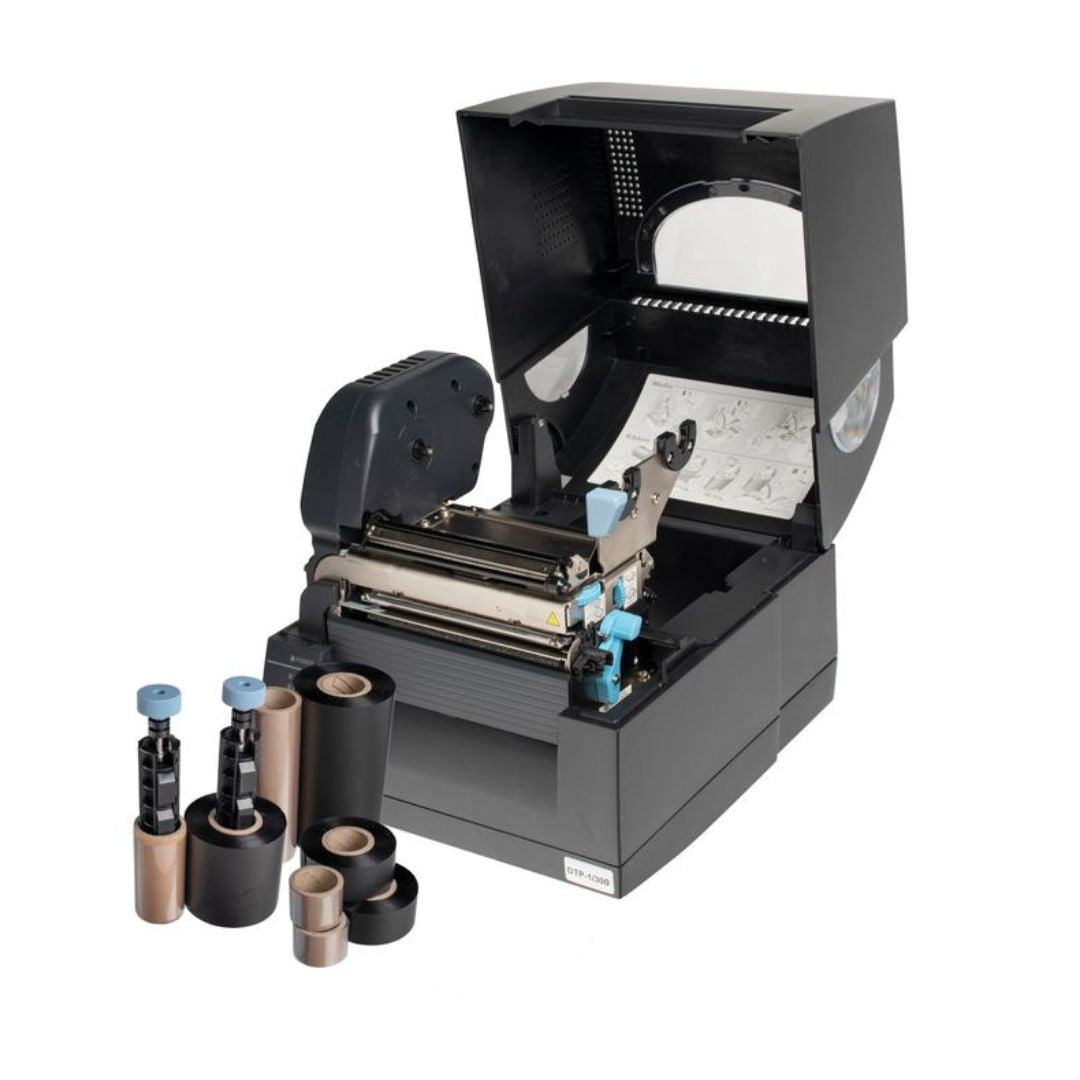
The Fox-in-a-Box® industrial label printer is designed to work seamlessly with the full range of Silver Fox® label materials, including Fox-Flo® LSZH labels and Legend™ heatshrink. Using a single printer, software package, and thermal transfer ribbon, you can produce labels for diverse applications without managing multiple systems or consumables.
The included Labacus Innovator® software supports importing cable schedules from spreadsheets and generating barcodes, QR codes, and custom graphics. This integration means your labelling process can connect directly to your project documentation, reducing manual data entry and the errors it introduces.
For guidance on different cable labelling scenarios, including how to label cables that are already terminated, see our step-by-step guide to labelling terminated wires.
7. FAQ
Common Questions About LSZH Labels
What is the difference between LSZH and PVC cable labels?
PVC (polyvinyl chloride) labels contain chlorine, a halogen element. When burned, PVC releases hydrogen chloride gas, which is toxic and corrosive. LSZH labels contain no halogens and produce significantly less smoke, making them safer for enclosed environments and protecting nearby electronic equipment from secondary damage.
Are LSZH labels more expensive than standard labels?
LSZH materials typically cost more than standard PVC due to the specialised compounds required. However, the price difference is modest compared to the overall project cost, and the safety and compliance benefits often outweigh the material premium. In regulated industries, LSZH labels may be the only compliant option regardless of cost.
Can I use LSZH labels outdoors?
LSZH properties relate to fire performance, not weather resistance. However, some LSZH labels, such as Fox-Flo®, are also formulated for UV stability and outdoor durability. Always check that your chosen labels are tested for the specific environmental conditions of your application.
How do I verify that labels meet LSZH standards?
Request test certificates from your supplier showing compliance with relevant standards such as EN 45545-2, IEC 60754, or IMO FTPC. Reputable manufacturers will provide documentation of their testing. For rail projects, check for specific approvals such as London Underground LUL1-085 or PADS approval.
Do I need LSZH labels for a data centre?
While not always mandated by regulation, LSZH labels are increasingly specified for data centres. The combination of high-value equipment, dense cabling, and air-handling systems makes these environments particularly vulnerable to the effects of smoke and corrosive gases. Many data centre operators include LSZH requirements in their specifications as a matter of best practice.
Next Steps
Need Help Specifying LSZH Labels?
Speak to Our Technical Team
Whether you are working on a rail project requiring EN 45545 compliance, an offshore installation needing IMO approval, or a data centre where LSZH is part of your fire strategy, our team can help you select the right cable labelling solution.
Contact our expert team at [email protected] or call +44 (0) 1707 37 37 27.
References
BSI (2020) BS EN 45545-2:2020+A1:2023 Railway applications. Fire protection on railway vehicles. Requirements for fire behaviour of materials and components. London: British Standards Institution.
International Maritime Organization (2010) International Code for Application of Fire Test Procedures (FTP Code). London: IMO.
Transport for London (2022) LUL1-085: Fire Safety Performance of Materials. London: Transport for London.
Blog post published 12/12/2024 & updated 29/01/2026