
Cable Labelling Guide
The Complete Guide to Cable Labels for Industrial Projects
Discover how effective cable labelling transforms project efficiency, reduces maintenance costs, and keeps your installations compliant with industry standards.
Effective cable labelling is far more than an administrative task. It forms the backbone of organised, efficient, and safe electrical installations. Whether you are managing a data centre, working on a rail project, or installing electrical systems in commercial buildings, the right cable labels and cable markers ensure that every wire can be quickly identified, traced, and maintained.
This guide covers everything you need to know about cable labelling, from selecting the right materials to implementing a system that saves time on every project. For more detailed guidance on specific cable types, see our guide to labelling ethernet cables, network cables, and data centres.
1. The Fundamentals
Why Cable Labels Matter for Every Project
Cable labelling might seem like a small detail in the grand scheme of an electrical installation, but its impact on project outcomes is substantial. Proper cable identification reduces troubleshooting time, prevents errors during maintenance, and ensures compliance with industry standards such as ANSI TIA 606-B.
Consider a scenario where a technician needs to trace a fault in a control panel containing hundreds of wires. Without clear cable identification tags, this task could take hours. With a well-implemented labelling system, the same job might take minutes. This time saving multiplies across every maintenance visit, every modification, and every inspection throughout the installation's lifespan.
Time Savings
Clear wire labels eliminate guesswork, allowing technicians to identify cables instantly rather than tracing wires manually.
Error Prevention
Visible cable marker tags reduce the risk of disconnecting the wrong cable during maintenance or modifications.
Compliance
Many industries require permanent, legible labelling to meet safety and documentation standards.
Beyond efficiency, cable labels play a critical role in safety. In emergency situations, being able to quickly identify and isolate specific circuits can prevent injuries and equipment damage. This is why standards bodies and regulatory authorities increasingly mandate comprehensive cable labelling in industrial and commercial installations.
2. Label Types
Understanding Different Cable Label Options
Not all cable labels are created equal. The right choice depends on your specific application, environment, and installation requirements. Understanding the differences between cable label types helps you select the most effective solution for your project.
Tie-On Cable Labels
Tie-on labels attach to cables using cable ties, making them ideal for situations where cables are already terminated or where the label needs to be positioned away from the cable surface. Fox-Flo® tie-on cable labels are manufactured from premium Low Smoke Zero Halogen (LSZH) material, offering exceptional durability in harsh environments including outdoor installations, rail applications, and marine settings.
Wrap Around Cable Labels
Wrap around labels, also known as self-laminating labels, wrap completely around the cable with a clear protective tail that covers the printed information. This design protects the print from abrasion, moisture, and chemicals. Wrap around cable labels work particularly well for data cables, fibre optic installations, and any application where the label needs to withstand handling during installation and maintenance.
Heat Shrink Cable Markers
Heat shrink labels provide a permanent, tamper-evident solution by shrinking tightly around the cable when heat is applied. They create a smooth, professional finish and are especially suited to wire markers in control panels and switchgear where space is limited and a clean appearance is important.
Cable Tags
Cable tags and cable identification tags are typically larger format labels used for major cables, trunking, and equipment. They can include detailed information such as circuit numbers, destinations, and barcodes for asset management systems.
High Performance Tape
For pipe labelling and larger equipment identification, Prolab® High Performance Tape offers excellent adhesion and durability in widths up to 100mm, suitable for colour-coded systems and hazard identification.
3. Material Selection
Selecting the Right Material for Your Environment
The material of your cable labels determines how long they will remain legible and attached. Selecting the wrong material leads to label failures, requiring costly re-labelling and potentially causing safety issues if cables become unidentifiable.
For indoor environments with moderate temperatures, standard polyester or vinyl labels often suffice. However, industrial and outdoor applications demand materials specifically engineered for harsh conditions. This is where understanding your environment becomes essential.
Low Smoke Zero Halogen (LSZH) Labels
In enclosed spaces, tunnels, railway applications, and anywhere fire safety is critical, LSZH materials are often mandatory. These materials emit minimal smoke and no halogen gases when exposed to fire, protecting both people and equipment. Fox-Flo® labels meet London Underground approval (LUL 1-085) and EN 45545 requirements for rail applications, making them suitable for the most demanding safety-critical installations.
UV Stable Labels for Outdoor Use
Outdoor cable labelling presents unique challenges. Sunlight degrades many plastics and inks, causing labels to become brittle, fade, or fall off entirely. UV stable materials like those used in Fox-Flo® have been tested to withstand 8,000 hours of accelerated UV exposure, equivalent to 12 to 15 years in a Northern European climate. This testing ensures your labels remain readable throughout the installation's operational life.
Material Selection Checklist
- Operating temperature range of your environment
- Exposure to UV light, moisture, or chemicals
- Fire safety requirements (LSZH, plenum rated)
- Expected lifespan of the installation
- Regulatory compliance requirements
For more guidance on choosing the right labels for specific UK engineering applications, our article on choosing cable and wire labels for UK engineering projects provides detailed recommendations.
4. Printing Solutions
Efficient Cable Label Printing
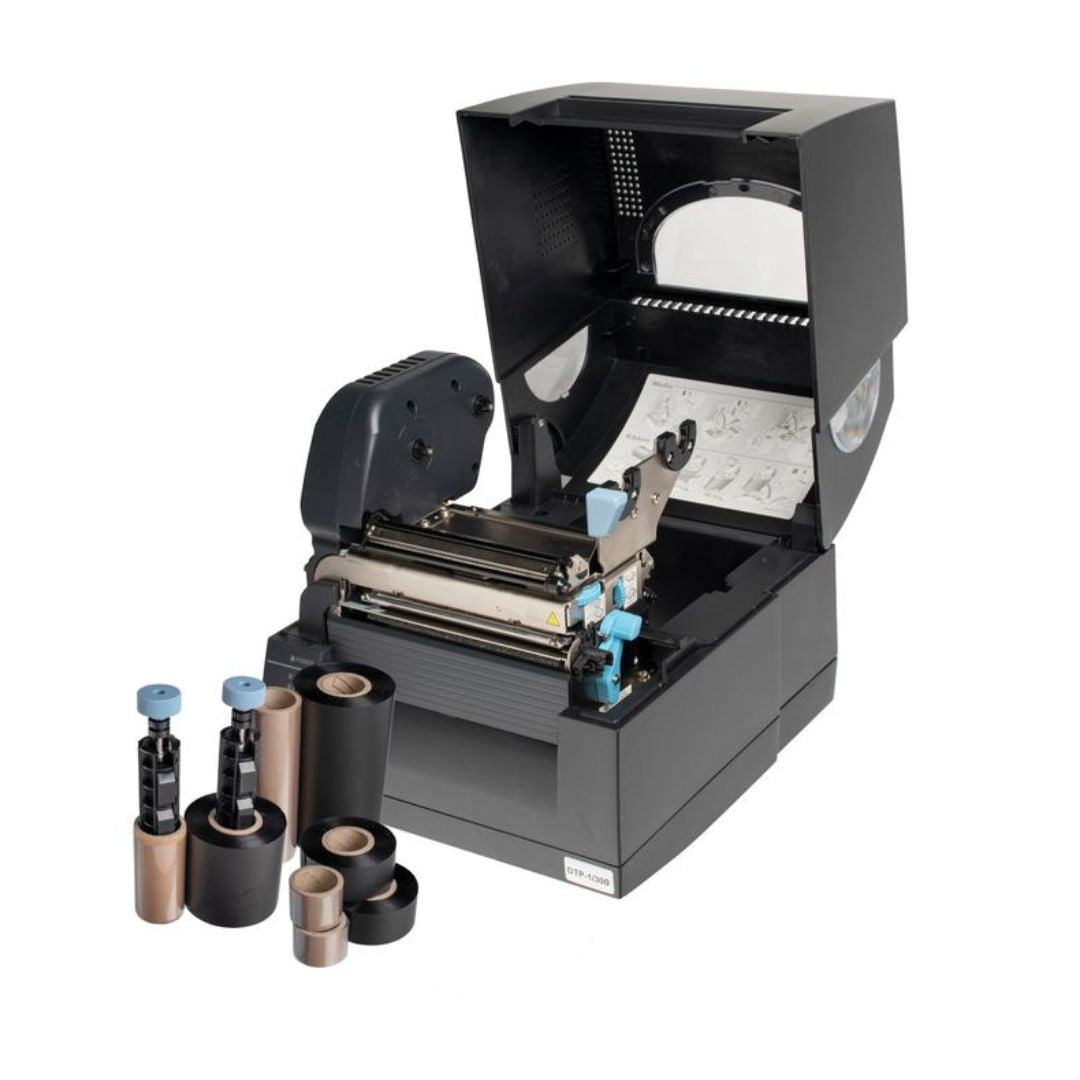
A reliable cable label printer is essential for any organisation that regularly installs or maintains electrical systems. The ability to print labels on demand, exactly when and where you need them, eliminates waiting for pre-printed labels and allows last-minute changes without waste.
Industrial thermal transfer printing offers the best combination of durability, speed, and flexibility for cable labelling. Unlike direct thermal printing, which produces prints that fade over time, thermal transfer uses a ribbon to create permanent prints that resist heat, chemicals, and UV exposure.
One Software, One Printer, One Ribbon
Managing multiple printers for different label types creates complexity, increases training requirements, and leads to higher inventory costs. The Fox-in-a-Box® system addresses this by providing a single industrial label printer that handles the complete range of thermal labels, from small wire markers to large cable tags, all using the same ribbon and Labacus Innovator® software.
The Labacus Innovator® software included with Fox-in-a-Box® allows you to design custom labels with barcodes, QR codes, graphics, and variable data. This enables integration with cable testing equipment from manufacturers like Fluke Networks® and asset management systems, creating a seamless workflow from design to installation.
5. Application
How to Label Cables Effectively
Knowing how to label cables correctly is just as important as choosing the right materials. Poor application can lead to labels falling off, becoming illegible, or failing to provide the information needed during maintenance.
-
1
Plan Your Labelling System
Establish a consistent naming convention before you begin. Include information such as circuit reference, source, destination, and cable type. A well-planned system makes future maintenance straightforward.
-
2
Prepare the Cable Surface
For adhesive labels, ensure the cable surface is clean and dry. Dust, oil, or moisture will reduce adhesion. Tie-on labels like Fox-Flo® are less sensitive to surface conditions, making them ideal for site applications.
-
3
Position Labels Correctly
Place labels where they can be easily read without disturbing other cables. Standard practice is to label both ends of each cable, within 150mm of terminations, and at regular intervals on long runs.
-
4
Apply Securely
For wrap around labels, ensure the clear laminating tail completely covers the printed area. For tie-on cable tags, use appropriate cable ties and position the label so it hangs naturally without twisting.
For a detailed walkthrough of labelling terminated wires, including specific product recommendations, see our step-by-step guide to labelling terminated wires.
6. FAQs
Common Cable Labelling Questions
How do I label ethernet cables?
Ethernet cables are typically labelled using wrap around labels or small tie-on tags. Include the port number, destination, and any relevant VLAN information. Consistency is key in data centre environments where thousands of cables may be present. Self-laminating wrap around labels protect the print from handling during patching and reconfiguration.
How do I label network cables in a data centre?
Data centre cable labelling should follow established standards such as ANSI TIA 606-B. Use a hierarchical naming system that identifies the building, room, row, rack, and port. Colour coding can help distinguish between different cable types or network functions. Many organisations also include barcodes or QR codes for integration with asset management systems.
What are wrap around cable labels used for?
Wrap around labels are versatile and suit most cable labelling applications. They work particularly well for cables that may be handled frequently, as the laminating tail protects the printed information from abrasion. They are commonly used for data cables, power cables in control panels, and any application where a clean, professional appearance is important.
What is the best cable label printer for industrial use?
For industrial applications, thermal transfer printers offer the best durability and versatility. Look for a printer that can handle the full range of label sizes you need, from small wire markers to large cable tags. The Fox-in-a-Box® system is designed specifically for industrial cable labelling, offering one printer solution for all thermal label types with free ongoing support.
How do I label cables for outdoor installations?
Outdoor cable labelling requires UV stable materials that resist degradation from sunlight. LSZH materials like Fox-Flo® are tested for outdoor use and maintain legibility for over a decade in Northern European climates. Ensure labels are positioned where they are protected from direct water ingress where possible, and use cable ties rated for UV exposure.
Next Steps
Ready to Improve Your Cable Labelling?
Get Expert Advice on Cable Labelling Solutions
With over 45 years of experience helping engineers save time, Silver Fox® offers a complete range of cable labels, cable tags, and printing solutions. Our team provides free training and ongoing support to ensure you get the most from your labelling system.
Contact our expert team at [email protected] or call +44 (0) 1707 37 37 27.