
Compliance Guide
A Guide to BS 1710 Pipe Marking in the UK
Understanding British Standard 1710:2014 for pipe identification, colour coding requirements, and how to ensure your facility meets current regulations.
Pipe marking might seem like a small detail in the broader scope of facility management, but it plays a critical role in workplace safety. From offshore oil platforms to commercial buildings, clearly identified pipework helps engineers, maintenance teams, and emergency responders quickly understand what flows through each pipe and in which direction.
British Standard 1710:2014 (BS 1710) provides the framework for pipe identification in the UK. This guide explains what the standard requires, why it matters, and how to implement compliant pipe marking across your facility.
1. The Standard
What is BS 1710?
BS 1710:2014 is the British Standard that specifies how pipes, ducts, and electrical conduits should be identified. The current version, published in 2014, replaced the 1984 edition and introduced several important updates, particularly around water service identification.
The standard works alongside the Health and Safety (Safety Signs and Signals) Regulations 1996, which legally require pipes containing dangerous substances to be identified with appropriate hazard symbols and content names. While BS 1710 itself is not law, it provides the detailed guidance needed to comply with these regulations.
Regulations vs Standards
Health and Safety Regulations 1996 set the legal requirement. BS 1710 provides the detailed methodology for compliance.
2014 Update
The current standard updated water service coding and introduced a three-size methodology for different pipe diameters.
Key areas covered by BS 1710:2014 include basic identification colours for different pipe contents, safety colours for hazard indication, code colours for specific applications (such as water sources), label placement requirements, and direction of flow marking.
2. Colour System
BS 1710 Colour Codes Explained
The heart of BS 1710 is its colour coding system. Each basic identification colour represents a category of pipe contents, allowing personnel to identify what a pipe carries at a glance. The colours are defined using BS 4800 colour references to ensure consistency.
Basic Identification Colours
| Pipe Contents | Colour | BS 4800 Reference |
|---|---|---|
| Water | Green | 12 D 45 |
| Steam | Silver-Grey | 10 A 03 |
| Oils (mineral, vegetable, animal) | Brown | 06 C 39 |
| Gases (gas or liquid phase) | Yellow Ochre | 08 C 35 |
| Acids and Alkalis | Violet | 22 C 37 |
| Air | Light Blue | 20 E 51 |
| Other Liquids | Black | 00 E 53 |
| Electrical Services and Ventilation Ducts | Orange | 06 E 51 |
Safety Colours
Safety colours are used in addition to basic identification colours to warn of specific hazards. These include red for firefighting systems, yellow for warning or caution, and auxiliary blue for water from the public supply. The safety colour appears between bands of the basic identification colour.
Important Note on Water Services
- All water services use green as the basic identification colour
- Auxiliary blue indicates water from a public supply
- Flint grey indicates water from any other source
- Black band indicates non-potable water
The 2014 update placed particular emphasis on water service identification. This was driven by the need to prevent cross-contamination between potable and non-potable water systems, especially as alternative water sources (such as rainwater harvesting and greywater recycling) become more common in buildings.
3. Label Requirements
What Must Pipe Labels Include?
BS 1710 requires that pipe contents be identified using at least one of several methods. The information can be provided through the full name of the contents, a common abbreviation, the chemical symbol, or the refrigerant number (as specified in BS 4580). Colour banding alone is not sufficient; there must always be a code indication adjacent to any banding.
Content Identification Methods
- Full name: The complete name of the pipe contents (e.g., "Compressed Air")
- Abbreviation: A commonly understood shortened form (e.g., "CA" for Compressed Air)
- Chemical symbol: The appropriate chemical notation (e.g., "H₂O" for water)
- Colour bands: Must be accompanied by text or symbol identification
Flow Direction
The direction of fluid flow must be indicated by an arrow located near the basic identification colour. The arrow should be either white or black, whichever provides the best contrast against the background. When using arrow-ended pipe markers, the pointed end of the label indicates the flow direction.
Text Legibility
All text, abbreviations, symbols, and numbers must be printed in either black or white to ensure maximum contrast and readability. The choice depends on the background colour of the label. For most darker colours, white text provides better visibility, while lighter backgrounds typically require black text.
4. Placement
Where to Position Pipe Markers
Correct placement of pipe markers is essential for effective identification. BS 1710 specifies minimum locations where markers must appear, though additional markers may be needed in complex installations.
-
1
Both Sides of Valves
Markers must appear on both sides of any valve, allowing identification from either direction of approach.
-
2
Wall and Floor Penetrations
Where pipes pass through walls, floors, or ceilings, markers must be visible on both sides of the penetration.
-
3
Direction Changes
At bends, junctions, and any changes in direction, markers should be placed to maintain visibility.
-
4
Concealed Pipes
For pipes in concealed locations (such as between floor joists), markers must be applied at intervals no greater than 500mm.
Service identifiers must be readily visible from floor level or from any platform or walkway. If a marker becomes obscured by coverings or is otherwise not clearly visible, additional markers are required. Any markers damaged or removed during maintenance work must be replaced.
5. Applications
Where Pipe Marking Matters Most
While BS 1710 applies broadly across UK facilities, certain industries face particularly demanding pipe marking requirements. The combination of complex pipework, hazardous contents, and challenging environmental conditions makes durable, compliant marking essential.
Oil and Gas
Offshore and onshore facilities require UV-stable, chemical-resistant labels that withstand extreme conditions.
Manufacturing
Process plants need clear identification of multiple fluid systems for safe operation and maintenance.
Commercial Buildings
HVAC, water, and fire suppression systems require proper marking for building compliance.
The costs of inadequate pipe marking extend beyond regulatory compliance. Incorrectly identified pipes can lead to maintenance errors, delayed emergency response, and in serious cases, injury or environmental damage. Investing in quality pipe identification reduces these risks while supporting efficient facility operation.
6. Solutions
Pipe Marking Products for Every Environment
Effective pipe marking requires labels and tapes that remain legible throughout their service life, even in challenging conditions. Silver Fox® offers a range of pipe identification solutions designed for both internal commercial applications and demanding external industrial environments.
External Grade Pipe ID Tape
Endurance® External Grade Pipe ID Tape is engineered for demanding environments. Made from 50-micron self-adhesive polyester, it has been tested for 6,500 hours of simulated UV ageing along with salt mist spray testing according to Lloyd's Register Type Approval System, H₂S exposure, and high/low temperature cycling. This makes it suitable for oil and gas applications both onshore and offshore, where label longevity directly impacts maintenance costs.
Internal Grade Pipe ID Tape
For general commercial applications, Endurance® Internal Grade Pipe ID Tape provides a durable PVC solution with strong acrylic adhesive. Both products are available in colours matching BS 1710 (BS 4800 colours), ISO 14726, and ASME (ANSI) A13.1 standards. Custom RAL or Pantone colour matching is also available, along with bespoke service messages and directional arrows.
Valve Tags
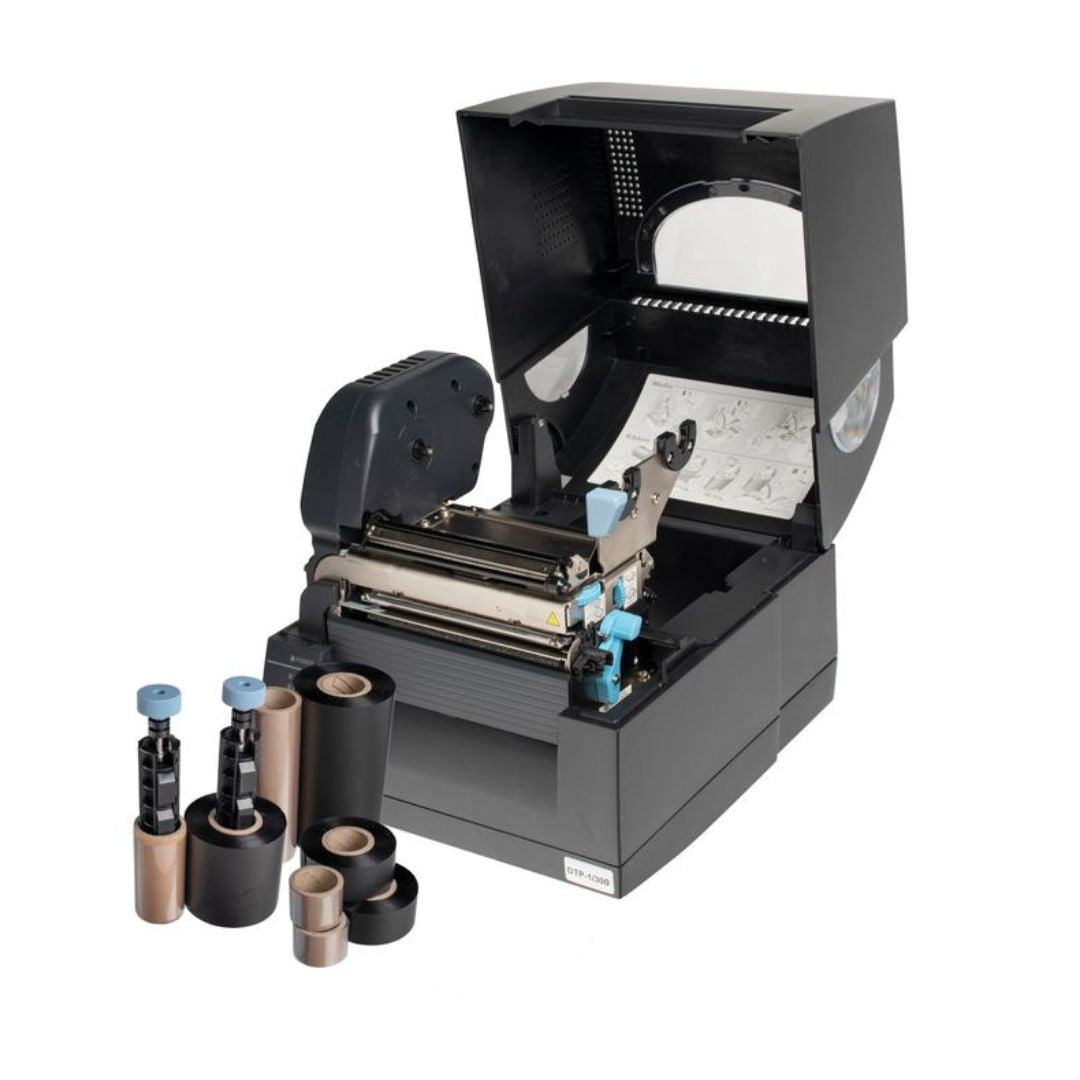
Valve identification often requires tags rather than adhesive labels. Endurance® Valve Tags are available in UV-stable PVC (printable on-site using the Fox-in-a-Box® thermal printer) or as pre-made engraved traffolyte and metal tags for permanent installations.
Why Label Durability Matters
- Longer label life means fewer maintenance interventions
- Reduced relabelling costs, especially in hard-to-access locations
- Consistent compliance without periodic replacement programmes
- Reliable identification in emergency situations
7. FAQ
Common Questions About Pipe Marking
Is BS 1710 a legal requirement?
BS 1710 itself is a standard, not a law. However, the Health and Safety (Safety Signs and Signals) Regulations 1996 legally require pipes containing dangerous substances to be identified. BS 1710 provides the detailed methodology to meet this legal requirement. Following BS 1710 is considered best practice and demonstrates compliance with the regulations.
How often should pipe markers be inspected?
There is no set frequency in BS 1710, but markers should be inspected during routine maintenance and replaced if damaged, faded, or illegible. In harsh environments, more frequent checks may be necessary. Any markers removed during work must be replaced immediately.
Can I use custom colours not listed in BS 1710?
Yes, BS 1710 allows for user-defined custom colours to provide additional information. However, these must not replace the basic identification colours and should be positioned between bands of the required identification colour, similar to safety colours.
What is the difference between BS 1710 and ISO 14726?
BS 1710 is the British Standard primarily used in the UK for building and industrial applications. ISO 14726 is an international standard originally developed for ships and marine facilities. There is overlap in colour coding, and some Silver Fox® products are available in colours that comply with both standards.
Do decorative pipe coverings need to follow BS 1710?
Decorative or protective coverings on pipes must not use any of the basic identification colours. This prevents confusion between the covering and the pipe contents. If coverings obscure pipe markers, additional markers must be applied to ensure visibility.
Next Steps
Need Help With Pipe Identification?
Talk to Our Team About Compliant Pipe Marking
Whether you need BS 1710-compliant pipe ID tape for a new installation, replacement labels for an existing facility, or custom valve tags for a specialist application, our team can help you find the right solution.
All pipe marking products are manufactured in our UK facility, with custom colour matching and fast turnaround available.
Contact our expert team at [email protected] or call +44 (0) 1707 37 37 27.
References
BSI (2014) BS 1710:2014 Specification for identification of pipelines and services. London: British Standards Institution. Available at: https://knowledge.bsigroup.com/products/specification-for-identification-of-pipelines-and-services (Accessed: January 2026).
Health and Safety Executive (1996) Health and Safety (Safety Signs and Signals) Regulations 1996. London: HMSO.
Water Regs UK (2021) Pipe Identification: BS 1710. Available at: https://www.waterregsuk.co.uk/downloads/publications/info_leaflets/pipe_identification_bs_1710.pdf (Accessed: January 2026).
Blog post published 04/09/2023 & updated 29/01/2026