
Cable Standards Explained
What is a CL2 Cable? A Guide for UK Installers
Understanding the US CL2 cable rating, its UK equivalents, and how proper cable labelling ensures compliance and safety in low-voltage installations.
If you work on international projects or source cables from US suppliers, you may have encountered cables marked "CL2" and wondered what this rating means. While CL2 is a US standard, understanding it can be valuable for UK engineers working with imported equipment, multinational clients, or installations that must meet multiple regulatory frameworks.
This guide explains what CL2 means, how it compares to UK and European standards, and why clear cable labelling remains essential regardless of which standard applies to your project.
1. Definition
What Does CL2 Mean on a Cable?
CL2 stands for "Class 2" under the US National Electrical Code (NEC). It designates cables suitable for low-voltage applications where the maximum voltage does not exceed 150 volts. The classification primarily concerns fire safety: CL2 cables must resist flame spread and limit smoke emission when exposed to fire.
The "CL" prefix indicates the cable meets specific safety criteria for in-wall and concealed installations. You will also encounter related designations such as CL3 (for voltages up to 300V), CM (communications), and various plenum-rated variants.
CL2 Rating
Suitable for low-voltage circuits up to 150V. Commonly used for audio/visual systems, security installations, and control wiring in the US market.
CL2R / CL2P Variants
CL2R indicates riser-rated cable for vertical runs. CL2P is plenum-rated for air-handling spaces, with stricter smoke and flame requirements.
2. UK Standards
How CL2 Compares to British Standards
The UK does not use the CL2 classification directly. Instead, British and European standards take a different approach to cable safety classification. For UK installations, the relevant frameworks include BS 7671 (the IET Wiring Regulations) for electrical installation requirements and BS EN 50575 for fire performance of cables in construction.
The key difference is that UK standards typically specify cable performance through CPR (Construction Products Regulation) Euroclasses, which rate cables from Aca (non-combustible) through to Fca (no performance determined) based on fire reaction properties.
Comparing Fire Safety Approaches
Where US CL2 ratings focus on flame spread and smoke emission for specific installation scenarios, European CPR classifications provide a more granular assessment of fire behaviour including heat release, smoke production, and flaming droplets. For projects requiring enhanced fire safety, UK installers often specify Low Smoke Zero Halogen (LSZH) cables, which minimise toxic fume emission in enclosed spaces.
Key Point for UK Installers
- CL2 is a US standard - not directly applicable to UK installations
- For UK projects, refer to BS 7671 and BS EN 50575 CPR classifications
- LSZH materials are often required in UK public buildings, rail, and underground applications
- Always verify local building regulations and client specifications
3. Applications
Where CL2 Cables Are Typically Used
In the US market, CL2-rated cables find widespread use in low-voltage systems. Understanding these applications helps UK installers identify when they might encounter CL2-marked cables in imported equipment or on projects with US-based clients.
Audio/Visual
Speaker cables, amplifier connections, and home theatre wiring in residential and commercial settings.
Security Systems
CCTV camera feeds, alarm system wiring, and access control connections operating at low voltage.
Building Automation
Control system cables for HVAC, lighting automation, and building management systems.
For equivalent UK applications, installers would typically select cables compliant with relevant British Standards rather than relying on US CL2 certification. The cable labelling requirements, however, remain equally important regardless of which standard applies.
4. Cable Labelling
Why Proper Labelling Matters
Whether you are working with CL2-rated cables from US suppliers or BS-compliant cables for UK installations, proper labelling serves the same essential functions: enabling quick identification during installation, simplifying troubleshooting, and ensuring compliance with documentation requirements.
Clear cable labelling becomes particularly important when multiple standards apply to a single project, such as installations in multinational facilities or buildings with both UK and imported equipment. Labels that identify cable ratings, destinations, and circuit information help prevent confusion and reduce the risk of errors.
Selecting the Right Label for Your Application
The choice of cable label depends on the installation environment. For harsh conditions, UV exposure, or areas requiring LSZH materials, labels must match the durability requirements of the cables themselves. Fox-Flo® tie-on labels, for example, are manufactured from LSZH material and tested for UV stability, making them suitable for demanding environments including London Underground and rail applications where both the cable and label must meet strict fire safety requirements.
For applications where self-laminating protection is preferred, Prolab® Wrap-Around labels provide a clear protective layer over printed information, guarding against moisture, oils, and handling damage. This makes them well-suited to industrial settings where cables may be exposed to contaminants.
Cable Labelling Best Practices
- Label both ends of every cable for complete traceability
- Include destination, circuit reference, and relevant standard where applicable
- Match label material to environmental conditions (UV, temperature, chemicals)
- Use machine-printed labels for legibility and consistency
- Maintain documentation that corresponds to physical labels
5. Efficient Labelling
Streamlining Your Labelling Process
Managing cable labelling across projects with different requirements becomes significantly easier with a single, versatile printing solution. Rather than maintaining separate systems for different label types, a unified approach saves time and reduces the potential for errors.
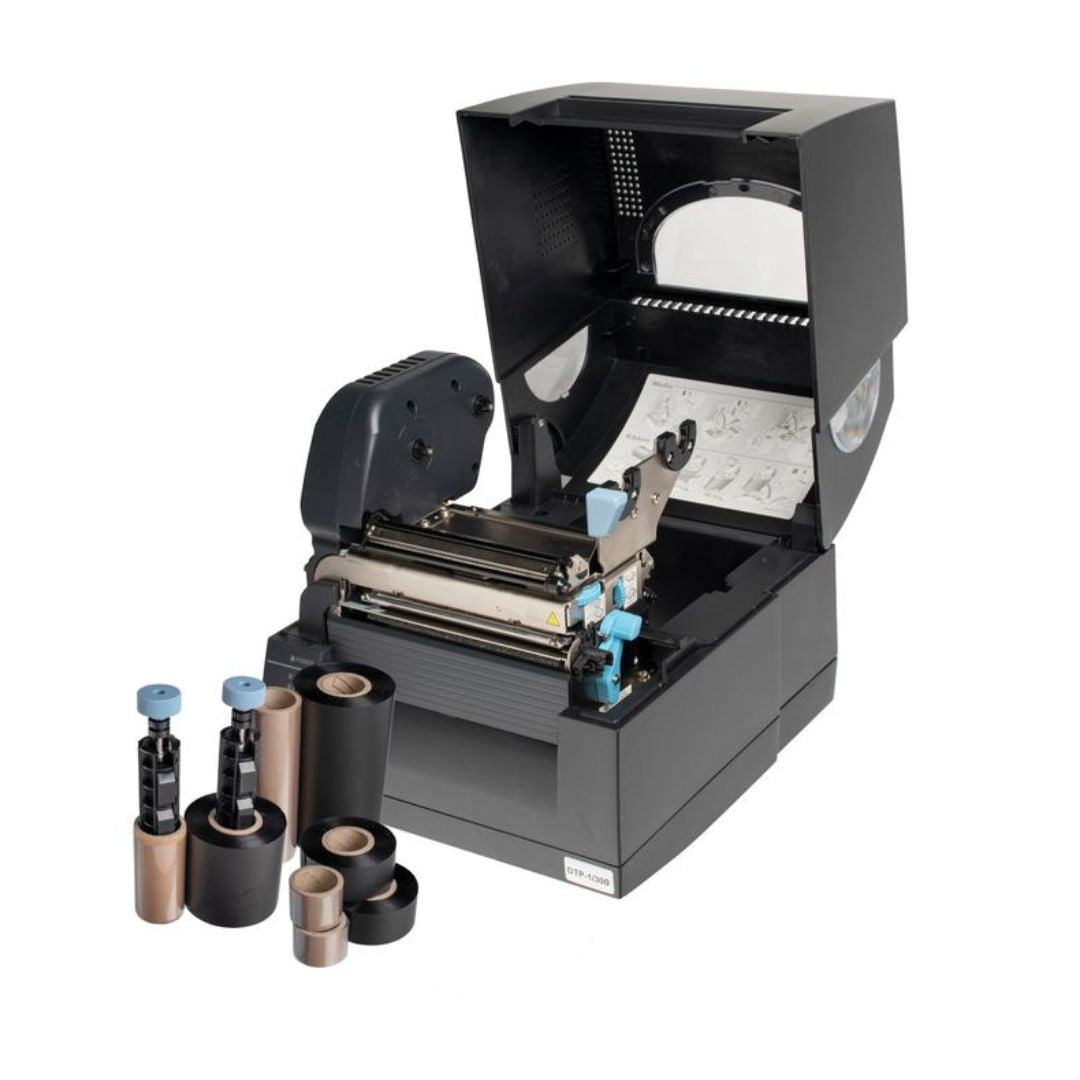
The Fox-in-a-Box® system enables UK installers to print over 160 label variations using one printer, one software package, and one ribbon. This includes tie-on labels, wrap-around labels, heatshrink markers, and asset tags, covering the full range of cable and equipment identification needs regardless of which regulatory standard applies to the installation.
-
1
Import Your Data
The Labacus Innovator® software accepts data from spreadsheets, allowing you to import cable schedules directly rather than manually entering each label.
-
2
Select Your Label Type
Choose from LSZH tie-ons, wrap-arounds, heatshrink, or other formats based on your application requirements and environmental conditions.
-
3
Print and Apply
Print complete label runs quickly and consistently, then apply to cables during installation for immediate identification.
For guidance on labelling specific cable types, see our related guides on labelling Ethernet and network cables and cable labelling best practices.
6. FAQs
Common Questions About CL2 Cables
Can I use CL2-rated cables in UK installations?
CL2 is a US certification that does not directly satisfy UK regulatory requirements. For UK installations, cables should meet relevant British Standards such as BS 7671 and carry appropriate CPR Euroclass ratings. If using CL2-marked cables from US suppliers, verify they also meet the standards required for your specific UK application.
What is the difference between CL2 and CL3?
Under the US National Electrical Code, CL2 cables are rated for circuits up to 150 volts, while CL3 cables are rated for circuits up to 300 volts. Both must meet flame spread and smoke emission requirements, but CL3 cables have additional insulation to handle the higher voltage.
How do I label cables that meet multiple standards?
For installations where cables must comply with both US and UK standards, labels should clearly identify all relevant certifications and ratings. Using durable, professionally printed labels ensures this information remains legible throughout the cable's service life. The Fox-in-a-Box® system with Labacus Innovator® software allows you to include multiple lines of text, barcodes, and symbols to capture all necessary compliance information.
What labels should I use for LSZH cable applications?
When the installation requires LSZH cables, your labels should also be LSZH to maintain compliance throughout the system. Fox-Flo® labels are specifically designed for this purpose, meeting the fire safety requirements for applications including London Underground, rail, and marine environments.
Next Steps
Need Help with Cable Labelling?
Speak with Our Expert Team
Whether you are working with US-sourced equipment, UK installations, or projects requiring multiple standards, Silver Fox® provides labelling solutions that meet your compliance and durability requirements. Our team can advise on the right label types for your specific application.
Contact us at [email protected] or call +44 (0) 1707 37 37 27.
References
NFPA (2023) National Electrical Code (NEC) Article 725 - Class 1, Class 2, and Class 3 Remote-Control, Signaling, and Power-Limited Circuits. Quincy, MA: National Fire Protection Association.
BSI (2022) BS 7671:2018+A2:2022 Requirements for Electrical Installations - IET Wiring Regulations. London: British Standards Institution.
BSI (2014) BS EN 50575:2014+A1:2016 Power, control and communication cables - Cables for general applications in construction works subject to reaction to fire requirements. London: British Standards Institution.
Blog post published 20/03/2024 & updated 29/01/2026