
Cable Labelling Guide
LSZH Cable Labels: How to Mark Wires in Low Smoke Zero Halogen Environments
A practical guide to selecting and applying compliant cable labels in rail, marine, tunnels, and public buildings where LSZH materials are mandatory.
When a fire breaks out in an enclosed space such as a train carriage, underground tunnel, or public building, the materials used for cable labelling can directly affect survival outcomes. Standard PVC-based wire labels release dense smoke and toxic halogen gases when they burn, reducing visibility and creating serious health risks for anyone attempting to evacuate.
This is precisely why low smoke zero halogen (LSZH) materials have become mandatory in many safety-critical environments. Cable labels, like the cables themselves, must comply with these requirements to ensure the entire installation meets fire safety standards.
1. Definition
What Does Low Smoke Zero Halogen Mean?
Low Smoke Zero Halogen (LSZH) describes materials that have two critical fire safety properties. First, they produce minimal smoke when exposed to fire, helping to maintain visibility during evacuations. Second, they contain no halogen elements such as fluorine, chlorine, bromine, or iodine, which means they do not release corrosive or toxic hydrogen halide gases when burning.
Low Smoke
Reduced smoke emission during combustion maintains visibility in enclosed spaces, allowing safer evacuation and enabling emergency responders to locate the fire source.
Zero Halogen
Materials free from halogen compounds do not release toxic hydrogen chloride or hydrogen fluoride gases, which can cause respiratory damage and corrode electronic equipment.
The importance of these properties becomes clear when you consider the conditions during a fire in a confined space. According to fire safety research, smoke inhalation accounts for the majority of fire-related fatalities. In railway carriages or underground stations, maintaining visibility and breathable air for even a few additional minutes can be the difference between safe evacuation and tragedy.
For a deeper understanding of how to select the right cable and wire labels for UK engineering projects, including material considerations, our comprehensive guide provides detailed selection criteria.
2. Applications
Where Are LSZH Cable Labels Required?
LSZH requirements extend far beyond just the cables themselves. Any component attached to those cables, including wire labels, cable tags, and identification markers, must meet the same fire safety standards. This ensures that the entire installation maintains its safety rating rather than being compromised by non-compliant labelling.
Rail & Metro
Rolling stock, stations, tunnels, and signalling infrastructure where EN 45545-2 compliance is mandatory across Europe.
Marine & Offshore
Ships, oil platforms, and offshore installations where IMO FTPC standards govern fire safety requirements.
Public Buildings
Airports, hospitals, shopping centres, and high-rise buildings where evacuation routes must remain clear.
The London Underground provides a particularly stringent example. Following the King's Cross fire in 1987, which claimed 31 lives, Transport for London developed the LUL 1-085 standard specifically for materials used on the network. This standard applies to all components, including cable markers and wire markers used throughout stations and tunnels.
Key Industries Requiring LSZH Labels
- Railways and metro systems (EN 45545-2)
- London Underground (LUL 1-085)
- Marine and offshore (IMO FTPC)
- Nuclear facilities
- Data centres and plenum spaces
- Hospitals and healthcare facilities
- Airports and transportation hubs
3. Standards
Which Standards Apply to LSZH Cable Labelling?
Understanding the relevant standards helps ensure your cable labelling meets project specifications. Different industries and regions may reference different standards, though they share similar underlying principles regarding smoke emission and halogen content.
EN 45545-2: Railway Fire Safety
This European standard specifies fire protection requirements for materials used on railway vehicles. It categorises materials into different hazard levels (HL1, HL2, HL3) based on the operating category of the vehicle. Cable labels used in rail applications typically need to meet the R22 or R23 requirement sets, which define acceptable smoke density and toxicity levels.
LUL 1-085: London Underground
Transport for London's specification goes beyond EN 45545 in certain areas, reflecting the unique challenges of the underground environment. Materials must pass specific tests for oxygen index, smoke emission, and toxic fume emission as defined in BS 6853. Products approved for LUL 1-085 can be confidently used in demanding public transport applications.
IMO FTPC: Marine Applications
The International Maritime Organization's Fire Test Procedures Code governs materials used on ships. Parts 2 and 5 cover smoke and toxicity (Part 2) and surface spread of flame (Part 5) requirements. Offshore installations often reference these standards alongside industry-specific requirements.
UL 94 V-0: Flammability Rating
While not specific to LSZH, the UL 94 vertical burn test provides a widely recognised flammability classification. Materials rated V-0 self-extinguish within 10 seconds after removal of the flame source. This rating is often specified alongside LSZH requirements for comprehensive fire safety.
For more information on cable labelling standards including ANSI/TIA requirements for data centres, see our guide to ANSI TIA 606-B cable labelling standards.
4. Selection
How to Select LSZH Cable Labels
Choosing compliant cable labels involves more than simply picking a product labelled "LSZH". You need to verify that the specific product has been tested against the standards required for your project, and that it will perform reliably in your operating environment.
-
1
Verify Test Certifications
Request test certificates or datasheets showing compliance with the specific standards required. A reputable manufacturer will provide documentation showing their labels have been independently tested to EN 45545-2, LUL 1-085, or other relevant standards.
-
2
Consider Operating Environment
LSZH compliance is just one requirement. Labels may also need UV stability for outdoor applications, chemical resistance for industrial environments, or extreme temperature tolerance. Ensure the product meets all environmental requirements, not just fire safety.
-
3
Check Print Durability
The label material may be LSZH compliant, but what about the print? Thermal transfer printing with appropriate ribbons ensures text remains legible throughout the label's lifespan. Poorly printed labels can become unreadable, defeating the purpose of cable identification.
-
4
Assess Application Method
Consider whether tie-on labels, or heatshrink markers best suit your cable types and installation conditions. The attachment method should secure labels firmly without damaging cable insulation or compromising LSZH properties.
Our guide to labelling terminated wires covers the practical aspects of applying different label types in various installation scenarios.
5. Solution
Fox-Flo® LSZH Tie-On Cable Labels
Silver Fox® developed Fox-Flo® specifically for environments where LSZH compliance is mandatory. The material is manufactured in-house to our own specification, giving complete control over the formulation and ensuring consistent quality across every batch.
Fox-Flo® Certifications and Testing
- EN 45545-2 R22 compliant for rail applications
- London Underground approved (LUL 1-085)
- UL 94 V-0 vertical burn rating
- IMO FTPC Parts 2 and 5 for marine use
- PADS approved
- 8,000 hours accelerated UV testing (12-15 years outdoor stability)
Fox-Flo® cable labels operate across a temperature range of -40°C to +100°C, making them suitable for everything from cold storage facilities to engine compartments. The material has also been tested for resistance to H2S sour gas exposure, salt mist spray, and a range of chemicals and solvents commonly encountered in industrial environments.
Why UV Stability Matters
Many LSZH applications are outdoors or in areas with significant UV exposure. Trackside installations, offshore platforms, and station platforms all expose labels to sunlight. Fox-Flo® has been tested to ISO 4982 Part 3 for 8,000 hours of accelerated UV weathering, equivalent to 12-15 years in a Northern European climate. This ensures labels remain legible throughout their service life.
For applications requiring heatshrink markers rather than tie-on labels, Silver Fox® also offers Legend™ LSZH Heatshrink in continuous roll format, tested to the same EN 45545-2 and LUL 1-085 standards.
6. Printing
Printing LSZH Labels with Fox-in-a-Box®
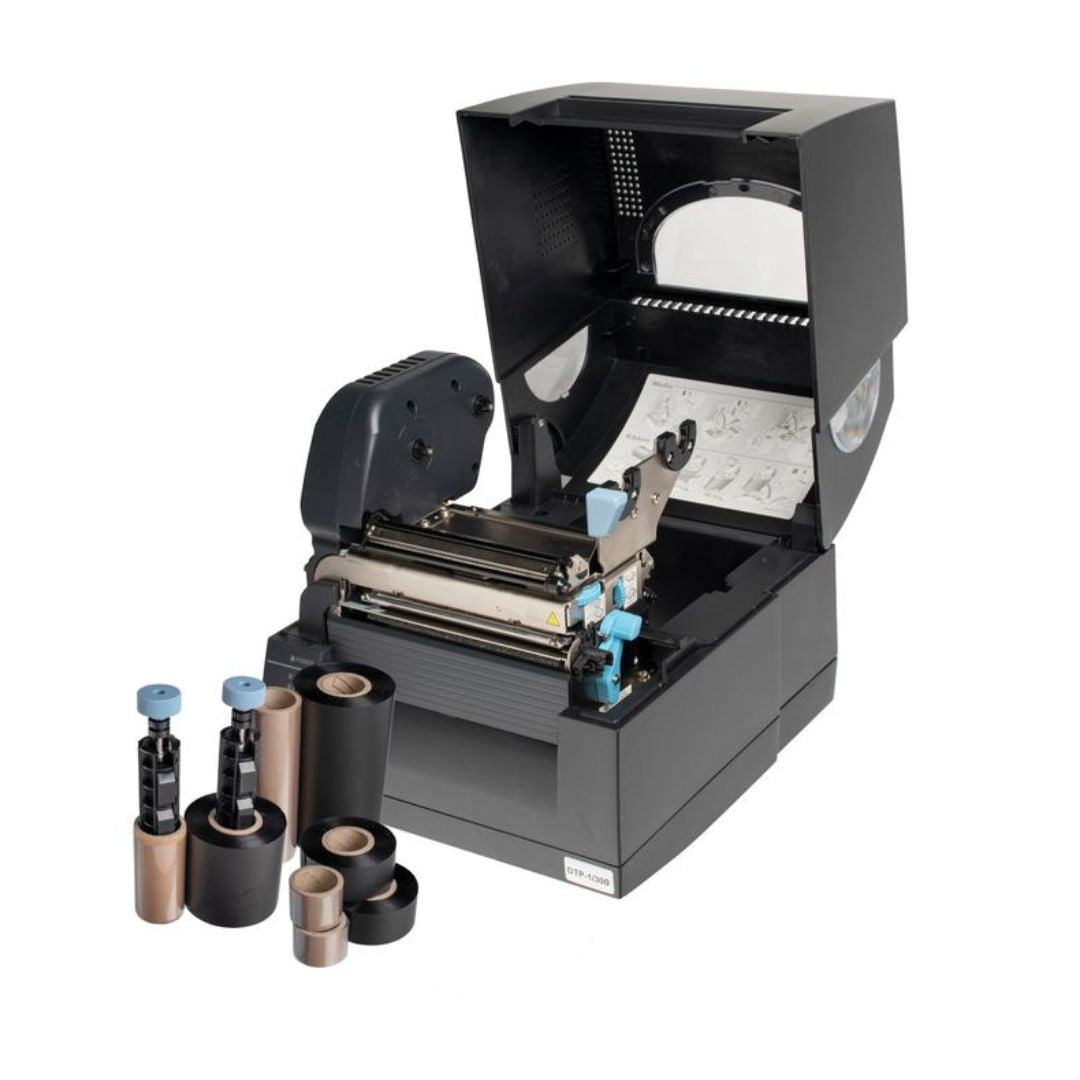
Having compliant label material is only part of the solution. The printing system must produce durable, legible text that withstands the same environmental conditions as the label itself. Fox-in-a-Box® is an all-in-one thermal printing system designed specifically for industrial cable labelling, including LSZH applications.
The system operates on a "one software, one printer, one ribbon" principle. The Labacus Innovator® software handles label design with features including barcode generation, sequential numbering, and data import from spreadsheets. The same Fox-in-a-Box® printer and TSR3/300 thermal transfer ribbon work across the entire range of Silver Fox® thermal labels, whether LSZH tie-ons, heatshrink, or standard PVC labels.
Software Features for Efficient Cable Labelling
Labacus Innovator® includes templates for common label formats and allows custom designs for specific requirements. Engineers can import cable schedules directly, generate barcodes or QR codes for asset tracking, and print batch runs efficiently. The software is available in Basic, Advanced, and Professional tiers to match different project requirements.
For data centre applications, see our detailed guide on how to label ethernet cables, network cables, and data centres.
7. FAQ
Common Questions About LSZH Cable Labels
How do I label wires and cables in LSZH environments?
Start by selecting cable labels that are certified to the specific LSZH standard required for your project, such as EN 45545-2 for rail or LUL 1-085 for London Underground work. Use a thermal transfer printing system with appropriate ribbons to ensure print durability. Apply labels according to your project's labelling schedule, positioning them for visibility during maintenance while ensuring secure attachment with cable ties or integrated tie features.
Can I use standard wire markers in LSZH-required areas?
No. Standard PVC-based wire markers are not LSZH compliant and will compromise the fire safety rating of the entire installation. Using non-compliant cable tags in areas where LSZH is mandated can result in failed inspections, project delays, and potential liability issues. Always verify label compliance before installation.
What is the difference between LSZH and LSOH cable labels?
These terms are essentially interchangeable. LSZH (Low Smoke Zero Halogen) and LSOH (Low Smoke Zero Halogen) refer to the same material properties. Some regions or industries prefer one term over the other, but both describe materials that produce minimal smoke and contain no halogen elements.
Are LSZH labels more expensive than standard labels?
LSZH labels typically cost more than standard PVC labels due to the specialised material formulation and testing requirements. However, the cost difference is minor compared to the overall project budget, and using non-compliant labels would require complete replacement if identified during inspection. The additional cost provides peace of mind and ensures project compliance.
How long do LSZH cable labels last outdoors?
This depends on the specific product and environmental conditions. Fox-Flo® labels have been tested for 8,000 hours of accelerated UV exposure, which corresponds to approximately 12-15 years in a Northern European climate. Products from other manufacturers may have different performance characteristics, so always check the UV stability rating in the product specifications.
Next Steps
Need LSZH Compliant Cable Labels?
Get Expert Advice on LSZH Labelling
Our technical team can help you select the right cable labels for your LSZH-required project. We provide test certificates, datasheets, and guidance on meeting specific standards including EN 45545-2, LUL 1-085, and IMO FTPC requirements.
Contact us at [email protected] or call +44 (0) 1707 37 37 27 for technical support and product recommendations.
References
BSI (2020) BS EN 45545-2:2020+A1:2023 Railway applications. Fire protection on railway vehicles. Requirements for fire behaviour of materials and components. London: British Standards Institution.
Transport for London (2019) LUL 1-085 Fire Safety Performance of Materials. London: Transport for London.
International Maritime Organization (2010) International Code for Application of Fire Test Procedures (FTP Code). London: IMO Publishing.
Blog post published 04/03/2024 & updated 29/01/2026