
Asset Labelling
Choosing the Right Asset Labelling Technology for Industrial Environments
A practical guide to selecting between QR codes, DataMatrix, barcodes, and printed labels for cable and equipment identification in data centres, telecoms, and industrial settings.
Effective asset management relies on clear, durable identification that remains readable throughout the equipment's lifespan. Whether you're labelling cables in a data centre, tracking equipment across multiple sites, or managing assets in harsh industrial environments, the technology you choose for your labels directly impacts operational efficiency and long-term maintenance costs.
This guide explores the practical considerations for choosing between different labelling technologies, with a focus on QR codes, DataMatrix codes, barcodes, and printed identification for cable and equipment labelling in UK industrial settings.
1. Options
Understanding Asset Labelling Technologies
Modern asset labelling offers several technology options, each with distinct advantages depending on your application. Understanding the differences helps you select the most appropriate solution for your specific environment and requirements.
QR Codes
Two-dimensional codes that can store significant data, including URLs, serial numbers, and maintenance information. Scannable with standard smartphones and dedicated scanners, with built-in error correction that maintains readability even if partially damaged.
DataMatrix Codes
Compact two-dimensional codes ideal for small labels. Commonly used in electronics and industrial applications where space is limited. Like QR codes, they include error correction and can be read from any angle.
Linear Barcodes
Traditional one-dimensional barcodes, including Code 128 and Code 39. Widely supported by scanning equipment and well-suited for asset tracking systems. Limited data capacity compared to 2D codes.
Printed Text
Human-readable identification that requires no scanning equipment. Provides immediate visual reference and serves as a backup when electronic scanning is unavailable or impractical.
The most effective asset labels often combine multiple technologies. For example, a label might include a QR code linking to detailed asset records, a barcode for compatibility with existing inventory systems, and printed text for quick visual identification.
2. Considerations
Practical Factors for Technology Selection
When selecting an asset labelling approach, several practical factors should guide your decision. The best choice depends on your specific operational environment and requirements.
Network and Connectivity
Consider what happens when network connectivity is unavailable. Asset management systems that store all data centrally require network access to retrieve asset details. QR and DataMatrix codes can store essential information directly on the label, allowing offline access to critical data. Printed text provides a fail-safe backup, enabling technicians to identify assets visually without any electronic systems.
Security and Access Restrictions
Many secure facilities, including data centres and government installations, have policies restricting certain electronic devices. Standard smartphones and dedicated barcode scanners are typically permitted where more specialised equipment may not be. QR and DataMatrix codes can be read with widely-available devices, offering flexibility across different security environments.
Dense Installation Environments
In environments with many cables or equipment items close together, such as network racks or control panels, quick visual identification becomes essential. Labels with printed text allow engineers to identify specific cables at a glance. Combining printed identification with scannable codes provides the best of both approaches: rapid visual reference with the option for detailed data retrieval when needed.
Key Questions for Technology Selection
- Will technicians always have network access when checking assets?
- Are there security restrictions on scanning equipment at your sites?
- How quickly do engineers need to identify individual cables?
- What information must be accessible without electronic systems?
3. Durability
Label Durability for Long-Term Asset Management
Whatever technology you choose, the label itself must remain readable for the asset's entire service life. A scannable code or printed text is only useful if the label material and print withstand the operating environment.
Environmental Testing
Industrial labels should be independently tested for the conditions they'll face. Key considerations include UV exposure for outdoor installations, temperature extremes, chemical and oil resistance, and abrasion from handling or cable movement.
For example, Fox-Flo® labels from Silver Fox® have been tested to 8,000 hours of accelerated UV exposure, equivalent to approximately 12-15 years of outdoor stability in Northern European conditions. This level of testing provides confidence that both the printed text and any barcodes or QR codes will remain readable throughout the asset's service life.
UV Stability
Essential for outdoor installations. Look for labels with documented accelerated UV testing hours.
Temperature Range
Consider both operating and storage temperatures. Labels may face extremes during installation and service.
Chemical Resistance
Industrial environments may expose labels to oils, solvents, and cleaning chemicals.
Print Quality and Permanence
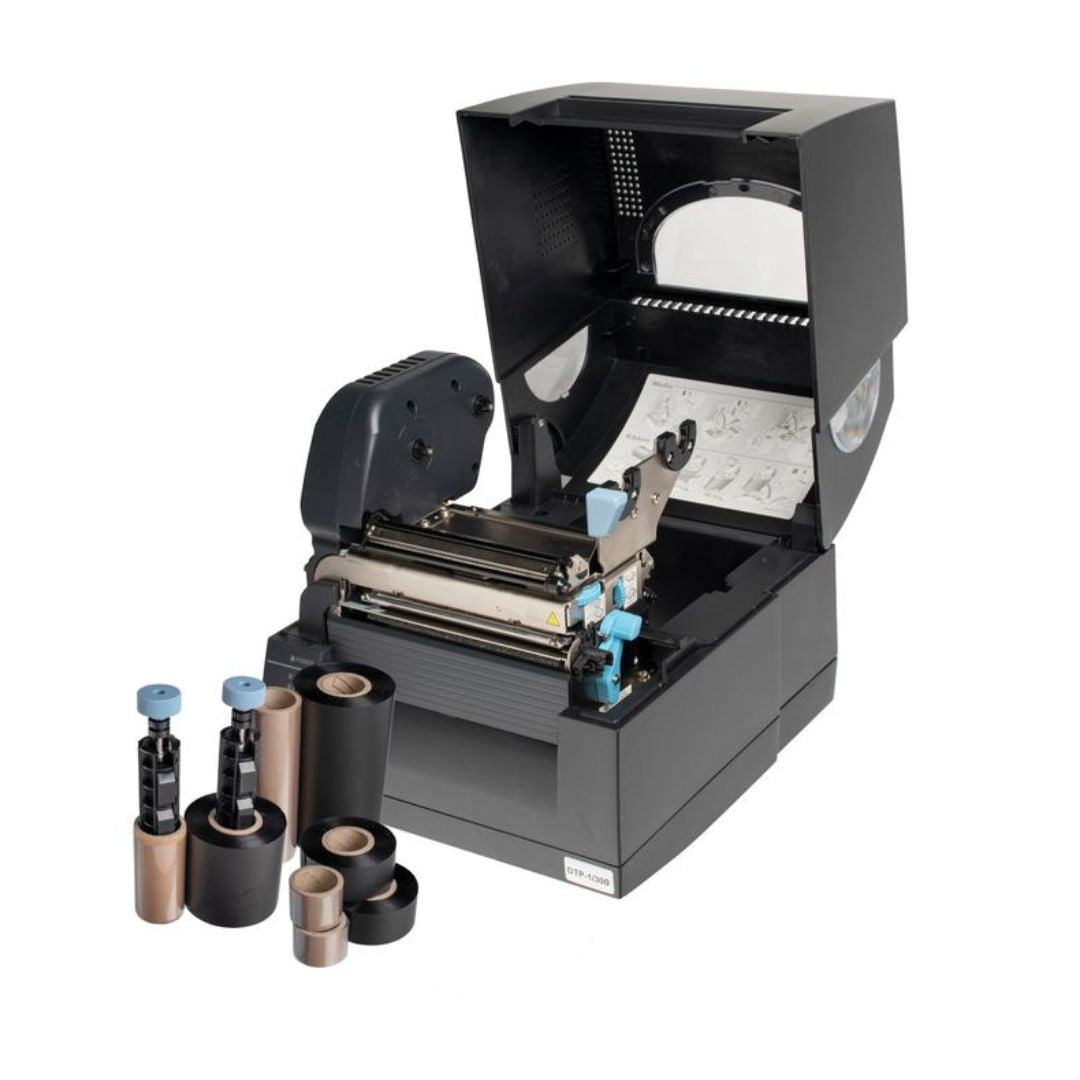
The printing method and ribbon quality directly affect how long the label remains readable. Thermal transfer printing with high-quality ribbons produces durable prints that resist fading, smudging, and abrasion. The Fox-in-a-Box® system from Silver Fox® uses industrial-grade thermal transfer technology specifically designed for cable and asset labelling, ensuring that both text and codes remain scannable for years.
4. Implementation
Implementing Effective Asset Labelling
A successful asset labelling system combines appropriate technology with practical label design and efficient production workflows. Here's how to implement an effective solution.
-
1
Define Your Information Requirements
Determine what data each label needs to contain: asset numbers, installation dates, maintenance codes, or links to digital records. This determines whether you need QR codes, DataMatrix, barcodes, or a combination.
-
2
Select Label Materials
Match label materials to your environment. Indoor equipment may use standard polyester labels, while outdoor or harsh environments require UV-stable, LSZH materials. For asset labels, consider Prolab® Raised Profile or Prolab® Low Profile labels depending on your surface and visibility requirements.
-
3
Design Label Layouts
Include both scannable codes and human-readable text. The Labacus Innovator® software allows you to design labels with QR codes, DataMatrix, barcodes, and custom text layouts, with templates specifically designed for asset labelling applications.
-
4
Establish Production Workflow
Set up efficient label printing, either on-site for flexibility or via a pre-print service for large projects. Silver Fox® offers both options, with the Fox-in-a-Box® system supporting on-demand printing and pre-print services available for high-volume requirements.
5. Applications
Asset Labelling by Application
Different environments have specific requirements for asset labelling. Here's guidance for common industrial applications.
Data Centres and Network Infrastructure
Data centre environments require rapid identification of cables and equipment during maintenance and troubleshooting. Labels should combine clear printed identification with QR codes linking to asset management systems. For patch panels, Silver Fox® offers Patch Panel Labels designed specifically for high-density identification. As covered in our guide to labelling Ethernet cables and data centres, consistent labelling practices are essential for efficient operations.
Electrical and Control Panels
Panel labelling requires durable identification that remains readable in potentially warm, confined spaces. Prolab® Equipment Labels are laser-printable and tested to 85°C for 1,000 hours, making them suitable for panel environments. Include QR codes linking to circuit documentation for quick access during maintenance.
Outdoor and Harsh Environments
Outdoor installations and harsh industrial environments demand labels with proven UV stability and chemical resistance. Fox-Flo® LSZH labels are specifically designed for these conditions, with independent testing confirming long-term outdoor durability. The combination of durable materials and thermal transfer printing ensures both text and barcodes remain readable.
Rail and Safety-Critical Applications
Rail and other safety-critical environments often require Low Smoke Zero Halogen (LSZH) materials and specific approvals. Fox-Flo® labels comply with LUL1-085 for London Underground installations and meet stringent fire safety requirements. For more on material requirements, see our overview of cable labelling best practices.
Asset Label Selection Checklist
- Indoor or outdoor installation environment
- Temperature range during operation and storage
- Chemical exposure (oils, solvents, cleaning agents)
- LSZH requirements for fire safety
- Compliance approvals needed (LUL, EN 45545, etc.)
- Network availability for asset management access
- Scanning equipment permitted on site
6. FAQs
Common Questions About Asset Labelling
How do asset tags work with QR codes?
QR codes on asset tags can store data directly (such as asset numbers and installation dates) or link to external databases containing detailed asset records. When scanned with a smartphone or dedicated scanner, the code either displays the stored information or opens the linked record. The built-in error correction means codes remain readable even if partially damaged or dirty.
How to label assets effectively?
Effective asset labelling combines scannable codes with human-readable text, uses materials matched to the operating environment, and follows consistent placement conventions. Labels should include enough information for immediate identification while linking to more detailed records when needed. Use label design software like Labacus Innovator® to create standardised layouts across your asset portfolio.
What is an asset tag on equipment?
An asset tag is a durable label affixed to equipment for identification and tracking purposes. Asset tags typically display a unique identifier, barcode or QR code, and key information such as the asset owner or installation date. They enable inventory management, maintenance tracking, and audit compliance by providing a consistent way to identify and record information about each piece of equipment.
How to asset tag equipment for best results?
For best results, select label materials appropriate for the equipment's environment, place labels in visible locations that won't be obscured or damaged during normal operation, and use high-quality printing that resists fading. Design labels with both scannable codes and printed text so identification remains possible even without scanning equipment. Establish consistent placement and design standards across all assets.
Next Steps
Ready to Improve Your Asset Labelling?
Discuss Your Asset Labelling Requirements
Silver Fox® provides complete asset labelling solutions, from label design and materials to printing systems and software. Our team can help you select the right approach for your specific environment and requirements, whether that's QR codes, barcodes, or a combination of technologies.
Contact our expert team at [email protected] or call +44 (0) 1707 37 37 27.