
Compliance & Standards
How to Label Pipes According to ISO Standards
Proper pipe labelling protects workers, aids emergency response, and ensures regulatory compliance. This guide covers the key requirements of ISO 20560 and BS 1710, plus practical solutions for achieving compliant pipe marking in industrial environments.
In any industrial facility, pipes transport substances that can range from harmless to highly hazardous. Without clear identification, workers risk exposure to dangerous chemicals, incorrect maintenance procedures, and delayed emergency response. Effective pipe labelling eliminates ambiguity, enabling personnel to recognise pipe contents at a glance and respond appropriately.
International standards such as ISO 20560 and national standards like BS 1710 provide frameworks for consistent, universally understood pipe marking. These standards specify everything from colour coding to label placement, ensuring that whether a worker is in Aberdeen or Abu Dhabi, they can quickly identify what flows through each pipe.
1. Safety First
Why Pipe Labelling Standards Matter
The growing mobility of workers across international facilities has created a pressing need for standardised pipe identification. A contractor working on an offshore platform in the North Sea may next find themselves in a refinery in the Middle East. Without standardised labelling, each facility presents a learning curve that wastes time and introduces safety risks.
ISO 20560 was developed specifically to address this challenge. According to the International Organization for Standardization, the standard exists to convey information in a harmonised manner to an increasingly mobile workforce. By using globally accepted colour codes and hazard symbols, the standard reduces training requirements and helps prevent accidents caused by misidentification.
Worker Safety
Clear identification prevents exposure to hazardous substances and enables appropriate protective measures during maintenance.
Emergency Response
First responders can quickly assess hazards and take appropriate action when pipe contents are clearly marked.
Operational Efficiency
Standardised labelling reduces training time for new personnel and contractors working across multiple sites.
Regulatory Compliance
Meeting ISO and BS standards demonstrates due diligence and helps satisfy health and safety requirements.
2. International Standard
Understanding ISO 20560 Pipe Marking
ISO 20560 is the international standard that describes safety information for above-ground piping systems and tanks. First published in 2020, it provides a uniform approach to pipe marking that can be applied globally, replacing the patchwork of national standards that previously existed.
The standard consists of two parts: ISO 20560-1 covers piping systems, while ISO 20560-2 addresses tanks. Together, they create a comprehensive framework for identifying hazardous contents throughout industrial facilities.
The Four Essential Elements
A correct ISO 20560 pipe marker consists of four key components that work together to communicate essential safety information:
-
1
Basic Identification Colour
The background colour indicates the general category of substance in the pipe. Colours are specified precisely using standardised colour references to ensure consistency across manufacturers.
-
2
Content Name
The substance name must be displayed clearly, either as the full name, its chemical formula, or using approved abbreviations. Sans serif fonts in contrasting colours ensure legibility.
-
3
Flow Direction Arrows
Arrows indicate the direction of flow, helping personnel understand the system layout and identify potential sources of hazards during leaks or maintenance.
-
4
Warning Symbols
GHS/CLP pictograms and ISO 7010 hazard symbols appear on a yellow safety colour background, providing visual warnings about specific hazards associated with the contents.
Label Sizing Requirements
ISO 20560 specifies three standard sizes for pipe markers, determined by pipe diameter:
3. British Standard
BS 1710 Pipe Identification in the UK
BS 1710 is the British Standard for pipe identification that has been widely used in the UK since 1984. While ISO 20560 provides an international framework, BS 1710 remains relevant for many UK installations, particularly in building services and water systems.
The standard specifies basic identification colours that indicate the general type of substance in the pipe. These colours are defined using BS 4800 colour references to ensure accuracy. As our guide to BS 1710 compliance explains, the standard requires colour bands to be placed at specified locations including both sides of valves, wall penetrations, and at regular intervals along pipe runs.
Basic Identification Colours
BS 1710 assigns specific colours to different categories of pipe contents:
- Green: Water of any type, including potable, process, and fire-fighting water
- Silver-grey: Steam of any pressure or temperature
- Brown: Mineral, vegetable, and animal oils
- Yellow ochre: Gases in either liquid or gaseous form
- Violet: Acids and alkalis
- Light blue: Air, including compressed air and vacuum lines
- Orange: Electrical conduits and ducts
- Red: Fire-fighting services (used as a safety colour)
Key Placement Requirements
- Both sides of valves, service appliances, and wall penetrations
- At junctions and branch points
- At regular intervals along pipe runs (typically every 3-6 metres)
- Where pipes enter or exit buildings or compartments
4. Practical Solutions
Pipe Labelling Products for Compliance
Achieving compliance with pipe labelling standards requires products that can withstand demanding industrial environments while maintaining legibility over time. Labels may be exposed to extreme temperatures, chemicals, UV radiation, and physical abrasion, making material selection critical.
Silver Fox® offers a range of pipe and valve labelling solutions designed to meet both ISO 20560 and BS 1710 requirements. All products are manufactured in the UK, enabling fast turnaround times and the flexibility to meet specific project requirements.
External Grade Pipe ID Tape
Endurance® External Grade Pipe Labels are engineered for the most demanding environments. Tested for 6,500 hours of simulated UV ageing along with salt mist spray testing, these labels are typically used in the oil and gas industry to identify process pipes both onshore and offshore. The labels feature a specially designed release liner for quick and easy application.
Internal Grade Pipe ID Tape
For general commercial applications, Endurance® Internal Grade Pipe Labels provide a durable solution made from self-adhesive PVC. Colours and markings are available to match BS 1710 (BS 4800 colours), ISO 14726, and ASME/ANSI A13.1 standards. Custom RAL or Pantone colours can also be matched to meet specific requirements.
Durability
Labels tested for UV resistance, chemical exposure, and extreme temperatures to ensure long-term performance.
Custom Colours
Match RAL, Pantone, or standard colour specifications with custom service messages and arrows as required.
UK Manufactured
In-house production enables fast turnaround times and quality control throughout the manufacturing process.
Valve Tags for Complete Identification
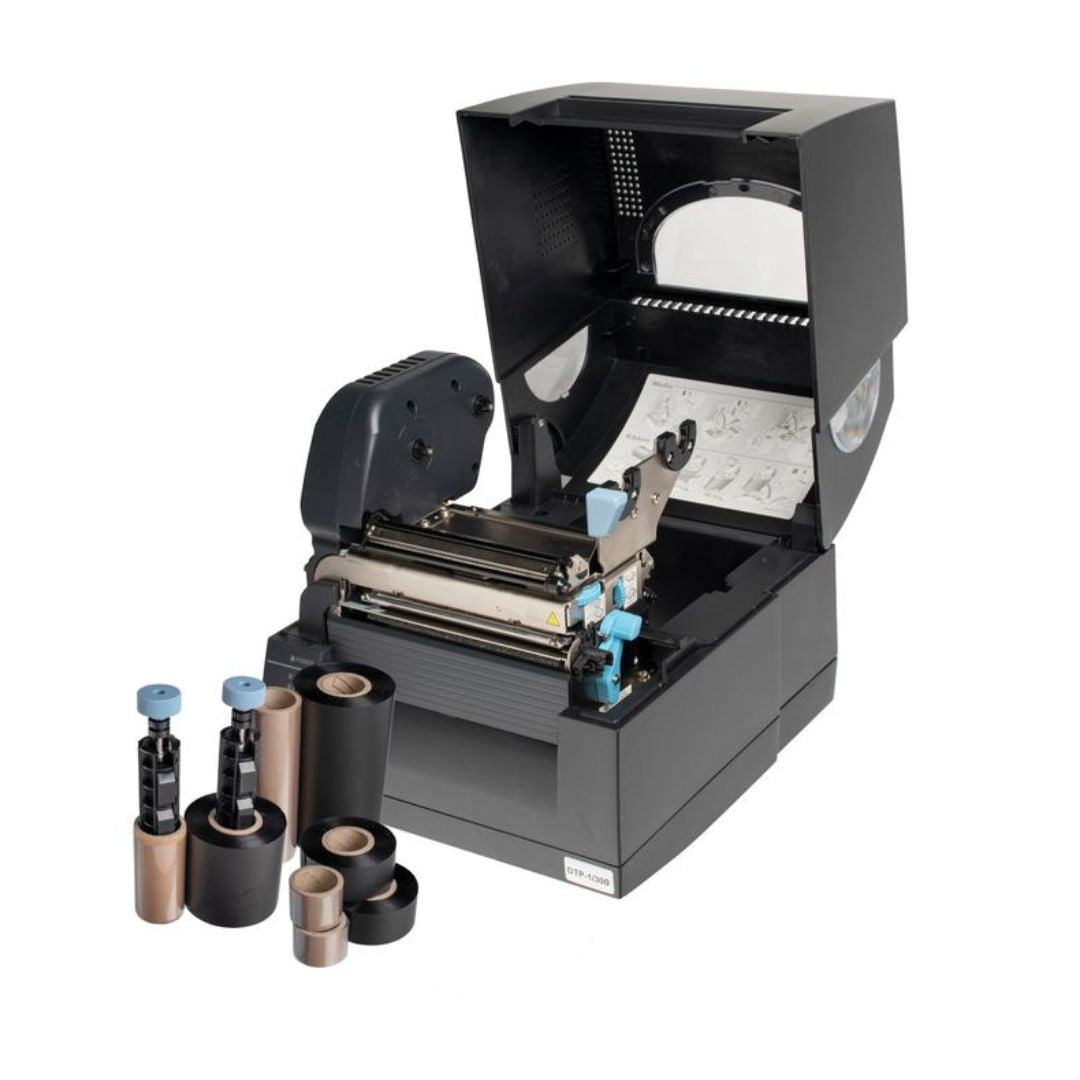
Proper pipe identification extends to valves, which require their own tagging for maintenance and operational purposes. Endurance® PVC Valve Tags can be printed on-site using the Fox-in-a-Box® thermal printer, enabling rapid identification of valves, pipelines, and equipment. For applications requiring maximum durability, Endurance® Metal Valve Tags in brass, stainless steel, or aluminium provide permanent identification that resists chemicals, oils, and harsh environments.
5. Bespoke Production
Custom Pipe Labelling to Your Specifications
Colour-coded pipe identification tape that meets ISO 20560 and BS 1710 requirements is produced bespoke in our factory in Hertfordshire, UK. This ensures precise colour matching to BS 4800, RAL, or Pantone specifications, along with accurate printing of content names, flow direction arrows, and any additional process information your project requires.
Our in-house manufacturing capability means we can produce pipe markers to your exact requirements, whether you need standard colours from the BS 1710 specification or custom colours to match existing site systems. Service messages, arrows, and supplementary information are all incorporated during production.
What We Can Customise
- Correct basic identification colour matched to BS 4800, RAL, or Pantone
- Content name and any abbreviations you require
- Flow direction arrows in your preferred style
- Service messages and supplementary information
- Size appropriate for your pipe diameters
- Material grade for internal or external applications
Fast Turnaround from UK Production
Because all Endurance® Pipe ID Tape is manufactured in-house at our Hertfordshire facility, we can offer fast turnaround times from order to delivery. This UK-based production also enables us to respond quickly to changes in specifications or additional requirements as your project develops. Labels are produced to your exact requirements and delivered to UK or international sites, freeing up engineering resources and ensuring consistent quality across all pipe markers.
On-Site Valve Tagging
While pipe identification tape is factory-produced, valve tags can be printed on-site using the Fox-in-a-Box® thermal printer. Endurance® PVC Valve Tags are designed for rapid printing with the same printer, ribbon, and software used for cable labels, enabling engineers to produce valve identification as needed during installation and commissioning.
6. Best Practices
Tips for Effective Pipe Labelling
Achieving compliance with pipe labelling standards is only valuable if the labels remain effective over time. Proper installation, regular maintenance, and staff training all contribute to a successful pipe identification system.
Strategic Placement
Labels should be positioned where they will be visible during normal operations and maintenance activities. This includes placing markers at critical points such as valves, branch connections, wall penetrations, and at regular intervals along pipe runs. Consider viewing angles and ensure labels are not obscured by other equipment or structural elements.
Surface Preparation
For adhesive-backed labels, clean pipe surfaces thoroughly before application. Remove dust, grease, and loose coatings to ensure proper adhesion. Many pipe labelling failures can be traced back to inadequate surface preparation rather than label quality.
Regular Inspection
Include pipe markers in routine maintenance inspections. Check for fading, peeling, or damage that could compromise legibility. Replace labels promptly when they show signs of deterioration, before they become unreadable.
Staff Training
Ensure all personnel working in areas with labelled pipes understand the colour coding system and hazard symbols in use. This is particularly important for contractors and new employees who may not be familiar with the specific standards applied at your facility. The standardised nature of ISO 20560 helps reduce training requirements, but verification of understanding remains important.
7. Common Questions
Pipe Labelling FAQs
What is the difference between ISO 20560 and BS 1710?
ISO 20560 is an international standard designed for global use, particularly in industrial settings with hazardous substances. It emphasises GHS/CLP hazard symbols and a two-colour zone system. BS 1710 is a British Standard more commonly used in building services and water systems in the UK, using a different colour coding scheme based on BS 4800 colours. Both can be applicable depending on the specific application and industry requirements.
How often should pipe labels be replaced?
Label lifespan depends on the environment and material quality. In harsh outdoor environments, even high-quality labels may need replacement every 5-10 years. Indoor labels in controlled environments can last significantly longer. Regular inspection should identify labels requiring replacement before they become illegible. As discussed in our guide to labelling best practices, durability considerations should inform material selection from the outset.
Can I create pipe labels on-site?
Colour-coded pipe identification tape that meets ISO 20560 and BS 1710 standards requires precise colour matching and multi-colour printing, so this is produced bespoke at our UK factory to your specifications. However, valve tags can be printed on-site using the Fox-in-a-Box® system, giving you flexibility for valve identification during installation and commissioning.
What information must appear on a pipe label?
At minimum, a compliant pipe label should include the content name and flow direction. For hazardous substances, appropriate warning symbols (GHS pictograms or ISO 7010 symbols) are also required. Additional process information such as temperature, pressure, or line identification numbers may be included where beneficial.
Next Steps
Need Help with Pipe Labelling?
Get Expert Advice on Pipe Identification
Whether you need pre-printed pipe markers to specific colour standards, on-site labelling equipment, or custom solutions for demanding environments, our team can help you find the right approach for your project.
With over 45 years of experience in industrial labelling and in-house UK manufacturing, Silver Fox® delivers reliable solutions with fast turnaround times and lifetime support.
Contact our team at [email protected] or call +44 (0) 1707 37 37 27.
References
International Organization for Standardization (2020) ISO 20560-1:2020 Safety information for the content of piping systems and tanks - Part 1: Piping systems. Geneva: ISO.
British Standards Institution (2014) BS 1710:2014 Specification for identification of pipelines and services. London: BSI.
Water Regulations UK (2021) Pipe Identification Information Note. Available at: https://www.waterregsuk.co.uk/ (Accessed: January 2026).
Blog post published 09/12/2024 & updated 29/01/2026