
Industry Guide
Labelling Aerospace Wiring Harnesses: Standards, Materials and Best Practice
Wiring harnesses carry critical signals throughout every aircraft. Here is what engineers need to know about identification requirements, conductor types, and choosing labels that meet military and aviation standards.
1. Terminology
What Is a Wiring Harness?
In the aerospace and aviation industries, the terms wiring harness and wiring loom describe the same fundamental product: an assembly of electrical cables and wires that transmit signals or electrical power throughout an aircraft. You may encounter it under several names, including wire harness, cable harness, cable assembly, wiring assembly, or electrical wiring harness assembly. "Wiring loom" is the more common term in a European context, while "wire harness" or "wiring harness" is more prevalent in North American usage.
The distinction between a wire and a cable matters here. A wire is a single, solid or stranded conductor covered by an insulating material. A cable is typically two or more conductors grouped within a common outer jacket - for example, a shielded, jacketed cable used where electromagnetic interference must be controlled. Both wires and cables are used to build a wiring harness.
Wire
A single conductor, solid or stranded, covered in insulating material. Must be stranded in aircraft applications to withstand in-flight flexing and vibration without fatigue failure.
Cable
Two or more conductors within a common jacket. Shielded jacketed cables are used where signal integrity or electromagnetic compatibility is required within the harness.
A finished wiring harness consists of conductor wires contained within insulated coverings, arranged as individual wires, twisted pairs, triplets, or other multi-conductor configurations, then bundled, routed, and secured for installation.
2. Construction
Conductors, Materials and Specifications
The two most widely used conductor materials in aircraft wiring are aluminium and copper, each offering a different balance of properties.
Aluminium is used extensively in aviation, particularly for power wiring, because its lower density makes it practical for long runs across an airframe. Its relatively large diameter for a given conductivity also reduces corona discharge - the unintended discharge of electricity from the wire surface - which matters at altitude.
Copper offers higher conductivity for a given cross-section, higher tensile strength, and is easily soldered, making it the preferred choice for signal wiring, avionics connections, and any application where compact routing is important.
Critically, conductor wire in aircraft applications should be stranded rather than solid. In-flight flexing and vibration would eventually cause solid conductors to crack and fail. Stranded construction distributes the mechanical stress across many individual filaments, dramatically extending service life. Commercial and military aircraft specify wire manufactured under MIL-W-22759, which covers fluoropolymer-insulated, multi-strand copper or copper alloy wire meeting both military and FAA requirements (U.S. Department of Defense, 2021).
In a modern aircraft, wiring harnesses serve engine controls, fuselage systems, landing gear, flight control surfaces, avionics, lighting, and many other functions. The total wiring in a large commercial aircraft can span several kilometres, making organised, legible, and durable identification essential from day one of assembly.
3. Identification
Why Harness Labelling Is Critical
Wiring harness identification serves three purposes: assembly traceability during build, safe maintenance and fault-finding in service, and regulatory compliance throughout the aircraft's life. A label that fails - whether it falls off, fades, or becomes illegible - introduces risk at each of those stages.
The environment inside an aircraft is demanding. Labels on wiring harnesses must resist:
- Vibration and flexing - harnesses flex during installation and in service, so label adhesion and substrate flexibility both matter.
- Fluid contamination - hydraulic fluid, fuel, de-icing fluids, and cleaning agents all contact wiring in various zones of the airframe.
- Temperature cycling - from ground-level heat to sub-zero temperatures at altitude, often within a single flight cycle.
- Abrasion - labels in high-traffic maintenance areas must survive repeated physical contact without the print wearing away.
Labels that cannot meet these conditions become a maintenance liability. Illegible harness identification slows fault diagnosis, increases the risk of incorrect reconnection, and can cause delays to return-to-service approvals.
Harness Label Requirements at a Glance
- Flexible enough to accommodate harness curvature without delaminating
- Resistant to fuels, hydraulic fluids, and cleaning agents
- Legible across the full operating temperature range
- Secure attachment that does not damage wire insulation or shielding
- Durable print that does not fade, smear, or abrade over the aircraft's service life
4. Labelling Solutions
Silver Fox® Labels for Aerospace Wiring
Silver Fox® has a range of labelling solutions designed for harness and wiring applications, which have been successfully tested to MIL-STD-202 Method 215 - the military standard covering test methods for electronic and electrical component parts. This means the labels have been evaluated under the environmental and electrical stress conditions that matter in aerospace and defence applications.
For wiring harness identification, the Fox-Flo® UV-stable LSZH tie-on cable label is a practical solution. Its tie-on format means it can be attached to bundles of varying diameter without adhesive bonding to the outer surface of the harness, making it suitable for use on jacketed, braided, or wrapped bundles where adhesive contact may not be appropriate. The LSZH (Low Smoke Zero Halogen) material meets fire performance requirements commonly specified in aerospace and public-space applications, generating minimal smoke and no halogenic gases if exposed to fire.
Where individual conductors within a harness require identification, heat-shrink label sleeves offer a secure and space-efficient solution. Applied over the conductor before termination, a heat-shrink label locks in place on contraction, creating a label that cannot shift along the wire in service. Silver Fox® Legend™ Heatshrink labels are produced using the Fox-in-a-Box® thermal transfer printer, allowing harness builders to print exactly what they need, when they need it, on the bench. (Please verify the Legend™ Heatshrink product URL from silverfox.co.uk before publishing.)
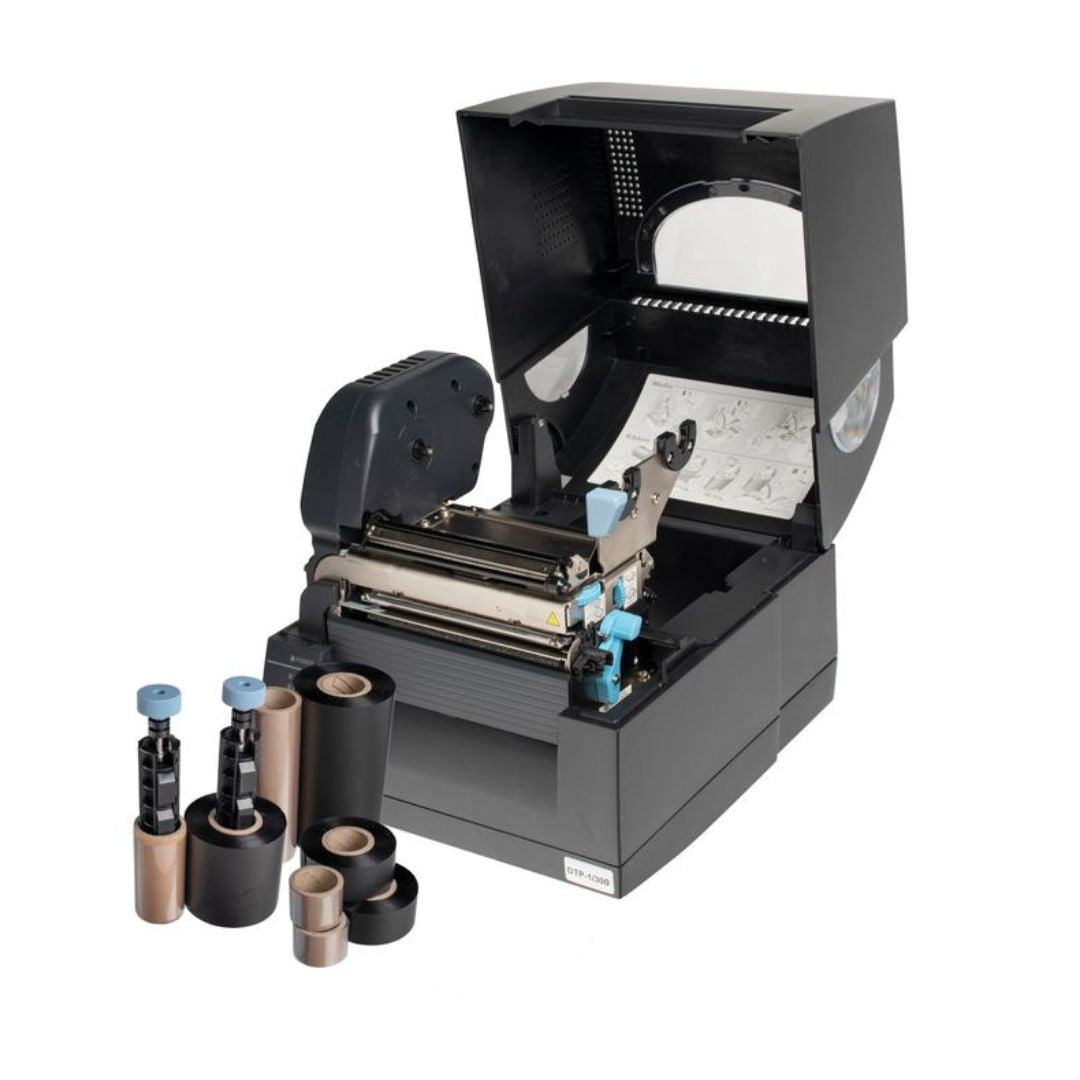
All Silver Fox® labelling products in this application can be printed using the Fox-in-a-Box® printer, a compact thermal transfer printer designed for on-site and workshop use. With access to over 200 label variations from a single printer, harness shops and MRO facilities can standardise on one platform and one consumables supply without maintaining multiple printers for different label formats.
Fox-Flo®
UV-stable, LSZH tie-on labels suited to bundle identification across varying harness diameters.
Legend™ Heatshrink
Heat-shrink label sleeves for individual wire identification - locked in place on contraction, resistant to migration in service.
Fox-in-a-Box®
One thermal transfer printer for the full Silver Fox® label range. Suitable for harness shop, MRO, and on-aircraft use.
5. FAQ
Common Questions
What is the difference between a wiring harness and a wiring loom?
The terms refer to the same product: a bundled assembly of electrical conductors routed and secured for installation. "Wiring loom" is the more common European term; "wiring harness" or "wire harness" is used more widely in North American contexts. Both describe an assembly that may include individual wires, twisted pairs, or shielded cables grouped together within conduit, wrap, or other protective covering.
Why must aircraft conductor wire be stranded rather than solid?
Aircraft structures flex in flight, and vibration is continuous throughout operation. A solid conductor would develop metal fatigue at bending points and eventually fail. Stranded wire distributes mechanical stress across many individual filaments, dramatically reducing fatigue failure risk. Commercial and military aircraft wire is manufactured to MIL-W-22759 specifically to address this, among other performance requirements.
What is MIL-STD-202 Method 215?
MIL-STD-202 is the US military standard covering test methods for electronic and electrical component parts, used widely in defence and aerospace qualification processes. Method 215 tests components for electromagnetic interference (RF) characteristics under defined conditions. Silver Fox® harness labelling products have been tested under this method, confirming their suitability for use in environments where EMI performance is a specification requirement.
Can adhesive cable labels be used on wiring harnesses?
Adhesive labels can be used where the outer surface of the harness permits secure bonding - for example, on a smooth outer sheath. For bundles with braided, textile, or corrugated outer coverings, or where adhesive contact is not appropriate for the substrate, tie-on label formats offer a reliable alternative. The correct format depends on the harness construction and the maintenance environment it will experience in service.
What does LSZH mean on a cable label?
LSZH stands for Low Smoke Zero Halogen. It describes a material formulation that, when exposed to fire, produces minimal smoke and does not release halogenic gases such as hydrogen chloride. In confined spaces - like aircraft cabins, military vehicles, and railway rolling stock - toxic gas release from burning materials can be more immediately dangerous than the fire itself. LSZH labelling materials are specified wherever this risk is a concern.
Next Steps
Speak to Our Team
Labels tested for the aerospace environment
Silver Fox® has supplied labelling solutions to aerospace and defence customers since 1979. Whether you are specifying labels for a new harness programme or reviewing identification on an existing platform, our team can advise on the right product for your application and environment.
Contact us at [email protected] or call +44 (0) 1707 37 37 27.
References
U.S. Department of Defense (2021) MIL-W-22759: Wire, Electrical, Fluoropolymer-Insulated, Copper or Copper Alloy. Available at: https://quicksearch.dla.mil (Accessed: March 2026).
U.S. Department of Defense (2015) MIL-STD-202: Test Methods for Electronic and Electrical Component Parts. Available at: https://quicksearch.dla.mil (Accessed: March 2026).