
Label Printing Guide
Thermal Transfer Ribbon: What It Is and Why It Matters for Industrial Labels
Understand how thermal transfer ribbons work, why they produce more durable prints than direct thermal, and how to select the right ribbon width and formulation for cable and equipment labelling.
When engineers think about cable labelling, the focus naturally falls on the label itself: what material it is made from, whether it will survive the environment, and how long it will remain legible. But there is another component that has just as much influence on label durability: the thermal transfer ribbon used to print it.
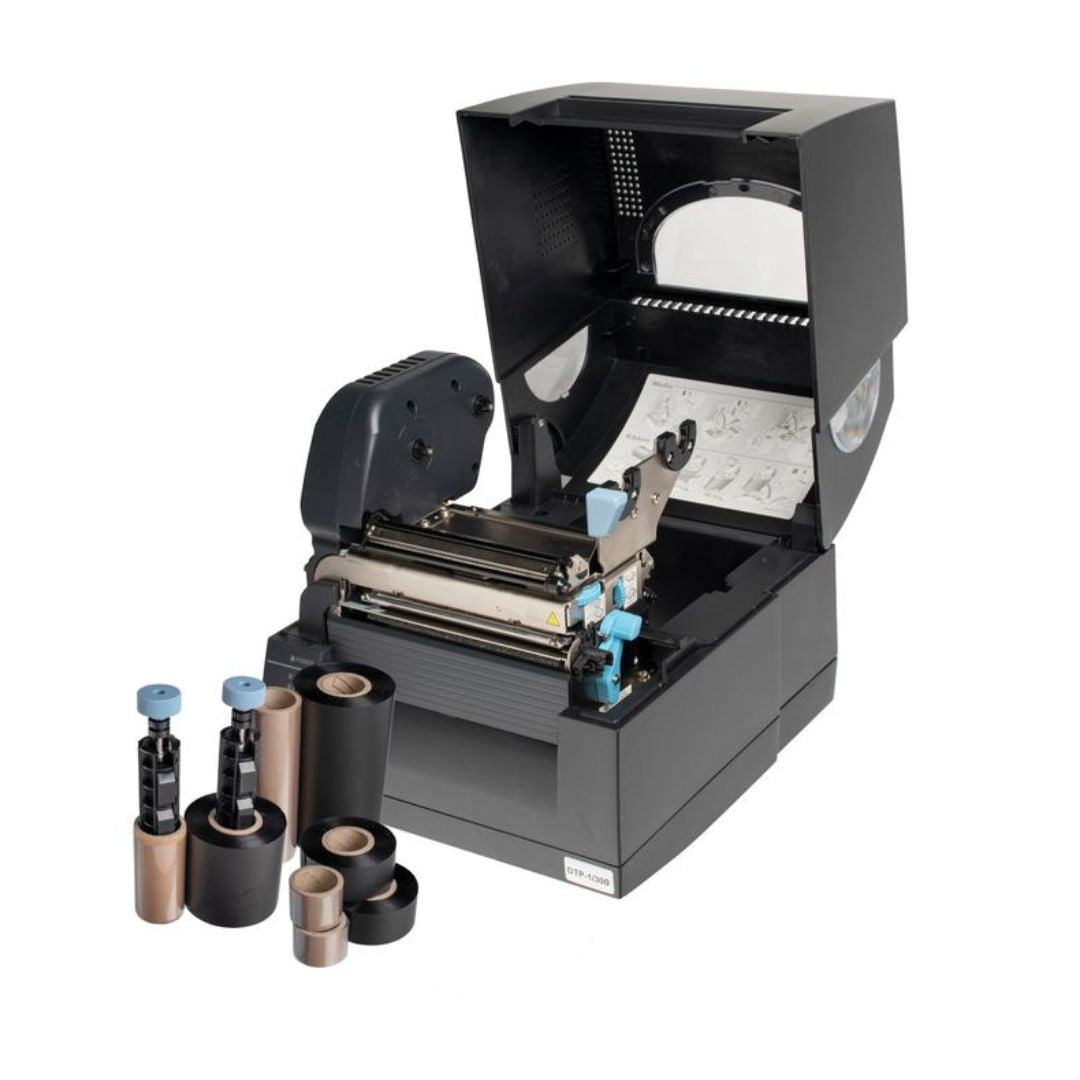
A thermal transfer ribbon is a consumable film coated with ink that transfers onto labels when heated by a printhead. Unlike direct thermal printing, which darkens heat-sensitive paper directly, thermal transfer printing creates a permanent image that resists fading, scratching, and chemical exposure. As we explored in our history of thermal printing, this technology has become the gold standard for industrial label printing precisely because of its superior durability.
1. The Basics
How does a thermal transfer ribbon work?
A thermal transfer printer uses a heated printhead containing hundreds of tiny elements that can be individually controlled. As the label and ribbon pass beneath the printhead, specific elements heat up according to the image being printed. This heat melts the ink coating on the ribbon, transferring it onto the label surface where it bonds permanently as it cools.
The process happens rapidly, with modern thermal transfer printers like the Fox-in-a-Box® capable of printing at speeds up to 100mm per second. Because the ink physically transfers from ribbon to label rather than being burned into heat-sensitive material, the resulting print is far more robust.
Thermal Transfer Printing
Heat melts ink from a ribbon onto the label. Creates durable prints resistant to UV, chemicals, and abrasion. Requires both ribbon and compatible label stock.
Direct Thermal Printing
Heat activates chemicals in special paper to darken it. No ribbon required, but prints fade over time and are sensitive to heat, light, and friction.
For industrial cable and equipment labelling, thermal transfer printing is strongly preferred because the labels need to remain legible for years or even decades in demanding environments. A direct thermal label might work for a shipping label with a lifespan of days, but it is entirely unsuitable for identifying a cable in a substation or offshore platform.
2. Construction
What is a thermal transfer ribbon made of?
A thermal transfer ribbon consists of multiple layers, each serving a specific purpose in the printing process:
- Base film: A thin polyester (PET) carrier, typically 3-6 microns thick, that provides structural stability during printing.
- Release layer: A coating between the base film and ink that allows the ink to separate cleanly during transfer.
- Ink layer: The printable coating containing wax, resin, or a combination of both, plus pigments for colour.
- Back coating: A protective layer on the outside of the ribbon that reduces static, prevents sticking, and protects the printhead from wear.
The composition of the ink layer determines the ribbon's performance characteristics. This is where the distinction between wax, wax-resin, and resin ribbons becomes important.
3. Types
Wax, wax-resin, or resin: which ribbon type do you need?
Thermal transfer ribbons fall into three main categories based on their ink formulation. Each offers different durability, print quality, and cost characteristics.
Wax Ribbons
Wax ribbons melt at lower temperatures and work well on uncoated paper substrates. They offer good print quality at the lowest cost but provide limited resistance to scratching, chemicals, and moisture. Typical applications include shipping labels, warehouse bin labels, and other short-term identification where the labels remain in controlled indoor environments.
Wax-Resin Ribbons
Wax-resin ribbons combine wax with resin to create a harder, more durable print. They work on a wider range of substrates including coated papers and some synthetics, and offer significantly better resistance to scratching, moisture, and moderate chemical exposure. This is the most versatile ribbon type and suits the majority of industrial labelling applications where labels will be handled frequently or exposed to variable conditions.
The Fox-in-a-Box® Thermal Transfer Ribbons use a wax-resin formulation specifically selected for industrial cable and equipment labelling. All Silver Fox® label testing is conducted with finished, printed labels using these exact ribbons, ensuring that both the label material and print withstand the same environmental challenges.
Resin Ribbons
Pure resin ribbons melt at higher temperatures and create the most durable prints. They are designed for synthetic label materials and can withstand extreme temperatures, aggressive chemicals, and outdoor UV exposure. However, they cost more than wax-resin ribbons and are typically reserved for specialised applications such as chemical drum labelling or medical device identification where extreme durability is essential.
Wax
Lowest cost. Paper substrates only. Limited durability. Best for short-term indoor labels like shipping and warehouse.
Wax-Resin
Balanced cost and performance. Works on papers and some synthetics. Good scratch and chemical resistance. Ideal for industrial labelling.
Resin
Highest durability and cost. Synthetic substrates. Extreme chemical, heat, and UV resistance. For specialised applications only.
4. Width Selection
Choosing the right ribbon width
Thermal transfer ribbons come in various widths, and selecting the appropriate width for your labels directly affects both cost efficiency and print quality. The ribbon should be at least as wide as your label, but using an excessively wide ribbon wastes material.
Fox-in-a-Box® Thermal Transfer Ribbons are available in three widths, all supplied at 300m length:
If you are printing labels that are 15mm wide, using a 25mm ribbon is more economical than a 110mm ribbon where most of the width goes unused. This approach to matching ribbon width to label size reflects Silver Fox®'s commitment to reducing waste, contributing to our carbon-negative credentials.
Ribbon yield examples
- A 300m ribbon yields approximately 3,000 labels at 90mm length (Fox-Flo® tie-on)
- A 300m ribbon yields approximately 16,000 labels at 15mm length (Legend™ tie-on)
- A 300m ribbon yields approximately 23,000 labels at 25mm length (Prolab® wrap-around)
5. Storage
Storing and handling thermal transfer ribbons
Proper storage ensures your thermal transfer ribbons perform consistently and deliver optimal print quality throughout their lifespan. Ribbons that have been stored incorrectly may produce inconsistent prints, cause printhead issues, or fail to transfer ink properly.
Recommended Storage Conditions
- Temperature: Store between 10°C and 25°C (50°F to 77°F). Avoid temperature extremes and rapid fluctuations.
- Humidity: Maintain relative humidity between 35% and 65% RH. High humidity can affect ink transfer; low humidity increases static.
- Light: Keep ribbons in dark conditions or in their original packaging. Prolonged light exposure can degrade the ink coating.
- Position: Store ribbon rolls horizontally to prevent the core from distorting under the weight of the ribbon.
When loading ribbons into the printer, allow them to acclimatise to room temperature if they have been stored in cooler conditions. Condensation on a cold ribbon can cause print defects or damage the printhead.
Shelf Life
Under proper storage conditions, thermal transfer ribbons typically remain usable for one to two years. However, for consistent results in demanding industrial applications, we recommend using ribbons within 12 months of purchase and following first-in, first-out stock rotation.
6. Quality
How ribbon choice affects print durability
The durability of a printed label depends on both the label material and the ribbon used to print it. Even the most robust label substrate will fail if the print itself fades, smudges, or rubs off. This is why Silver Fox® conducts all label testing with finished, printed labels using our standard thermal transfer ribbons.
When evaluating label performance in harsh environments, both components must withstand the same conditions. For example, Fox-Flo® tie-on labels are tested for UV stability, chemical resistance, and temperature extremes with prints made using Fox-in-a-Box® ribbons. The resulting performance data reflects real-world durability, not theoretical material properties.
The complete labelling system
- One software: Labacus Innovator® for design and data import
- One printer: Fox-in-a-Box® thermal transfer printer
- One ribbon: TSR3/300 wax-resin thermal transfer ribbon
- Tested labels: Over 200 label types tested as finished, printed products
This integrated approach eliminates the guesswork of matching components from different suppliers. When you use Fox-in-a-Box® ribbons with Silver Fox® labels, you can be confident that the combination has been tested and proven in demanding industrial environments including rail, offshore, marine, and data centre applications.
7. FAQ
Common questions about thermal transfer ribbons
Can I use any thermal transfer ribbon with Fox-in-a-Box®?
While the Fox-in-a-Box® printer will physically accept standard thermal transfer ribbons, we strongly recommend using the TSR3/300 ribbons specifically designed for the system. These ribbons are matched to the printer settings and label materials in our range, ensuring consistent print quality and durability. Using third-party ribbons may void warranty coverage and can result in suboptimal print quality.
Are coloured ribbons available?
Yes. In addition to standard black ribbons, Fox-in-a-Box® thermal transfer ribbons are available in red, blue, and green. Coloured ribbons enable colour-coded labelling systems and can improve label visibility in complex installations. Note that coloured ribbons may have different yield and durability characteristics compared to black.
How do I know when to change the ribbon?
Most thermal transfer printers, including Fox-in-a-Box®, include ribbon sensors that alert you when the ribbon is running low. Print quality degradation, such as fading or incomplete characters, can also indicate a ribbon approaching the end of its roll. For high-volume printing, monitor your ribbon consumption and maintain adequate stock to avoid production delays.
Why does ribbon width matter?
Ribbon width directly determines the maximum label width you can print. Using a ribbon narrower than your label will leave part of the label unprinted. Conversely, using an excessively wide ribbon wastes material, as unused ribbon area simply passes through the printer. Matching ribbon width to your most common label sizes optimises both cost and performance.
What is the difference between inside-wound and outside-wound ribbons?
This refers to whether the ink coating faces inward or outward on the ribbon roll. Different printers require different wind directions. Fox-in-a-Box® thermal transfer ribbons are supplied in the correct configuration for the printer, eliminating the need to check wind direction when ordering.
Next steps
Ready to optimise your label printing?
Understanding thermal transfer ribbons is one part of producing durable, professional cable and equipment labels. The ribbon works in conjunction with your printer, software, and label materials to create identification that lasts the lifetime of your installation.
With the Fox-in-a-Box® system, these components are designed to work together seamlessly. One software, one printer, one ribbon, over 200 label types, all backed by lifetime technical support from Silver Fox®.
Need help selecting the right consumables?
Our technical team can advise on ribbon selection, label materials, and printer configuration to ensure your labelling system delivers optimal results for your specific applications.
Contact our expert team at [email protected] or call +44 (0) 1707 37 37 27.