
Case Study - Rail & Mass Transit
How Gee Communications standardised SISS asset labelling across 250+ railway stations
Delivering consistent identification for more than 10,000 Station Information and Security System assets across a live UK railway network, using Fox-in-a-Box® and Labacus Innovator®.

Delivered by
Gee Communications
A specialist communications and infrastructure contractor based in South Wales, delivering critical labelling and asset identification programmes across the UK rail network.
At a glance
The programme in numbers
10,000+
SISS assets labelled
250+
Stations & depots covered
50
Asset types identified
1
Printer & software standard
Gee Communications delivered a large-scale asset verification and relabelling programme across one of the UK's major rail network operators. Station Information and Security Systems - CCTV, Public Address, communications cabinets, and the supporting power and data cabling - were brought onto a single labelling standard, station by station, using Silver Fox® Fox-in-a-Box® as the production platform.
1. Background
SISS verification across a live railway estate
Gee Communications was engaged to support asset verification and relabelling for Station Information and Security Systems across a major UK rail network, alongside numerous other rail projects covering new installs and renewals. A distributed delivery model across hundreds of live sites puts a premium on consistency - every station, regardless of where it sits on the network or which team installs it, needs to look and read the same way to maintenance engineers ten years later.
The scope covered equipment that the travelling public rely on every day, and that station operators depend on for safe, coordinated running of the network.
CCTV systems
Cameras and associated hardware across platforms, concourses, and equipment rooms.
Public Address systems
External speakers and internal control systems for passenger announcements.
Communications cabinets
Network equipment racks and associated rack-mounted hardware.
Power & data cabling
Supporting infrastructure interconnecting every part of the SISS estate.

The estate ranged from major transport hubs with dense, complex equipment rooms through to smaller regional and remote stations with limited access. At this scale, asset identification underpins maintenance and fault finding, safety and compliance, accurate asset registers, and clean project handover. Getting labelling right across a live, public-facing estate is not a cosmetic concern - it is a maintenance and operational reliability concern.
2. The challenge
Consistency and control across thousands of distributed assets
Delivering labelling across a large, live railway estate brought together several challenges that needed to be solved in parallel:
- Volume and scale. More than 10,000 individual assets requiring identification, with multiple engineering teams working concurrently across sites.
- Multi-site complexity. Wide variation in station size, layout, and environment - indoor equipment rooms, outdoor enclosures, and busy public areas all sharing the same asset register.
- Legacy inconsistency. Existing infrastructure was often poorly labelled, with no unified standard carried through from previous installations. Handwritten labels and mixed formats were common.
- Handover and compliance requirements. Strict expectations around label clarity, durability, and standardisation - labels needed to read consistently at the point of handover and continue to perform through years of service.
A purely reactive, site-by-site approach would have multiplied inconsistency. A centralised, production-line approach would have removed the flexibility needed for late-stage scope changes. The right answer sat between the two.
3. The solution
Standardising with a desktop labelling system
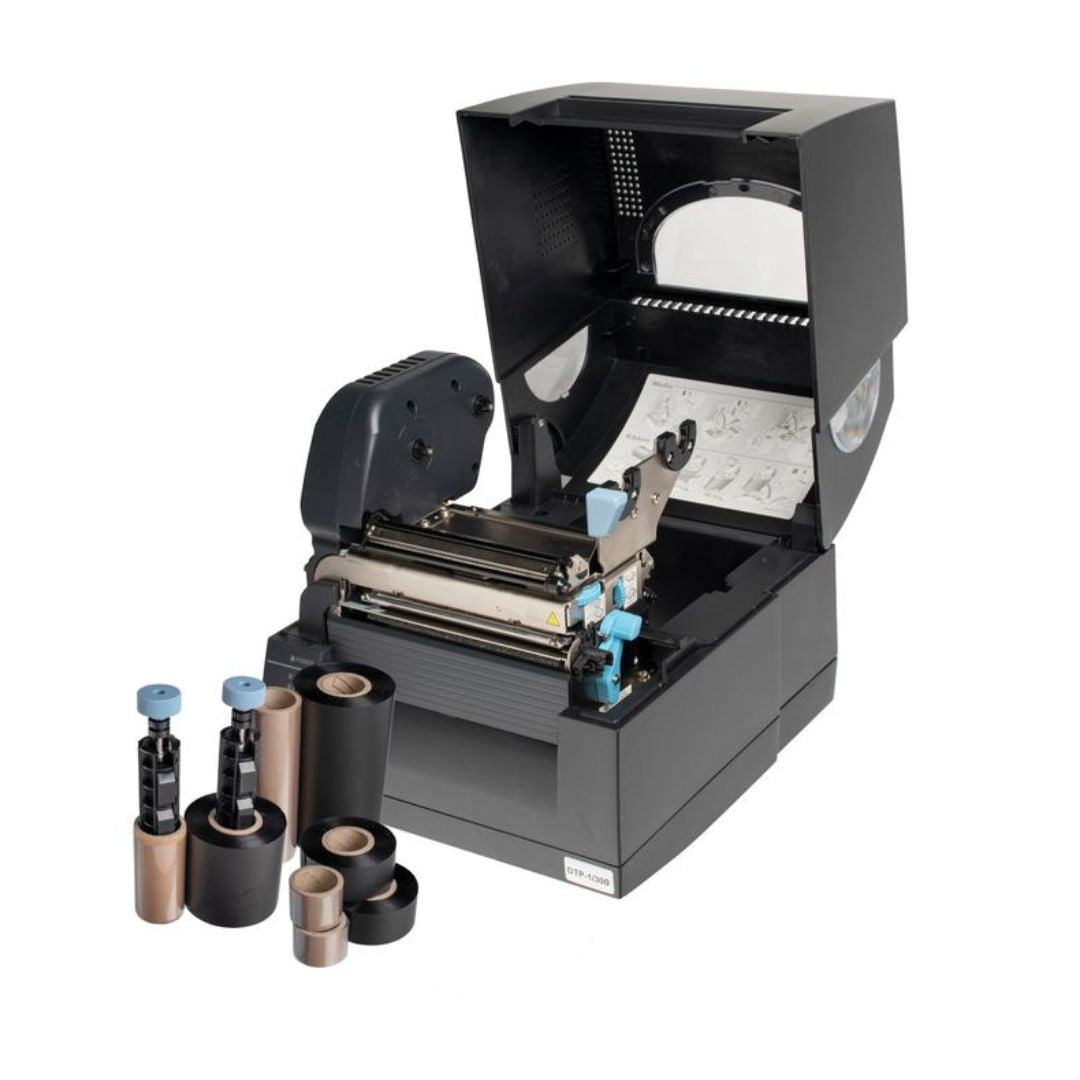
Gee Communications adopted Silver Fox® Fox-in-a-Box® as the standard labelling platform across the programme. Rather than relying on handheld devices for every site, the approach focused on controlled, high-quality label production in a site-based or office environment, with labels then applied on site by engineering teams.
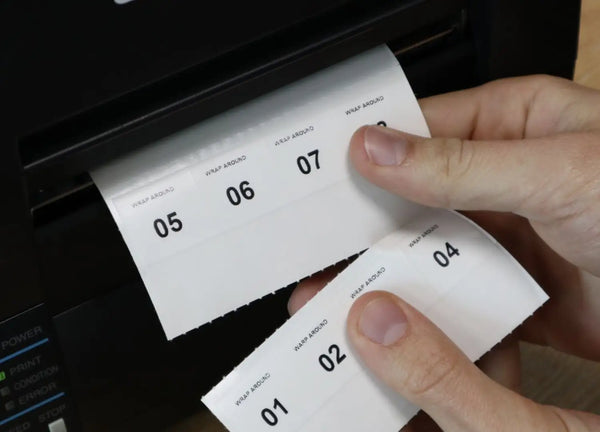
Label design and data handling ran through Labacus Innovator®, which imports directly from Microsoft Excel and CSV files. Asset registers, cable schedules, and design drawings - already maintained as spreadsheets - could be fed straight into the labelling workflow without manual retyping.

Labacus Innovator®
Silver Fox®'s label design software handles everything from simple sequential numbering to full spreadsheet imports, barcodes, QR codes, and GS1® Data Matrix encoding. For projects working from asset registers and cable schedules, direct Excel import removes the manual data entry step that introduces most labelling errors at scale.
4. Label strategy
Two label formats, one production platform
The programme separated identification into two label formats matched to two types of asset.
Asset identification - primary equipment
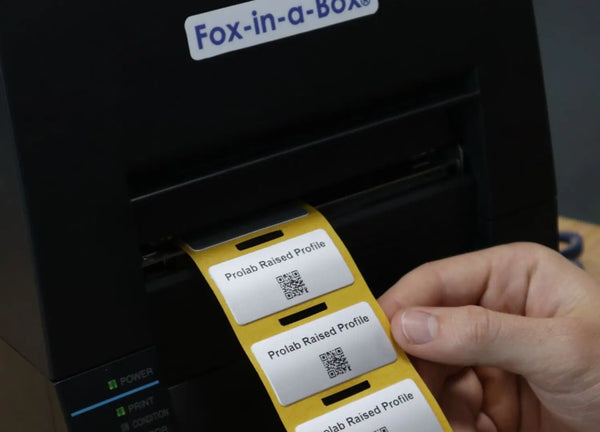
Raised profile labels were specified for primary equipment - CCTV cameras, Public Address hardware, equipment racks, and communications cabinets. Where appropriate, QR codes were added to link the physical label to an asset record.
Silver Fox® Prolab® Raised Profile Asset Labels carry a foam backing that gives the label a slight stand-off from the surface, making it highly visible and readable even in cluttered cabinets or low light. The format suits equipment that will be handled, inspected, and maintained over many years.
Cable identification - supporting infrastructure
Cable tie labels were specified for the supporting cabling that connects every part of the SISS estate - power cabling, data and comms cabling, and interconnections between systems. Legend™ Thermal Tie-On Cable Labels attach through a tie-on format that fits around live cables without disconnection, and accommodate late-stage installation changes where cables have already been routed.
Working to Network Rail standards for cable identification, the tie-on approach was the practical choice for retrofit and live-environment application. Engineers could apply labels during installation or commissioning without interrupting service.
5. Implementation
A structured workflow across 250+ stations
Gee Communications adopted a hybrid labelling workflow, balancing the quality control of batch production with the flexibility needed on live sites.
-
1
Pre-planning and batch printing
Labels were generated directly from asset registers, design drawings, and cable schedules. Bulk printing ran through Fox-in-a-Box® in a controlled environment, producing labels in predictable batches aligned to project documentation.
This approach gave the programme high accuracy aligned with project records, consistent formatting across every asset type, and efficient production at scale. Tracking which labels had already been printed was straightforward because the source data sat in the same spreadsheets used for project delivery.
-
2
On-site application
Engineers applied labels during installation and commissioning. Cable tie markers gave flexibility where scope changes occurred late, or where retrofit work was required in areas not originally in scope. Because the labels were produced in advance to a known specification, site teams could focus on correct placement and application rather than on-the-spot design decisions.
-
3
Deployment across every type of site
The same workflow was applied at major stations with high-density CCTV and PA systems, at regional stations mixing legacy and new infrastructure, and at remote locations with limited access and tight delivery windows. The output looked the same on every site, regardless of who installed it or when.
Why the desktop approach worked
- Superior print consistency and quality control across thousands of labels.
- Efficient handling of high asset volumes without trading off readability.
- Fewer on-site printing errors and delays because design and production sat upstream of application.
- Direct alignment with structured project documentation - asset registers drove labels, not the other way around.
6. Results
Measurable improvements across the rail network
Standardisation
Consistent labelling format across 250+ railway stations and depots. Variation between field engineers and stores was eliminated, improving location of spare parts and helping the network meet its service-level agreements.
Handover quality
Clear, professional labelling reduced snagging at project handover and built client confidence in the delivered assets. Every label read the same way, regardless of which team had installed it.
Production efficiency
Bulk printing streamlined delivery of more than 10,000 labels, reducing reliance on ad-hoc or reactive labelling at the point of installation.
Reduced rework
Labels generated directly from asset documentation matched the records, removing the errors that come with handwritten or inconsistent on-site labelling.
Maintenance & lifecycle
Clearly identified assets support faster fault diagnosis, easier asset tracking, and long-term operational efficiency for the maintenance teams who live with the labelling for years after handover.
Durable identification
Labels designed to withstand public interaction, environmental exposure at station platforms, and long-term infrastructure use.
7. Why it matters
Standardised labelling as an operational asset
The value of the programme shows up years after the last label is applied. Every maintenance visit, every fault investigation, every spare-parts request is faster because the labels are consistent, durable, and aligned with the asset register. The alternative - mixed formats, handwritten labels, missing identification - compounds as the estate ages and teams change.
For contractors delivering work across distributed, public-facing infrastructure, the lesson is that labelling strategy deserves the same structure as cable schedules or commissioning plans. A single production platform, a defined set of label formats, and a direct link from asset register to printed label removes the drift that makes labelling the first thing to degrade and the last thing to get fixed.
By standardising on Fox-in-a-Box® and implementing a structured, desktop-based labelling workflow, Gee Communications delivered a scalable, consistent, and compliant asset identification system across the customer's rail network - supporting over 10,000 SISS assets across 250+ stations, and improving both project delivery and long-term operational performance.
Next steps
Plan your labelling programme
Standardising labelling across a distributed estate?
Silver Fox® works with rail contractors, communications specialists, and infrastructure delivery teams who need consistent, durable identification across hundreds of sites. Whether you're planning a new programme or tightening an existing one, we can help you match the right label format to the right asset and the right workflow.
Contact us at [email protected] or call +44 (0) 1707 37 37 27.