
Industry Guide
Building the Grid: Labels for Substations and Transformers
The grid is being rebuilt at record pace, and the fluid inside the transformer is changing. Both shifts raise the same question for anyone designing, building or maintaining this infrastructure: how do you identify everything reliably, for the life of the asset?
Two things are happening to the electricity grid at the same time. The first is scale: across the United States in particular, and increasingly worldwide, the grid is being expanded and rebuilt at a pace not seen in generations. The second is quieter. Inside the transformers at the heart of that build-out, the insulating and cooling fluid is changing.
Both shifts share a practical consequence for anyone designing, building or maintaining this infrastructure. The cables, panels and equipment going in now will be in service for decades, in some of the most demanding environments in industry, and the identification on them has to last just as long.
1. The build-out
A historic expansion of grid infrastructure
The numbers behind the grid expansion are striking. According to industry analysts tracking the global transformer market, demand for generator step-up (GSU) transformers grew by around 274% between 2019 and 2025, with substation power transformers up roughly 116% over the same period (Wood Mackenzie, 2025). The drivers stack on top of one another: grid modernisation, renewable interconnection, industrial electrification, EV charging, and more recently the electrical load of AI data centres.
Supply has not kept pace. By the second quarter of 2025, lead times for power transformers in the United States averaged about 128 weeks, roughly two and a half years, with generator step-up units quoted at around 144 weeks. Some high-voltage orders were being quoted at four to five years. Industry analysts modelled a shortfall of around 30% in power transformers for 2025.
~128 wks
Average US power transformer lead time, Q2 2025
~274%
Growth in GSU transformer demand, 2019–2025
~40m
US distribution transformers beyond expected service life
160–260%
Modelled transformer stock growth needed by 2050
Data centres have become a notable accelerant. Their grid-power demand rose by around 22% in 2025 and is forecast to nearly triple by 2030 (International Energy Agency, 2025). Electrical equipment is a small fraction of a data centre's cost, but transformers and switchgear, not chips, are increasingly the part of the schedule that gates a project.
On top of new build sits an ageing fleet. Around 40 million distribution transformers in the United States are already beyond their expected service life, and national modelling suggests transformer stock may need to expand by 160 to 260% by 2050 to meet electrification goals (National Renewable Energy Laboratory, 2024). Prices have risen too, up around 77% since 2019, driven by grain-oriented electrical steel and copper.
The headline for identification is simple. A vast amount of new and replacement grid infrastructure is being installed, and it is being installed faster than at almost any time in living memory.
2. The fluid shift
Why transformer fluid is moving from mineral oil to ester
Inside the build-out, transformer fluid is shifting away from mineral oil. Transformers have traditionally been filled with mineral oil, which insulates the windings and carries away heat. The industry is increasingly turning to esters: natural esters derived from vegetable and seed oils, and engineered synthetic esters. This is no longer a niche choice. By 2013 there were already around one million transformers running on natural ester worldwide, and esters are now in service up to high-voltage transmission ratings (Doble Engineering, 2024).
Three reasons are driving the change
Fire safety
An oil-filled transformer is one of the largest single fire risks in a substation. Esters are high-fire-point, K-class "less flammable" fluids. Inherently safer fluid can reduce the need for fire walls, deluge systems and separation distances, which matters most for urban, indoor and wildfire-exposed substations.
Environmental performance
Natural esters are readily biodegradable and far less hazardous in soil and water than mineral oil. The consequences of a spill or tank rupture are lower, and the change aligns with utility sustainability commitments and emerging environmental disclosure requirements.
Asset life
Esters tolerate considerably more moisture than mineral oil, which helps protect the insulation paper and can extend transformer life. They also support higher loading, which matters when an ageing fleet is being pushed harder than ever to meet rising demand.
Retrofit-compatible
The shift is not limited to new equipment. Existing mineral-oil transformers can be retrofilled with ester, which means the change reaches the installed base as well. Over time, the fleet becomes a mixture of mineral oil, ester, and retrofilled units.
How the three fluid families compare
| Property | Mineral oilO-class | Natural esterK-class | Synthetic esterK-class |
|---|---|---|---|
| Base | Petroleum | Vegetable and seed oils | Engineered ester chemistry |
| Fire point (typical) | ~165°C | ~360°C | >300°C |
| Classification | O-class | K-class ("less flammable") | K-class |
| Biodegradability | Poor | Readily biodegradable | Readily biodegradable |
| Key standards | IEC 60296 | IEC 62770, IEEE C57.147, ASTM D6871 | IEC 61099, ASTM D8240 |
The ester shift is well formalised. Natural ester fluids are covered by IEC 62770 and IEEE C57.147, synthetic esters by IEC 61099, and the fire classes themselves by IEC 61039 (International Electrotechnical Commission, 2024). This is a mature, standards-backed transition, not an experiment.
3. What it means for identification
Identification has to last the asset, in some of the harshest places it goes
A build-out of this size, combined with a change in the fluid, raises a straightforward question for everyone working on the assets: how do you identify everything reliably, for the life of the equipment?
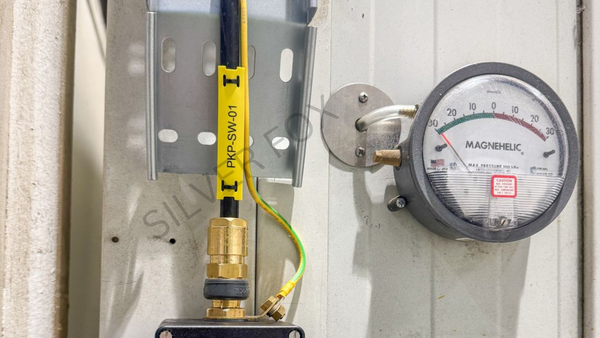
The environment is unforgiving. Cables, equipment and asset tags in substations and control rooms face corrosive atmospheres, salt mist, hydrogen sulphide, ultraviolet exposure and wide temperature swings. Identification that fades, cracks, smears or falls off within a few years is not just an inconvenience. In infrastructure that is meant to run for decades, illegible identification is a maintenance and safety problem.
The fluid shift adds a second identification need. During the transition, the fleet is mixed: some transformers still run on mineral oil, some on ester, and some have been retrofilled. Which fluid is in a given unit affects how a fire is fought, how the transformer is maintained and tested, and what can safely be used to top it up, because fluids should not be casually mixed. Knowing, at a glance and reliably over time, what is inside a piece of equipment is a genuine operational and safety need. It is also a labelling job in its own right, on the outside of the asset, and one that does not depend on anything inside the tank.
For specifiers and project teams, the practical implication is that substation and transformer identification cannot be an afterthought. The label has to be specified to the same standard as the cable, the conduit and the enclosure it sits on, with explicit attention to:
- Atmospheric corrosion from sulphurous compounds and coastal salt mist, particularly around switchgear, transformer bays and outdoor plant.
- Ultraviolet exposure for any label installed outside or near aperture windows in substation buildings.
- Wide temperature swings across hot summers and cold winters, often combined with condensation cycling.
- Chemical compatibility with any cleaning fluids, dielectric fluids or insulating compounds used in maintenance.
- Fluid-type identification on the outside of the transformer, so the next engineer on site knows what is inside before they make any decision.
4. The Silver Fox® position
Identification built for substation and control-room conditions
This is the environment Silver Fox® equipment identification is built for.
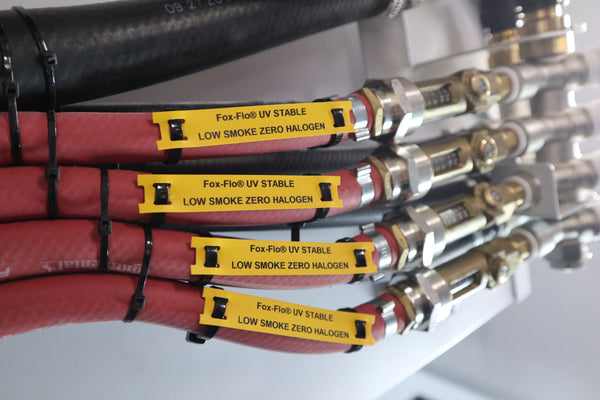
The Legend™ Thermal Tie-On Cable Label is made from a durable polyester and has undergone testing to the requirements of London Underground LUL1-085, the underground rail standard for materials used in passenger areas. It has also been tested for hydrogen sulphide (H₂S) sour-gas exposure and salt-mist spray, with a service temperature range of -40°C to 85°C. That combination is why it is well suited to substations, control rooms and other internal environments where the air itself is part of the challenge.
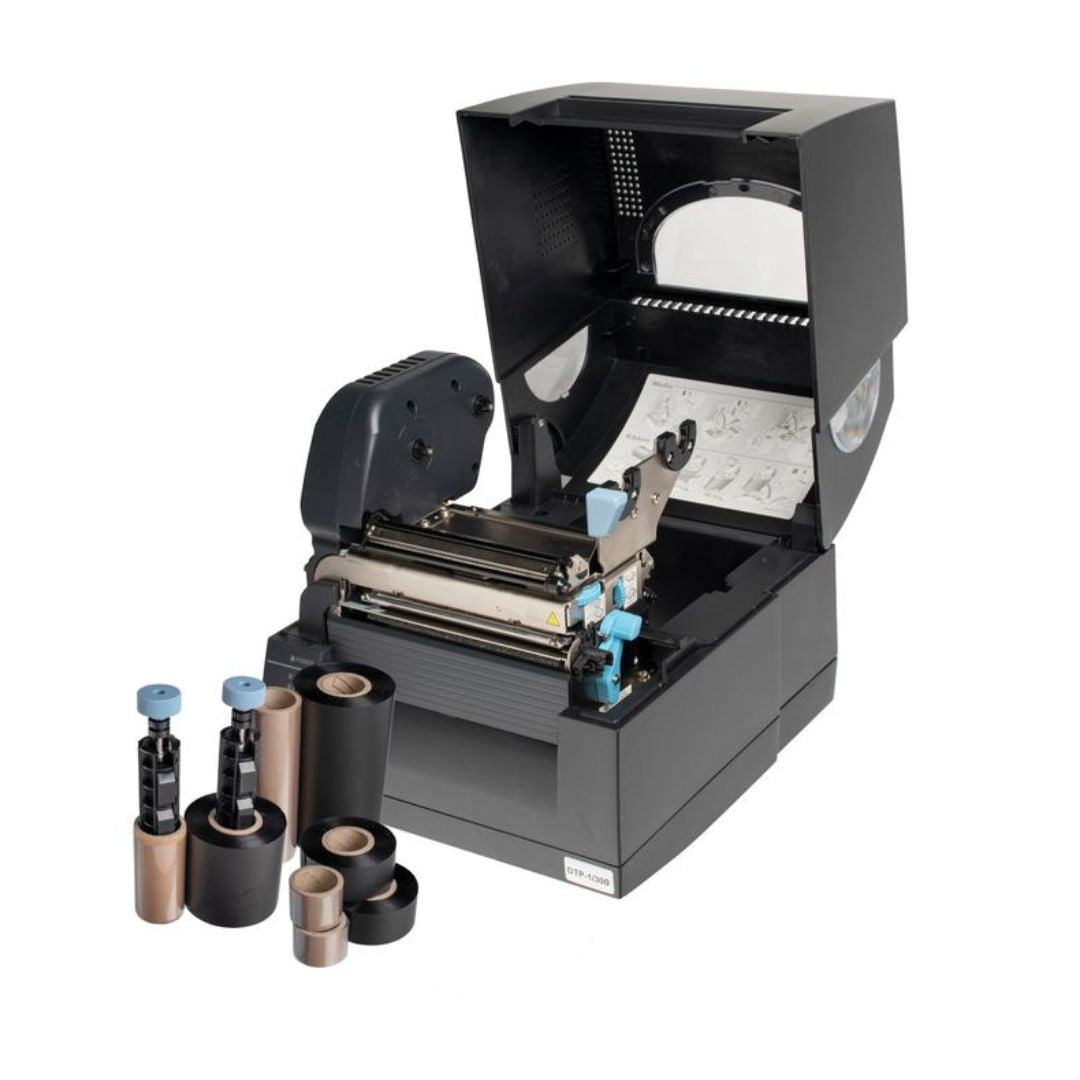
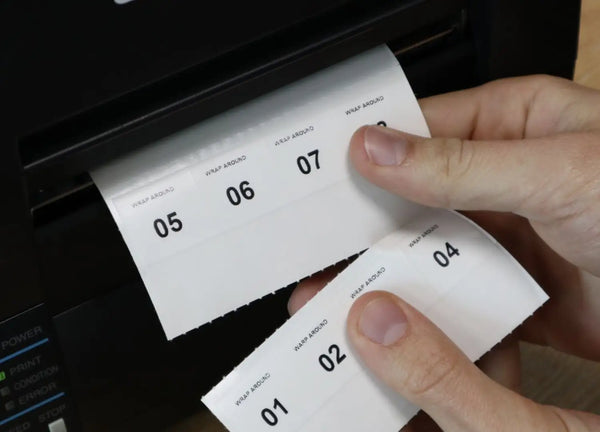
Those labels are produced on site, on demand, using the Fox-in-a-Box® thermal transfer printer and Labacus Innovator® software. The system supports print speeds of up to 8 labels per second for thermal tie-on labels, so a project can generate durable, consistent identification at the pace a major build-out requires, without waiting on outside print runs.

Labacus Innovator®
Silver Fox®'s label design software handles everything from simple sequential numbering through to full spreadsheet imports, barcodes, QR codes, and GS1® Data Matrix encoding. Available as a free trial plus Basic, Advanced and Professional tiers, each a one-time purchase, with free updates and support.
For projects that need a clear, on-asset record of which fluid is in which transformer, Labacus Innovator® allows fluid type, fill date, batch reference and maintenance information to be encoded as legible text alongside QR or Data Matrix codes. The same workflow handles cable identification, equipment labels and asset tags, so a substation can be labelled end-to-end from a single system. For a closer look at how this works in another fluid-resistant context, see our guide to cable labels for immersion-cooled data centres.
The point is reliability over time. New transformers, substations and control rooms are going in faster than ever, the fluid inside them is changing, and the assets are expected to last for decades. The identification on the cables and equipment around them should be held to the same standard.
FAQ
Common questions about substation and transformer labels
What makes a label suitable for substation use?
Substation environments combine corrosive atmospheres, UV exposure, wide temperature swings and the risk of contact with dielectric and cleaning fluids. A suitable label is made from a stable base material, typically polyester, and has been tested against the specific stresses found in the environment, including hydrogen sulphide and salt mist. The print method also matters: thermal transfer printing with a resin ribbon produces text that is far more resistant to abrasion and chemicals than inkjet or laser alternatives.
Should the transformer have a label saying what fluid is inside?
As the fleet becomes a mixture of mineral oil, natural ester, synthetic ester and retrofilled units, the answer is increasingly yes. The fluid type affects fire response, maintenance, testing routines and what can safely be added to top up. A durable external label that records fluid type, fill date and any retrofill information removes ambiguity for the next engineer on site, regardless of what is documented elsewhere.
What is the difference between K-class and O-class transformer fluids?
The classifications come from IEC 61039 and describe fire behaviour. O-class fluids, including conventional mineral oil, have a lower fire point. K-class fluids, which include natural and synthetic esters, are categorised as "less flammable" because of their significantly higher fire point. A K-class fluid does not eliminate fire risk, but it changes the consequences and can influence the fire protection design of a substation.
Can the same labels be used inside and outside the transformer enclosure?
The right answer depends on what you are labelling. For cables, equipment and asset tags in the substation environment around the transformer, a tested polyester label such as Legend™ Thermal Tie-On is designed for those conditions. For identification that will be in direct, continuous contact with a dielectric fluid, additional fluid-resistance testing is needed. Silver Fox® Legend™ Tie-On labels have been shown to resist Castrol ON dielectric cooling fluid in immersion data-centre contexts. For new dielectric environments, the specific fluid and its operating conditions should be confirmed before label selection.
How can a contractor keep up with the pace of new substation build-out?
The constraint is rarely label production once the right system is in place. On-site or in-house thermal transfer printing using Fox-in-a-Box® with Labacus Innovator® software lets project teams produce cable labels, equipment labels and asset tags from a single platform, with templates that can be reused across sites. This avoids the wait associated with outsourced print runs and keeps identification on the same critical path as the rest of the installation.
Next steps
Talk to us about your substation labelling
Build identification into the project, not the snag list
If you are specifying or building grid and transformer infrastructure, we can help you get the identification right for the environment and the service life it has to survive.
Email [email protected], call +44 (0) 1707 37 37 27, or visit silverfox.co.uk.
References
- International Electrotechnical Commission (2024). IEC 60296, IEC 62770, IEC 61099 and IEC 61039: Insulating fluids and fire classifications. Geneva: IEC. Available at: https://www.iec.ch.
- IEEE (2024). IEEE C57.147: Guide for Acceptance and Maintenance of Natural Ester Fluids in Transformers. New York: IEEE.
- International Energy Agency (2025). Energy and AI. Paris: IEA. Available at: https://www.iea.org.
- National Renewable Energy Laboratory (2024). Future Demand for Distribution Transformers. Golden, CO: NREL.
- Wood Mackenzie (2025). Global Power Transformer Market Outlook. Industry analysis report.
- Doble Engineering (2024). Natural and Synthetic Ester Fluids in Power Transformers. Technical briefing.