
Complete Guide
How to Choose the Right Cable Labels for Your Project
A practical guide to selecting cable labels and wire markers that match your environment, comply with UK standards, and save time during installation and maintenance.
Cable labelling is one of those tasks that seems straightforward until you realise how many variables are involved. The cable label that works perfectly in a climate-controlled data centre might fail within months on an outdoor substation. A wire marker that applies easily before termination becomes a frustrating bottleneck when you need to label an already-terminated cable.
This guide walks through the key decisions involved in selecting cable labels and wire markers for engineering projects. Whether you are labelling control panels, network racks, or industrial wiring harnesses, understanding these fundamentals will help you choose materials that last, comply with relevant standards, and make your work easier rather than harder.
1. Label Formats
Understanding the main cable label types
Cable labels and wire markers come in several distinct formats, each suited to different applications. Understanding these differences is the first step in making the right choice for your project.
Heat Shrink Labels
Tubing that shrinks when heat is applied, conforming tightly to the cable. Provides permanent, tamper-resistant identification that resists abrasion and movement. Must be applied before termination unless using a slit design.
Wrap-Around Labels
Self-laminating labels that wrap around the cable with a clear protective tail covering the printed area. Can be applied to terminated cables. The laminating layer protects print from dirt, oil, and moisture.
Tie-On Cable Tags
Rigid or flexible tags secured with cable ties or integral ties. Ideal for large-diameter cables where adhesive labels would not adhere well, or where labels need to hang freely for visibility.
Non-Shrink Tubing
Slide-on markers that do not require heat. Useful for quick installation during maintenance or when heat guns are impractical. Less permanent than heat shrink but allows easy repositioning.
The format you choose often depends on when in the installation process you are labelling. Heat shrink sleeves provide the most secure fit but require access to the unterminated cable end. Wrap-around cable labels and tie-on tags offer more flexibility for labelling cables that are already in place.
For projects requiring a mix of label types, the Fox-in-a-Box® thermal printing system prints over 200 label variations using one printer, one ribbon, and one software package. This eliminates the need to maintain multiple printers for different label formats.
2. Environment
Matching labels to your installation conditions
The environment where your cables are installed determines which materials will survive long-term. A cable label that fades, peels, or becomes illegible defeats the entire purpose of labelling.
Key environmental factors to consider
- UV exposure: Outdoor installations and areas with direct sunlight require UV-stable materials that resist fading and degradation.
- Temperature range: Consider both operating temperature and any heat sources nearby. Some labels are rated from -40°C to +150°C or beyond.
- Chemical exposure: Industrial environments may expose labels to oils, solvents, cleaning agents, or process chemicals.
- Moisture and humidity: Wet environments, condensation, or regular washdowns require materials with appropriate water resistance.
- Mechanical wear: Cables that are frequently handled, moved, or routed through conduits need abrasion-resistant labels.
For harsh industrial environments where cables face exposure to chemicals, oils, and extreme temperatures, materials like Fox-Flo® are specifically designed to withstand these conditions. These UV-stable, LSZH (Low Smoke Zero Halogen) tie-on labels maintain legibility throughout the equipment's lifespan, even in outdoor applications.
Environment checklist
- Will labels be exposed to direct sunlight or UV light sources?
- What is the temperature range (minimum and maximum)?
- Are chemicals, oils, or solvents present?
- Is moisture, condensation, or washdown expected?
- How often will cables be handled or repositioned?
For more guidance on labelling in challenging outdoor conditions, see our guide to effective wire marker systems for engineering projects.
3. Fire Safety
When Low Smoke Zero Halogen labels are required
Low Smoke Zero Halogen (LSZH) materials are increasingly specified for cable labelling in certain environments. Understanding when LSZH is required, and when it is optional, helps you make appropriate material choices.
What makes LSZH different
Standard PVC materials, when exposed to fire, release halogen gases including hydrogen chloride. These gases are toxic when inhaled and corrosive to electronic equipment. LSZH materials emit minimal smoke and no halogen gases when burned, reducing risks to people and equipment in enclosed spaces.
Where LSZH is typically required
- Public buildings: Airports, museums, hospitals, schools, and shopping centres where occupant safety is paramount.
- Rail and metro: Rolling stock and station installations must meet EN 45545 fire safety standards.
- Underground infrastructure: Tunnels, underground stations, and similar enclosed spaces with limited ventilation.
- Data centres: Often specified to protect sensitive equipment from corrosive smoke damage.
- Marine applications: Vessels and offshore installations where evacuation may be difficult.
The Legend™ LSZH Heatshrink range is manufactured from halogen-free, low smoke propagation material, making it suitable for these safety-critical environments.
LSZH applications
- Public transport and rail installations
- Underground and enclosed spaces
- Data centres and server rooms
- Marine and offshore installations
- Any project specifying EN 45545 compliance
4. Cable Size
Matching labels to cable diameter
Cable diameter significantly influences which label format and size will work effectively. A label designed for small data cables will not fit a large power cable, and attempting to use an oversized label on a thin wire creates a bulky, unprofessional result.
Small diameter cables (under 8mm)
Typical applications include network cables, control wiring, and instrumentation cables. Wrap-around labels with self-laminating tails work particularly well, protecting the print while adding minimal bulk. Heat shrink sleeves in smaller diameters (2.4mm to 6.4mm shrunk diameter) provide permanent identification.
The Prolab® Thermal Wrap-Around range is ideal for data cabling applications, incorporating strong acrylic adhesive and a clear protective laminate over the printed area.
Medium diameter cables (8mm to 25mm)
Common in electrical distribution, industrial control systems, and larger network infrastructure. Both wrap-around labels and heat shrink sleeves are viable. Choose labels with sufficient print area to display the required information legibly.
Large diameter cables (over 25mm)
Power cables, large multicore cables, and cable bundles typically require tie-on cable tags rather than adhesive or shrink-fit solutions. Tie-on tags can accommodate cables of virtually any diameter since they attach via cable ties rather than wrapping around the cable itself.
Fox-Flo® tie-on labels are available in multiple sizes to accommodate different cable diameters and information requirements, from compact tags for small conduits to larger formats for main power feeds.
5. Compliance
UK standards for cable labelling
Different industries and environments have specific requirements for cable identification. Understanding which standards apply to your project ensures compliance and avoids costly rework.
Rail
EN 45545 specifies fire protection requirements for railway vehicles, including materials used in cable labelling.
London Underground
LUL 1-085 sets fire safety performance requirements for materials used in Underground installations.
Data Centres
TIA-606 provides administration standards for telecommunications infrastructure, including labelling conventions.
Defence and government projects
Projects for the Ministry of Defence or other government bodies may specify defence standards (DEF STAN) that dictate approved materials and labelling methods. Verify specific requirements early in the project to ensure your chosen labels are compliant.
Marine and offshore
Lloyd's Register and other classification societies may require labels tested to specific standards including salt mist spray resistance. Silver Fox® labels are tested to Lloyd's Register Type Approval System requirements for salt mist exposure.
Silver Fox® labels are extensively tested and widely approved for use in critical UK infrastructure. The labelling cheat sheet provides a quick reference for matching labels to common applications and requirements.
6. Printing
Choosing the right cable label printer
The printing method you use affects print durability, production speed, and the range of labels you can produce. For industrial cable labelling, two main options exist: thermal transfer printing and laser printing.
Thermal transfer printing
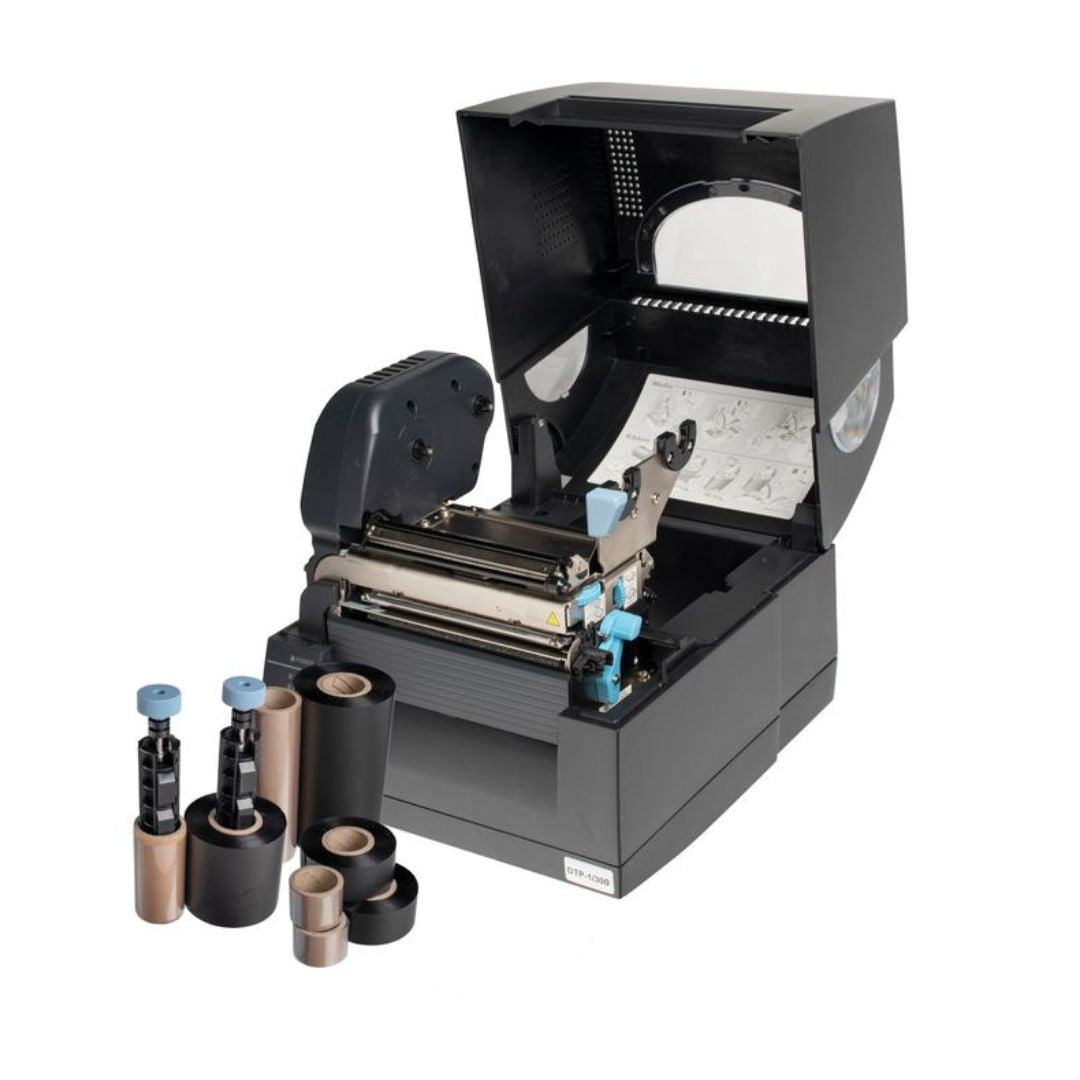
Thermal transfer printers use a heated print head to transfer ink from a ribbon onto the label material. This method produces highly durable prints resistant to heat, chemicals, abrasion, and UV exposure. Thermal transfer is the preferred method for industrial environments where label longevity is critical.
The Fox-in-a-Box® thermal printing system combines printer, software, and ribbon in a single package. With thermal transfer technology, you can print at speeds of up to 32 labels per second while maintaining print quality that withstands harsh conditions.
Laser printing
Standard office laser printers can print certain label formats, particularly A4 sheet-based labels like the Prolab® Laser Fibre Optic Flag Labels. Laser printing offers convenience, printing up to 60 labels in the time it takes to print a single sheet of paper. However, laser-printed labels may be less durable than thermal transfer prints in extreme conditions.
For detailed guidance on labelling already-terminated cables, see our step-by-step guide to labelling terminated wires.
7. Application
How to label cables effectively
Selecting the right label is only half the task. Proper application ensures labels remain legible and secure throughout the cable's service life.
-
1
Prepare the surface
Clean the cable jacket to remove dust, oil, and debris. For adhesive labels, ensure the surface is dry. Contamination is the most common cause of label adhesion failure.
-
2
Position consistently
Apply labels at a consistent distance from termination points or junction boxes. This makes cables easier to identify and creates a professional appearance. Common practice is 50mm to 150mm from each end.
-
3
Ensure legibility
Orient labels so text faces the technician's normal viewing angle. For wrap-around labels, position the printed area where it will be most visible once the cable is installed.
-
4
Verify before securing
Double-check label content against your documentation before final application. For heat shrink, this is critical since removal requires cutting the label off.
Labelling at both ends
Best practice is to label cables at both ends, allowing identification from either termination point. This is particularly important for long cable runs where tracing the cable back to its source would be time-consuming. The Labacus Innovator® software included with Fox-in-a-Box® supports cross-ferruling functionality, printing labels for both ends of a wire in a single operation.
8. FAQs
Common cable labelling questions
How do I label ethernet cables?
Ethernet and network cables are typically labelled with wrap-around labels that can be applied after termination. Choose labels sized for the cable diameter (usually 5mm to 7mm for Cat5e/Cat6) and position them consistently at both ends. For patch panels, use dedicated patch panel labels that align with port spacing. The QR codes and barcodes guide covers scannable options for network documentation.
How do I label cables in a data centre?
Data centre labelling requires a systematic approach with consistent naming conventions. Use wrap-around labels for patch cables and tie-on tags or flag labels for larger infrastructure cables. Ensure labels are easily visible without disturbing cable bundles. Consider colour coding to distinguish between different cable types or systems. TIA-606 provides administration standards for data centre labelling conventions.
What is the best cable label printer for industrial use?
Look for a thermal transfer printer that supports multiple label formats, has durable construction for workshop or site use, and includes software for designing and managing label data. The Fox-in-a-Box® system is specifically designed for industrial cable labelling, printing over 200 label variations with one printer and ribbon combination.
How do I label fibre optic cables?
Fibre optic cables require careful handling during labelling to avoid damaging the fibres. Use wrap-around or flag-style labels rather than methods requiring heat application near the cable. The Prolab® Laser Fibre Optic Flag Labels are designed specifically for this application, providing clear identification without risk to the fibres.
Can I label cables after they are already installed?
Yes. Wrap-around labels, tie-on tags, and two-part marker systems are all designed for labelling terminated or installed cables. Two-part systems allow you to slide clear tubing onto the cable first, then insert or change the printed ident without cutting the cable. This is particularly useful during commissioning when identifications may change.
Next steps
Need help choosing the right labels?
Selecting the right cable labels involves balancing durability, compliance, ease of application, and cost. The factors covered in this guide should help you narrow down the options, but every project has unique requirements.
Get expert advice for your project
Silver Fox® has over 45 years of experience helping engineers select the right labelling solutions. Our team can advise on material selection, compliance requirements, and the most efficient printing setup for your workflow.
Contact our expert team at [email protected] or call +44 (0) 1707 37 37 27.