
Selection Guide
How to Label a Wiring Harness: 3 Marker Types Compared
A wiring harness can contain dozens or hundreds of individual conductors. Each one needs clear, durable identification. This guide covers the three main cable marker types and when to use each.
A wiring harness is a structured assembly of cables, wires, and connectors designed to transmit electrical signals or power across a system. You will find them inside control panels, across factory floors, throughout vehicles, and behind the walls of every commercial building. The one thing they all have in common is density: dozens or hundreds of individual conductors bundled together, often routed through tight spaces, and all needing clear identification at both ends.
The challenge for the engineer or contractor is straightforward - which type of cable marker works for each situation? The answer depends on three things: when you are labelling (before or after termination), what the environment demands (temperature, chemicals, fire safety), and how many markers you need to produce. This guide walks through the three main options and helps you match the right marker to the job.
1. Heatshrink markers
When to Use Printed Heatshrink Sleeves
Heatshrink cable markers are the traditional choice for wire identification within harnesses. They are tubular sleeves that slide over a conductor before termination, then shrink to conform tightly to the cable when heat is applied. The result is a long-lasting, low-profile marker that moves with the cable under vibration and resists abrasion, chemicals, and temperature extremes.
The key constraint is timing. Heatshrink must be threaded onto the wire before connectors are fitted. It will not pass over a crimped terminal, an RJ45 plug, or any moulded connector. For harness builders working to a wiring schedule, this means printing and sliding heatshrink markers onto each conductor is part of the build sequence, not an afterthought.
Premium vs LSZH Heatshrink
Legend™ Premium Heatshrink from Silver Fox® offers a 3:1 shrink ratio, meaning each size covers a wider range of cable diameters - reducing the number of sizes you need to stock. It is designed for UV-exposed industrial and marine applications, with UV performance and any type-approval or certification status confirmed against current test records.This makes it suitable for a wide range of industrial and marine applications.
Where fire safety regulations require low smoke zero halogen materials - rail, metro, public buildings, marine, and many commercial installations - Legend™ LSZH Heatshrink provides a halogen-free alternative with a 2:1 shrink ratio. It is tested to London Underground standard LUL1-085, making it suitable for transit and safety-critical environments. For more on choosing between LSZH and standard materials, see our guide to choosing the right cable labels for UK engineering projects.
Legend™ Premium Heatshrink
3:1 shrink ratio. UL/CSA certified. UV and salt-spray tested. Ideal for general industrial, marine, and outdoor applications. Rolls and ladder format available.
Legend™ LSZH Heatshrink
2:1 shrink ratio. Halogen-free, low smoke. Tested to London Underground LUL1-085. Suitable for rail, metro, public buildings, and confined spaces.
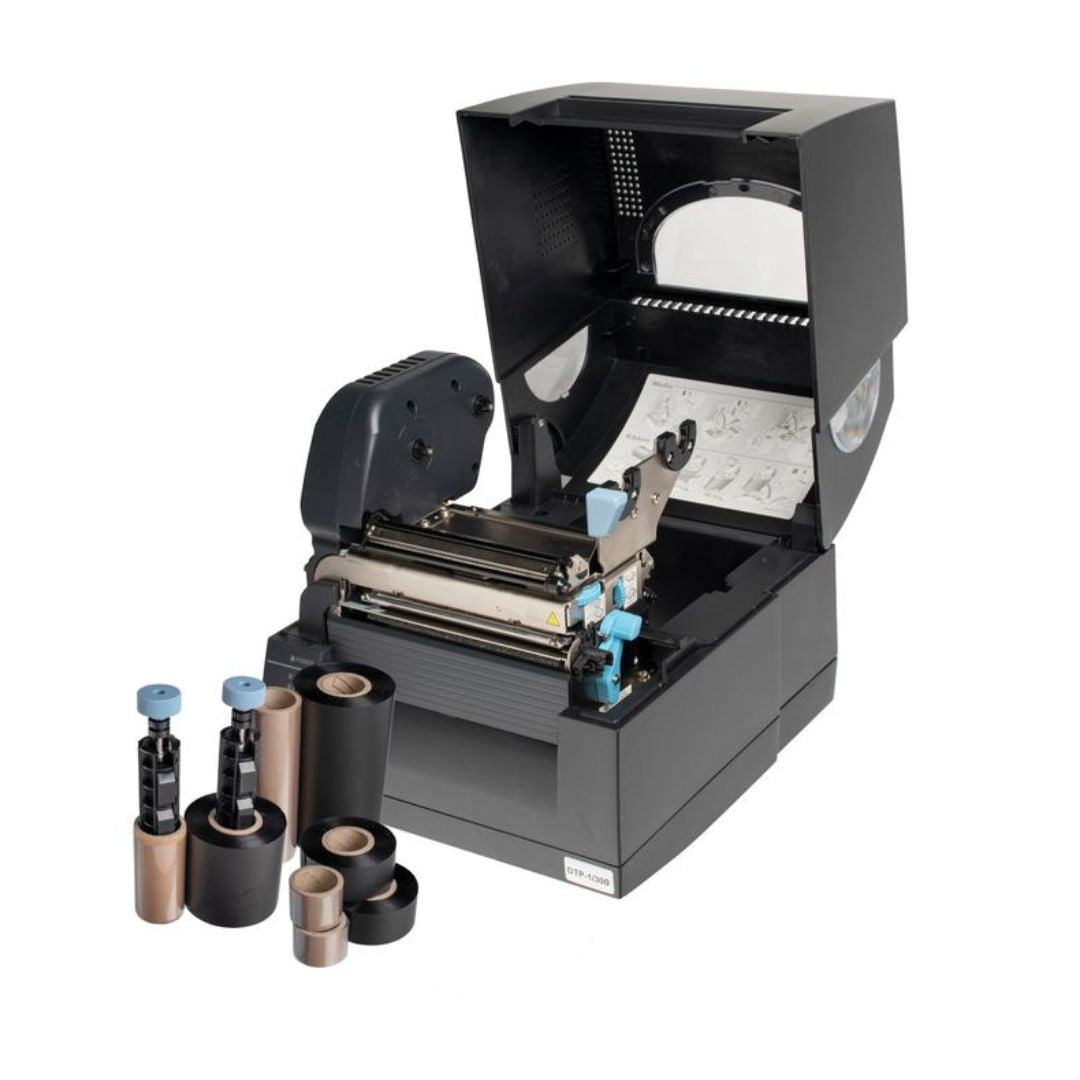
Both variants are available in continuous roll format (for use with the LGS3 guidance system on Fox-in-a-Box®) and in pre-cut ladder format for easy snap-off during application. The Fox-in-a-Box® cross-ferruling function prints both ends of a wire identifier simultaneously, reducing print time by roughly half compared to printing each end separately.
2. Non-shrink markers
A Faster Alternative to Ferrules and Heatshrink
Non-shrink cable markers solve the timing problem. They use a figure-of-eight grip design that wraps around the cable and locks in place without heat or adhesive. This means they can be applied at any stage of the installation - before termination, after termination, or even on live cables during retrofit work.
The speed advantage is significant. Traditional ferrule marking (using small crimp-on sleeves to identify individual conductors) can take close to two hours for 50 wires. Non-shrink markers from the same print run can be applied in a fraction of that time because there is no individual handling of each marker and no heat gun step. For harness builders running large batches or electrical contractors working to tight site programmes, that time saving adds up quickly.
Legend™ Non-Shrink Cable Markers are PVC-based, suitable for general industrial and commercial environments. They are tested for UV weathering (4,000 hours for white, 1,000 hours for yellow), temperature performance from -40°C to 85°C, and chemical resistance including H2S sour gas exposure. For environments requiring LSZH compliance, Fox-Flo® UV Stable LSZH Non-Shrink markers provide the same speed of application with halogen-free material properties. Our detailed guide to non-shrink cable markers covers material specs and sizing in full.
When Non-Shrink Beats Heatshrink
- Post-termination labelling - cables already have connectors fitted
- Retrofit or maintenance work on existing harnesses
- Hazardous or flammable environments where a heat gun is not permitted
- High-volume wire marking where speed is the priority
- Mixed cable diameters - each non-shrink size covers a range
Non-shrink markers are particularly valuable in oil and gas applications where heat sources near cables are not permitted, and in panel building where hundreds of wires need marking in a single session. They are printed on the same Fox-in-a-Box® system using the LGS3 guidance system, so the same printer, ribbon, and software handles both heatshrink and non-shrink production.
3. Tie-on labels
Labelling Bundled Looms and Larger Cables
Tie-on cable labels serve a different purpose. Rather than marking individual conductors within a harness, they identify the harness itself - or sections of it - at routing points, junction boxes, and termination panels. They are also the practical choice for larger-diameter power cables where heatshrink and non-shrink sizes would not fit.
Fox-Flo® Tie-on Cable Labels attach with a standard cable tie and sit alongside or around the cable bundle. They are manufactured from UV-stable LSZH material, making them suitable for both indoor and outdoor use in environments where low smoke zero halogen compliance is required. Fox-Flo® labels are available in a range of sizes, from compact identifiers for individual cables up to larger formats suitable for main cable routes.
A practical approach for wiring harness identification is to combine methods: heatshrink or non-shrink on the individual conductors, and tie-on labels at the harness level to identify the bundle, its route designation, and its destination. This gives maintenance teams two levels of information - they can identify which harness they are looking at before tracing individual wires within it. For an example of this combined approach in practice, see how RJ Power standardised cable identification across their UK projects.
4. Choosing the right marker
A Decision Framework for Harness Labelling
The choice between heatshrink, non-shrink, and tie-on markers comes down to three practical questions. Answering them narrows the options quickly.
When?
Before termination: heatshrink or non-shrink. After termination: non-shrink or tie-on. On a bundled loom: tie-on.
Where?
LSZH required: Legend™ LSZH or Fox-Flo®. Marine/outdoor: Legend™ Premium. Hazardous area (no heat gun): non-shrink.
How Many?
High volume (>100 wires): non-shrink for speed. Moderate volume with pre-build schedule: heatshrink. Individual bundles: tie-on.
In many real-world projects, the answer is a combination. A panel builder might use heatshrink on pre-terminated wires during the bench build, non-shrink for field additions and modifications, and tie-on labels to identify main cable routes entering and leaving the enclosure. The Fox-in-a-Box® system handles all three label types from a single printer, using the same Labacus Innovator® software and ribbon. This means one system, one training investment, and one stock of consumables - regardless of which marker type a given job requires.
Cross-Ferruling: Print Both Ends at Once
One of the most time-consuming aspects of harness labelling is producing identification for both ends of each wire. Labacus Innovator® software (Advanced and Professional tiers) includes a cross-ferruling function that prints the "from" and "to" identifiers for each conductor in a single print pass. For a harness with 200 wires, that means 200 markers rather than 400 separate print jobs. Combined with spreadsheet import for large wire schedules, this turns a day-long print task into a job that takes an hour or two.
5. Standards and compliance
Cable Identification Standards for Harness Work
Several UK and international standards govern cable identification within wiring harnesses and electrical installations. The specific requirements depend on the sector and application, but the core principles are consistent: every conductor should be identifiable at both ends, and the marking method should be durable enough to remain legible for the life of the installation.
BS 7671 (IET Wiring Regulations) requires that every conductor be identifiable and that identification be maintained throughout the installation. It does not prescribe a specific labelling method but expects the marking to be durable and unambiguous.
BS EN 62491 provides guidance on industrial cable labelling methods, including positioning, content, and the use of both human-readable text and machine-readable codes.
EN 45545-2 applies to rolling stock and specifies fire performance requirements for materials used in railway vehicles - relevant when selecting between standard PVC and LSZH markers for rail harness work.
For harness builders supplying into regulated sectors, the label material specification often needs to be confirmed at the design stage. Switching from PVC to LSZH after production has started creates rework. Confirming the material requirement upfront avoids that problem entirely.
FAQ
Frequently Asked Questions
Can I label a wire after it has been terminated?
Yes. Non-shrink cable markers and tie-on labels can both be applied to cables that are already terminated. Non-shrink markers grip the cable through their figure-of-eight shape without needing to pass over a connector. Heatshrink markers cannot be applied after termination because they need to slide over the end of the cable before connectors are fitted.
What is the difference between heatshrink and non-shrink cable markers?
Heatshrink markers are tubular sleeves that shrink to conform tightly to a cable when heat is applied. They provide a long-lasting, low-profile fit but must be installed before termination and require a heat gun. Non-shrink markers use a physical grip design that locks onto the cable without heat, making them faster to apply and usable at any installation stage.
Do I need LSZH cable markers for panel building?
It depends on the installation environment and the specification. LSZH (Low Smoke Zero Halogen) materials are required in enclosed public areas, rail and metro systems, marine vessels, and many commercial buildings where fire safety regulations mandate reduced smoke and toxic gas emissions. For general industrial panel building, standard PVC markers may be acceptable. Always check the project specification.
Can one printer handle heatshrink, non-shrink, and tie-on labels?
Yes. The Fox-in-a-Box® thermal transfer printer handles all three marker types using different guidance systems (LGS3 for Legend™ heatshrink and non-shrink, LGS4 for Fox-Flo® tie-on labels). The same ribbon and Labacus Innovator® software works across the full range.
How do I print wire labels from a cable schedule?
Labacus Innovator® software supports CSV and spreadsheet import at all licence levels. You can export your cable schedule from design software, import it into Labacus Innovator®, and print the full batch of wire markers in one session. The cross-ferruling function (Advanced and Professional tiers) prints both-end identifiers simultaneously.
Next steps
Get the Right Markers for Your Harness Work
Request Free Samples
Not sure which cable marker is right for your application? Silver Fox® offers free samples of Legend™ Heatshrink, Legend™ Non-Shrink, and Fox-Flo® Tie-on labels so you can test them on your actual cables before committing to a specification.
Contact us at [email protected] or call +44 (0) 1707 37 37 27.
References
British Standards Institution (2018) BS 7671:2018+A4:2026 - Requirements for Electrical Installations (IET Wiring Regulations). Available at: bsigroup.com.
British Standards Institution (2014) BS EN 62491:2014 - Industrial Cables: Cable Labelling. Available at: bsigroup.com.
European Committee for Standardization (2013) EN 45545-2 - Railway Applications: Fire Protection on Railway Vehicles. Available at: cencenelec.eu.