
Troubleshooting
Why Cable Labels Fall Off (and How to Fix It)
Cable labels that peel, slide, or curl are more than an annoyance. They create safety risks, compliance failures, and hours of rework. Here is why it happens and what you can do about it.
You have spent time designing and printing your cable labels, applied them carefully, and walked away confident the job is done. A few weeks later, labels are curling at the edges, sliding down the cable, or lying on the cable tray floor. It is a frustrating problem, and a surprisingly common one.
Poor cable labelling does not just look untidy. It compromises cable identification on site, which can lead to maintenance errors, wiring faults, and non-compliance with standards such as BS 7671 that require clear cable marking. This guide explains why cable labels fail and, more importantly, how to prevent it from happening.
1. The problem
Five Reasons Cable Labels Fail
Cable label adhesion failures almost always trace back to one of five root causes. Identifying which one is affecting your installation is the first step towards solving it.
Surface contamination
This is the most common reason industrial adhesive labels fail. Cable jackets arrive from the factory coated in release agents, plasticisers, dust, and oils from handling during installation. Even fingerprints from pulling cables can leave enough residue to prevent a pressure-sensitive adhesive from bonding properly. According to the Pressure Sensitive Tape Council (2023), surface contamination accounts for the majority of adhesive bond failures in industrial applications.
Wrong adhesive for the cable jacket
Not all cable jacket materials are created equal when it comes to adhesion. PVC jackets bond well with standard acrylic adhesives, but low surface energy (LSE) materials like polyethylene (PE), polypropylene (PP), and silicone resist bonding with most standard adhesive labels. If you are labelling LSZH (Low Smoke Zero Halogen) cables, which are increasingly common in public buildings and transport infrastructure, you may also encounter adhesion challenges depending on the specific compound used.
Temperature extremes
Adhesive performance changes with temperature. Most standard acrylic adhesives need to be applied at temperatures above 10°C to bond correctly. Once cured, they can typically withstand a wider range, but applying labels in cold plant rooms, outdoor cable runs, or unheated sites during winter is a recipe for failure. At the other end, sustained heat above 80°C can soften adhesive bonds over time.
Cable diameter mismatch
Labels applied to cables with a very small diameter experience significant curvature stress. The tighter the bend radius, the harder the adhesive has to work to maintain contact. If the label is not wide enough to wrap sufficiently around the cable, or if it is applied to a bundle rather than an individual conductor, the label may spring open and peel away.
Poor application technique
Even the right label on the right cable can fail if it is not applied properly. Common mistakes include not pressing firmly enough to activate the adhesive, applying labels over cable ties or corrugated conduit, and labelling cables that are still under tension or vibration during installation.
Quick adhesion checklist
- Is the cable surface clean and dry?
- Is the ambient temperature above 10°C?
- Does the label wrap far enough around the cable diameter?
- Are you applying firm, even pressure across the full label?
- Is the cable jacket PVC, LSZH, PE, PP, or something else?
2. Know your jacket
Cable Jacket Types and Adhesion
The cable jacket material is the single biggest factor in whether a self-adhesive cable label will stick. Understanding surface energy helps explain why.
Surface energy, measured in dynes/cm, describes how readily a material allows an adhesive to wet out and form a bond. High surface energy materials like PVC and nylon are easy to bond to. Low surface energy materials like PE and silicone actively resist adhesive contact. According to 3M (2024), a surface energy below 34 dynes/cm is generally considered difficult to bond with standard pressure-sensitive adhesives.
PVC (polyvinyl chloride)
High surface energy (~39 dynes/cm). Standard acrylic adhesives bond well. The most common cable jacket in general electrical installations and typically the easiest to label.
LSZH (Low Smoke Zero Halogen)
Moderate surface energy. Varies by compound, but many LSZH jackets use polyolefin blends that sit in the borderline range. Some bond well with acrylic adhesives; others need extra surface preparation or a higher-tack adhesive.
PE and PP (polyethylene, polypropylene)
Low surface energy (~31-33 dynes/cm). Standard adhesive labels will struggle. Common on data and telecoms cables. Options include specialist high-tack adhesives, mechanical labels, or tie-on cable markers.
Silicone and braided sleeving
Very low surface energy (~24 dynes/cm for silicone). Adhesive labels are unlikely to stay attached long-term. Tie-on labels or heat shrink cable markers are the reliable alternatives for these materials.
If you are working on a site with mixed cable types, which is common in data centres and industrial plants, you will likely need more than one labelling approach to get reliable results across every cable jacket material.
3. Preparation
How to Prepare Cable Surfaces for Labelling
Good surface preparation is the simplest and most effective way to improve cable label adhesion. It requires minimal effort and takes seconds per cable, yet it is the step most often skipped on busy sites.
Clean with isopropyl alcohol (IPA)
Wipe the cable jacket with an IPA-soaked lint-free cloth at the point where the label will be applied. IPA removes oils, dust, release agents, and fingerprints without leaving a residue of its own. Allow a few seconds for the solvent to evaporate before applying the label. This single step eliminates the most common cause of cable label failure.
Check the temperature
If you are working in an environment below 10°C, warm the cable surface and the label slightly before application. Some installers keep labels in an inside pocket to maintain them at body temperature. Avoid applying labels to cables that are wet or covered in condensation.
Consider a primer for difficult surfaces
For PE, PP, and other low surface energy jackets where adhesive labels are the only option, an adhesion promoter (primer) can raise the effective surface energy enough to achieve a bond. However, this adds time and complexity to the process. In most cases, switching to a self-laminating wrap-around label or a tie-on cable marker is more practical than priming every cable.
For equipment labels applied to powder-coated metal, stainless steel, or painted surfaces in industrial environments, the same principles apply. Clean the surface, ensure it is dry, and confirm the adhesive is rated for the substrate. Textured or powder-coated finishes may need an extra-strong adhesive label or a mechanical fixing.
4. The right approach
Choosing the Right Label Type for Reliable Adhesion
Sometimes the answer to adhesion problems is not a better adhesive, but a different labelling method entirely. Modern cable marking systems offer several approaches, each suited to different situations.
Self-laminating wrap-around labels
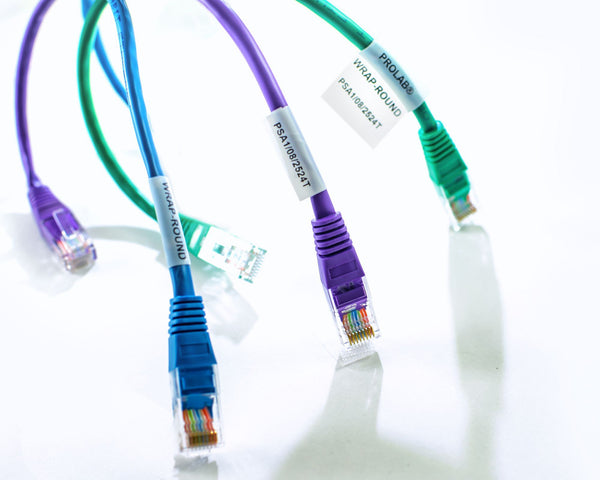
These labels wrap around the cable and then laminate over the printed area, effectively creating a flag that adheres to itself rather than relying solely on the bond to the cable jacket. This self-laminating design means the printed text is protected beneath a clear layer, making it resistant to abrasion, chemicals, and UV exposure. Prolab® Self-Laminating Wrap-Around Cable Labels from Silver Fox® use this approach, with an acrylic adhesive that bonds to itself as the label wraps, providing a secure hold even on cables where a simple sticky label would fail.
Tie-on cable labels
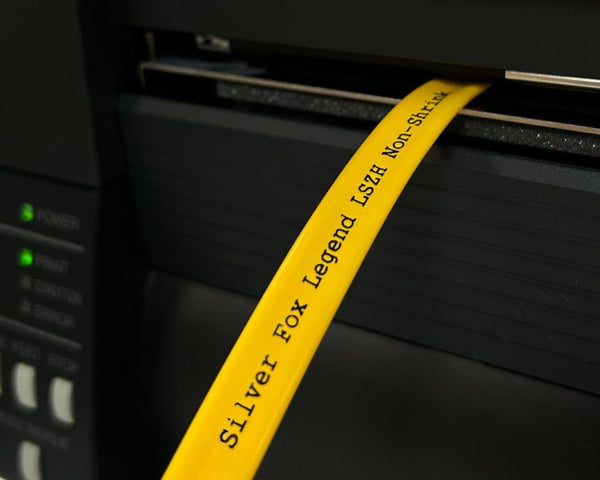
When adhesion is not an option at all, whether due to silicone jackets, braided sleeving, or extremely oily environments, tie-on cable markers bypass the problem entirely. They attach mechanically using cable ties, so the cable surface material is irrelevant. Fox-Flo® UV-Stable LSZH Tie-On Cable Labels are designed for exactly this scenario. They are manufactured from LSZH material for use in environments where low smoke and zero halogen properties are required, and they are UV-stable for outdoor or exposed installations where waterproof cable labels are essential.
High-performance adhesive tapes
For situations where you need a strong adhesive bond on challenging surfaces, including curved cables and rough equipment panels, Prolab® High Performance Tape offers industrial-grade acrylic adhesive that is engineered for demanding environments. The tape format is particularly useful for cable marking in harsh conditions where standard labels may not provide enough adhesive contact area.
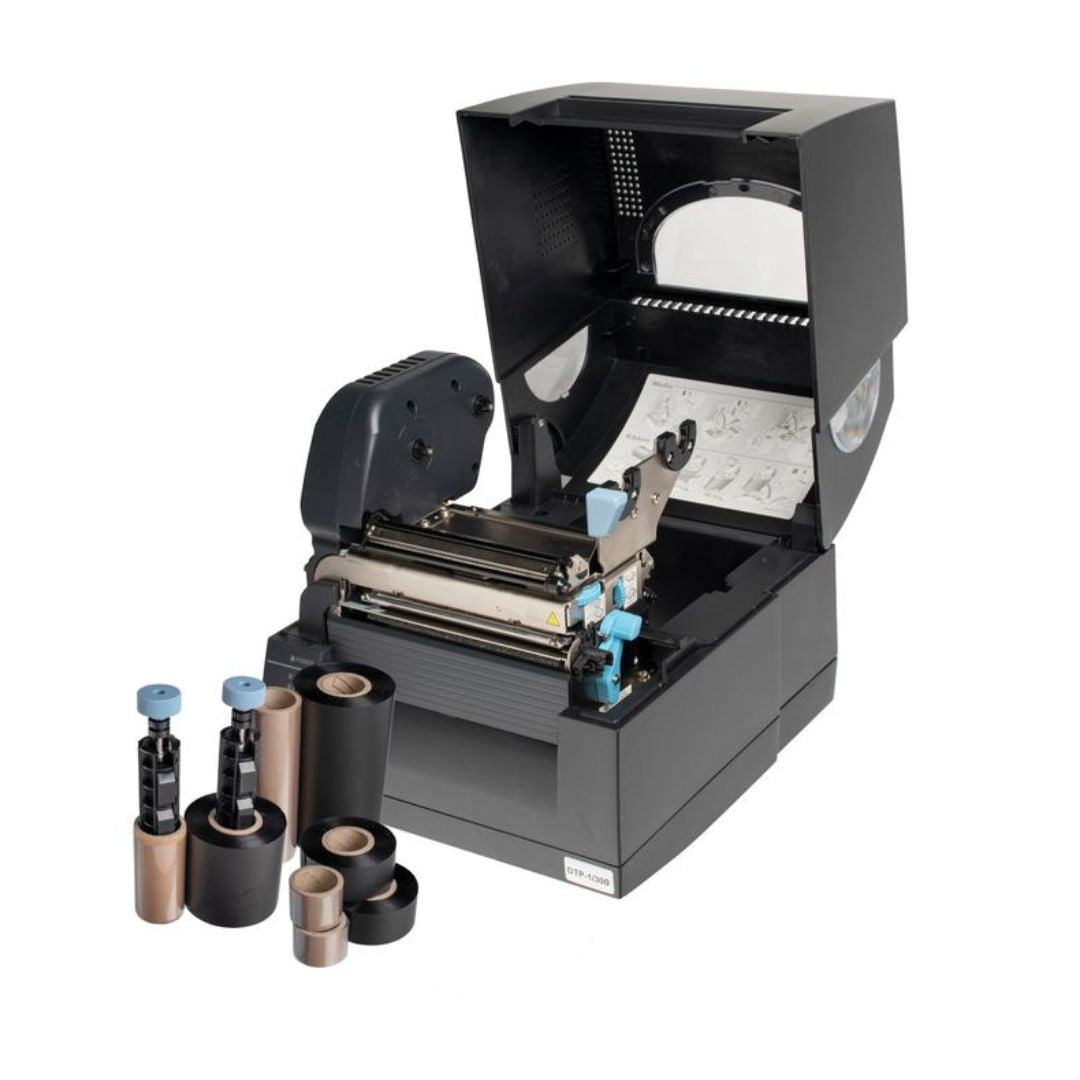
All of these label types can be designed and printed using Fox-in-a-Box®, Silver Fox®'s all-in-one industrial label printer. Having a single system that handles wrap-around labels, tie-on markers, and adhesive tapes means you can switch between labelling approaches on site without needing multiple printers or software packages.
Wrap-around
Self-laminating design bonds to itself. Best for PVC, LSZH, and mixed cable environments where you need abrasion-resistant cable identification.
Tie-on
Mechanical attachment via cable tie. Best for PE, PP, silicone, braided sleeving, and any surface where adhesive labels will not hold.
Adhesive tape
High-tack acrylic adhesive for extra-strong bonding. Best for equipment panels, junction boxes, and cable trays in harsh environments.
5. FAQ
Frequently Asked Questions
Will cable labels stick to PVC jackets?
Yes. PVC has high surface energy, making it the easiest cable jacket material to label with standard acrylic adhesive labels. Clean the surface with IPA first and apply firm pressure for the best results.
Will labels stick to PE or PP cable jackets?
Standard adhesive labels often struggle on polyethylene and polypropylene because of their low surface energy. Use a self-laminating wrap-around label that bonds to itself, a tie-on cable marker, or apply an adhesion primer before using an adhesive label.
Do I need primer or surface preparation for good adhesion?
An IPA wipe is sufficient for most cable jackets. Primer is only needed for very low surface energy materials like PE, PP, and silicone, and even then, switching to a tie-on or wrap-around label is usually more practical than priming every cable on a large installation.
Is oil on the cable the reason my labels fall off?
Very likely. Cables pick up oils from hands, pulling lubricants, and manufacturing residues. Even a thin film of oil prevents the adhesive from making proper contact with the jacket surface. A quick IPA wipe before labelling solves this in most cases.
Will labels stick to powder-coated metal?
Standard adhesive labels can struggle on textured powder coatings because the adhesive cannot make full contact with the surface. Use an extra strong adhesive label or consider self adhesive traffolyte labels or mechanically fixed engraved labels for permanent equipment identification on powder-coated enclosures and panels.
Will labels stick to stainless steel?
Clean stainless steel has good surface energy, so most acrylic adhesive labels bond well. The key is thorough cleaning, as stainless steel surfaces in industrial settings often have oil films, cleaning chemical residues, or condensation that will prevent bonding.
Can I label cables in cold environments?
Most pressure-sensitive adhesives need application temperatures above 10°C to bond correctly. If you are working in cold conditions, warm the label and the cable surface area before applying. Alternatively, use tie-on cable markers like Fox-Flo®, which do not rely on adhesive and work at any temperature.
Next steps
Get Labels That Stay Put
Need help choosing the right cable label?
Silver Fox® offers a complete range of cable labels, from self-laminating wrap-arounds to UV-stable tie-on markers, all printable from a single Fox-in-a-Box® system. Our technical team can help you match the right label type to your cable jacket, environment, and application requirements.
Contact us at [email protected] or call +44 (0) 1707 37 37 27.
References
Pressure Sensitive Tape Council (2023) Adhesion to Difficult Surfaces: Technical Bulletin. Available at: https://www.pstc.org (Accessed: 17 February 2026).
3M (2024) Surface Energy and Adhesion: A Guide to Bonding to Low Surface Energy Plastics. Available at: https://www.3m.com/3M/en_US/bonding-and-assembly-us/resources/science-of-adhesion/surface-energy/ (Accessed: 17 February 2026).