
Cable Labelling Guide
Wrap Around Cable Labels: When and How to Use Them
Self-laminating wrap around labels offer fast application and built-in protection for data cabling. This guide covers what they are, when to choose them, and how to apply them correctly.
When labelling cables in data centres, server rooms, or industrial Ethernet installations, the label you choose needs to stay readable for years, sometimes decades. It also needs to withstand the handling, movement, and environmental conditions that cables face throughout their working life. Self-laminating wrap around labels address these challenges with a design that combines fast application with built-in protection.
This guide explains what wrap around cable labels are, when they're the right choice for your project, and how to apply them correctly. Whether you're labelling a small network installation or a large-scale data centre project, understanding these labels will help you select the right solution for your cable identification needs.
1. Definition
What Are Wrap Around Cable Labels?
Wrap around cable labels, also known as self-laminating labels, consist of two distinct sections: an opaque printable area where your cable identification is printed, and a clear protective tail that wraps over the printed section once applied. This design creates a laminated finish without requiring any additional equipment or materials.
The label wraps completely around the cable, with the clear tail covering and protecting the printed information. This protective layer shields the text from abrasion, moisture, oils, and general handling, keeping your cable identification legible throughout the cable's operational life.
Printable Section
The opaque area where cable IDs, barcodes, or other identification information is printed. Highly opaque to ensure clarity regardless of cable colour.
Clear Protective Tail
A transparent section that wraps over the printed area, creating a sealed, laminated finish that protects against environmental factors.
Unlike tie-on labels that hang from the cable, wrap around labels adhere directly to the cable jacket using a strong acrylic adhesive. This makes them particularly suited to applications where cables are bundled tightly together or where hanging labels might snag or become difficult to read. Products like Prolab® Thermal Self-Laminating Wrap-Around Labels are manufactured from durable polyethylene with an acrylic adhesive designed for long-term bonding to cable jackets.
2. Benefits
Why Choose Self-Laminating Wrap Around Labels?
Self-laminating wrap around labels offer several distinct advantages that make them the preferred choice for data cabling and network infrastructure projects.
Built-In Protection
The clear laminate tail that wraps over your printed text provides protection without any additional steps or materials. Once applied, the printed identification is sealed beneath the transparent layer, shielded from abrasion, moisture, oils, and cleaning agents. This is particularly valuable in environments where cables are regularly handled during maintenance or reconfiguration.
Apply After Termination
One significant advantage of wrap around labels is that they can be applied to cables that are already terminated. Unlike heat shrink markers, which must be slid onto the cable before connectors are fitted, wrap around labels simply wrap around the cable jacket at any point in the installation process. This flexibility is valuable when labelling terminated wires during commissioning or maintenance.
Low Profile Design
Wrap around labels sit flat against the cable, creating minimal bulk. In data centres and server rooms where cables are tightly bundled in cable trays and racks, this low profile keeps cable runs neat and organised without obstructing airflow or creating snag points.
Self-Laminating
Clear tail seals over printed text, no extra equipment needed.
Post-Termination
Apply at any stage, including cables already fitted with connectors.
Fast Application
Peel, wrap, and press - no heat gun or specialist tools required.
3. Applications
When Should You Use Wrap Around Labels?
Self-laminating wrap around labels excel in specific applications where their design offers clear advantages. Understanding these use cases helps ensure you select the right cable identification approach for your project.
Data Centres and Network Infrastructure
In structured cabling environments, wrap around labels are often the preferred choice. Network cables in data centres are typically bundled closely together in cable trays and racks. The flat profile of wrap around labels keeps cable runs neat and organised, while the self-laminating construction protects identification from the regular handling that occurs during moves, adds, and changes.
Industrial Ethernet Applications
In manufacturing and process environments using industrial Ethernet, wrap around labels provide reliable identification that withstands the oils, cleaning agents, and handling common in these settings. The laminated construction offers good protection without requiring specialist materials.
Fibre Optic Patch Cords
For labelling fibre optic cables and patch cords, Prolab® Laser Fibre Optic Flag Labels provide a purpose-designed solution. These polyester flag labels feature a special shoulder design that helps align the label when fitting to thin fibre cables, with a strong acrylic adhesive ensuring long-term bonding. They can be printed using a standard office laser printer, making them accessible for any size of project.
Wrap Around Labels Are Ideal For:
- Data centres and server rooms
- LAN and network cabling
- Industrial Ethernet installations
- Fibre optic patch cords (using fibre optic flag labels)
- Cables already fitted with connectors
- Applications requiring tidy, low-profile identification
4. Selection
Choosing the Right Wrap Around Label Size
Selecting the correct label size ensures proper adhesion and legibility. The key factor is matching the label dimensions to your cable's outer diameter.
Cable Diameter Matters
Wrap around labels are sized according to the cable outer diameter (OD) they're designed for. Using a label that's too small for your cable means it won't wrap fully around and seal properly. Using one that's too large creates excess material and a bulkier profile than necessary. Prolab® Thermal wrap around labels are available in various sizes to suit different cable diameters, from small Cat5e/Cat6 data cables through to larger industrial cables.
Print Area Considerations
Labels with deeper print areas allow you to print identification that's visible from all sides of the cable once applied. This is useful when cables are arranged in ways that make only one side easily visible. Consider how much text you need to fit when selecting label dimensions. For example, choosing labels with a 25mm x 24mm print area allows you to print IDs that are readable from any angle around the cable.
Label Width Options
Both 25mm and 50mm width labels are available in the Prolab® range. The wider 50mm option is useful for longer cable IDs or when you need to include additional information such as destination details or circuit references.
Quick Sizing Guide
- Check your cable's outer diameter specification
- Select a label range that covers your cable OD
- Consider print area depth for all-round visibility
- Match label width to the length of ID you need to print
5. Application
How to Apply Wrap Around Cable Labels
Applying wrap around labels correctly ensures good adhesion and long-term legibility. The process is straightforward but following best practices makes a difference to the finished result.
-
1
Prepare the Cable Surface
Ensure the cable jacket is clean and dry. Remove any dust, oil, or residue that could affect adhesion. The acrylic adhesive bonds best to clean surfaces.
-
2
Position and Apply the Label
Peel the label from its backing and position the printed section where you want it on the cable. Press the printed area firmly onto the cable jacket.
-
3
Wrap Around the Cable
Continue wrapping the label around the cable, ensuring smooth application without air bubbles or wrinkles. Apply even pressure as you go.
-
4
Seal with the Clear Tail
The clear protective tail should wrap over the printed area, creating the laminated seal. Press firmly to ensure good contact between the layers.
The label should now be securely attached with the printed text protected beneath the clear laminate layer. This construction shields your cable identification from abrasion, moisture, and handling throughout the cable's service life.
6. Printing
Thermal vs Laser Printing for Wrap Around Labels
Wrap around cable labels are available in both thermal-printable and laser-printable formats. The right choice depends on your volume requirements and workflow preferences.
Thermal Printing for High Volume
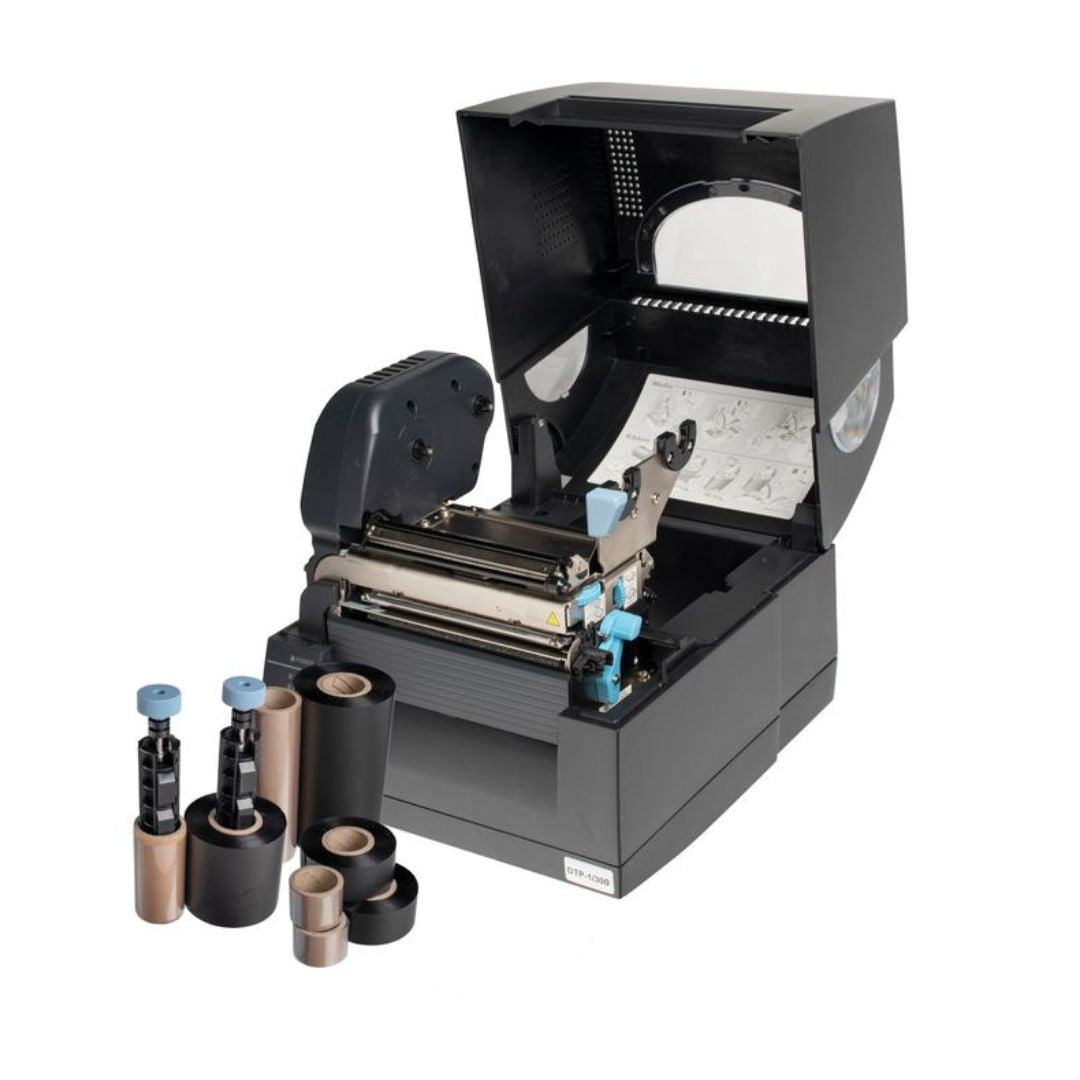
Thermal transfer printing using a dedicated cable label printer like Fox-in-a-Box® offers rapid, on-demand printing. Prolab® Thermal wrap around labels are supplied in rolls of 5,000 and can be printed at speeds of up to 32 labels per second. This makes thermal printing the practical choice for larger projects or environments where labelling is an ongoing, regular task. A single 300m thermal ribbon yields approximately 23,000 labels at 25mm width.
Laser Printing for Flexibility
For smaller volumes or where a dedicated printer isn't practical, Prolab® Laser Self-Laminating Wrap-Around Labels can be printed using a standard office laser printer. These are supplied as pre-perforated A4 sheets, with up to 90 labels printable in around 20 seconds - the time it takes the sheet to pass through the printer. Labels are then easily removed from the sheet by folding along the perforations. This option works well for occasional labelling needs or where investing in dedicated equipment isn't justified.
Thermal Printing
High-speed roll-fed printing at 32 labels per second. Rolls of 5,000 labels. Best for large projects and ongoing labelling needs using Fox-in-a-Box®.
Laser Printing
Pre-perforated A4 sheets for office printers. Up to 90 labels per sheet. Ideal for smaller volumes or occasional use with no specialist equipment.
Both printing options use the Labacus Innovator® software for label design, which includes templates for all Prolab® label sizes and supports importing data from spreadsheets for efficient batch printing.
7. FAQs
Frequently Asked Questions
How do I label cables DIY?
For DIY cable labelling, wrap around labels offer a straightforward solution. Print your cable identifications using either a thermal label printer or a standard laser printer with compatible label sheets. Apply by wrapping around the cable at your chosen location - no specialist tools are needed. The self-laminating design means the label seals itself as you apply it.
How do I label network cables?
Network cables are typically labelled near each end, close to the connector or patch panel. Use wrap around labels sized for your cable diameter, print the cable ID using consistent naming conventions, and apply so the text is easily readable. For structured cabling, follow your organisation's labelling standard or ANSI/TIA-606 guidelines.
Can I label fibre optic cables with wrap around labels?
Yes, but standard wrap around labels may be too large for thin fibre patch cords. Prolab® Laser Fibre Optic Flag Labels are specifically designed for individual optical fibres. These polyester labels feature a flag design with a special shoulder that helps align the label during application, and use a strong acrylic adhesive for long-term bonding to the fibre jacket.
What's the difference between wrap around labels and cable tags?
Wrap around labels adhere directly to the cable jacket using adhesive, creating a flat, low-profile identification. Cable tags, such as tie-on labels, hang from the cable and offer larger print areas but create more bulk. Wrap around labels are typically preferred for data cabling where space is tight, while tie-on tags are often used in industrial applications where larger, more visible identification is needed.
How long do wrap around labels last?
Prolab® wrap around labels are tested to withstand elevated temperatures, low temperatures, sour gas exposure, salt mist spray, and UV weathering. The combination of durable polyethylene or polyester material, strong acrylic adhesive, and self-laminating protection means labels typically last the lifetime of the cable installation when properly applied to a clean surface.
Next Steps
Ready to Start Labelling?
Whether you're setting up a new data centre, maintaining existing network infrastructure, or labelling industrial Ethernet installations, self-laminating wrap around labels provide a reliable, professional identification solution. The combination of fast application, built-in protection, and the ability to apply after termination makes them a practical choice for modern cable management.
Find the Right Labels for Your Project
Silver Fox® offers a complete range of self-laminating wrap around labels for thermal and laser printing, plus specialist fibre optic flag labels. Our team can help you select the right products for your specific application and volume requirements.
Contact our expert team at [email protected] or call +44 (0) 1707 37 37 27.