
Selection Guide
Durable Labels for Harsh Environments
Heat, UV, chemicals, moisture, and abrasion all attack cable labels differently. Here is how to choose a label material that keeps working when the environment does not.
A cable label that works perfectly in a temperature-controlled server room may fail within months on an offshore platform or inside a high-temperature switchgear panel. The difference is not quality in general terms - it is suitability for the specific conditions the label will face throughout its service life.
This guide covers the five main environmental threats to cable labels and equipment labels, explains which materials are designed to resist each one, and helps you make the right choice at the specification stage rather than discovering the wrong one at the maintenance stage. Whether you are selecting a labelling supplier for a new project or troubleshooting labels that have already failed, understanding these environmental factors is the starting point.
1. Temperature
Heat resistant labels and cold weather performance
Temperature is the most common cause of label failure in industrial environments. High temperature labels need to withstand not just the ambient reading but the peak conditions inside enclosed panels, engine compartments, and process equipment where heat concentrates.
Heat attacks labels in two ways. First, it softens adhesives, causing edge lift and eventual detachment. Second, it degrades print, turning crisp text into faded marks that can no longer be read during maintenance or fault-finding.
High temperature environments
Polyester-based labels such as Prolab® High Performance Tape use acrylic adhesives designed to maintain bond strength at elevated temperatures. These labels are designed to perform at elevated continuous temperatures without significant loss of adhesion or print legibility.
Cold and freeze-thaw cycling
Cold environments present the opposite challenge: adhesives stiffen, substrates become brittle, and repeated freeze-thaw cycling stresses the bond line. Labels installed outdoors in the UK routinely face temperature swings from -15°C to +35°C across a year.
For cable marking in high-temperature panels, Legend™ Premium Heatshrink markers provide a mechanical grip around the cable that does not depend on adhesive at all, making them a strong choice where heat is the primary concern.
2. UV exposure
Weatherproof labels for outdoor cable runs
Ultraviolet radiation breaks down polymers at the molecular level. In practical terms, this means labels that look fine after installation can become unreadable within one to two years of direct sunlight exposure if the wrong material is specified.
UV-stable materials use additives that absorb or reflect UV energy before it reaches the polymer chains. Fox-Flo® tie-on cable labels have been tested to 8,000 hours of accelerated UV weathering in accordance with ISO 4892 Part 3 Method A, which is broadly equivalent to 12 to 15 years of outdoor exposure in a Northern European climate.
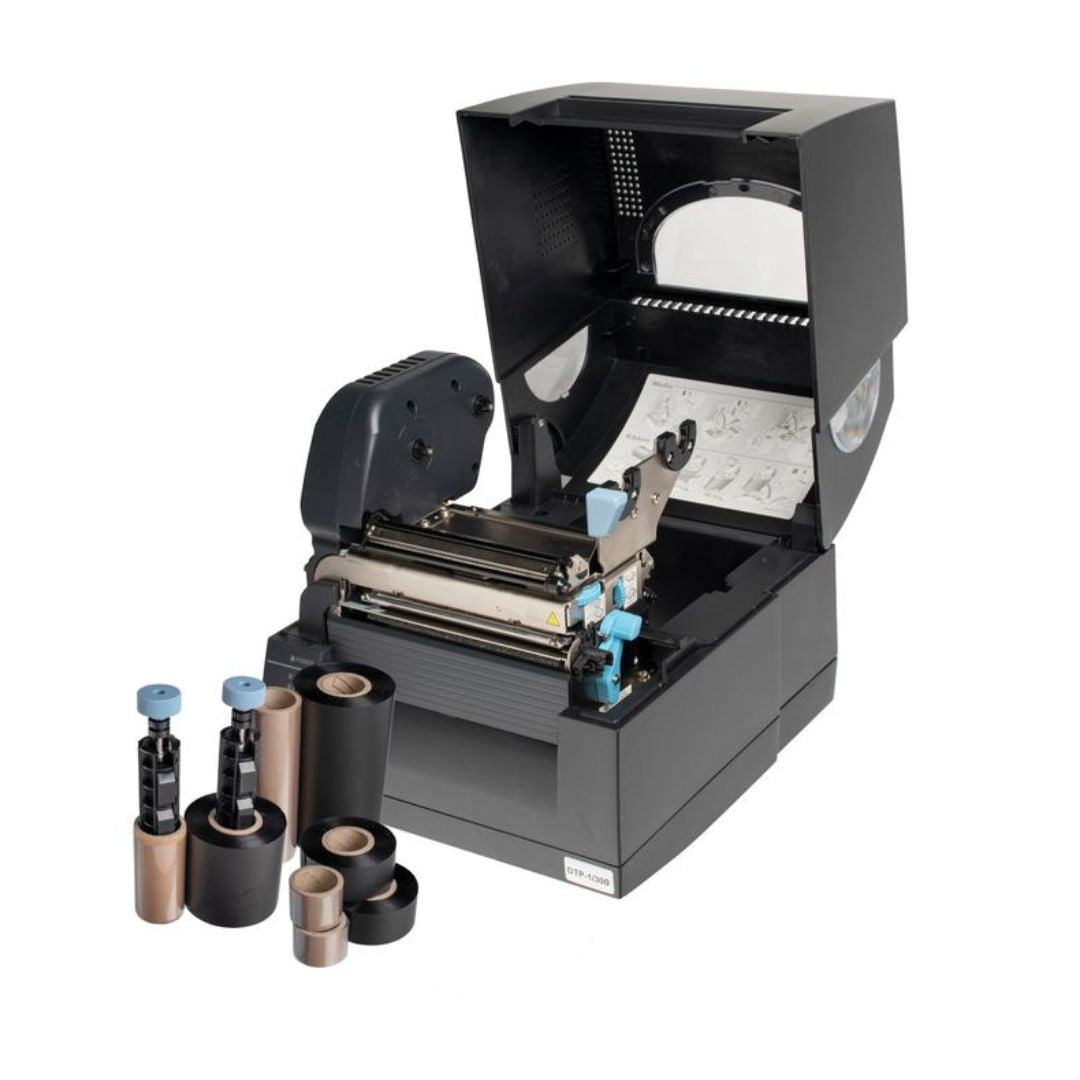
For weatherproof labels on equipment exposed to direct sunlight, combining a UV-stable substrate with thermal transfer printing (rather than laser or inkjet) significantly extends print life. The resin-based ribbon used in the Fox-in-a-Box® thermal transfer system bonds pigment into the label surface rather than depositing toner on top, giving it considerably better resistance to UV fading.
3. Chemicals
Chemical resistance for oil, solvents, and cleaning agents
Chemical exposure is common in oil and gas facilities, manufacturing plants, substations, and any environment where cables pass through areas subject to washdown, degreasing, or incidental fluid contact.
The challenge is that different chemicals attack different parts of the label system. Hydrocarbons tend to soften adhesives. Solvents can dissolve print. Acids and alkalis may attack the substrate itself. Cleaning agents used during routine maintenance are a particularly overlooked threat because they are applied repeatedly over the label's service life.
Polyester substrates with acrylic adhesives offer broad chemical resistance. Prolab® labels have been tested against a range of common industrial fluids and shown to maintain both adhesion and print legibility. For cables passing through cable glands into process areas where chemical exposure is unavoidable, specifying the right label at the design stage avoids the cost of re-labelling after commissioning.
In environments where chemical contact is severe or continuous, engraved traffolyte labels provide one of the most resilient options. Because the text is physically cut into the material rather than printed on the surface, there is no print layer to attack. Silver Fox® produces engraved labels in acrylic, stainless steel, and anodised aluminium to suit different chemical environments.
4. Physical wear
Abrasion, handling, and mechanical damage
Labels on cables that are regularly handled, bundled, pulled through conduit, or run through cable trays face mechanical wear that no amount of chemical resistance can solve. The print surface gets scuffed. Edges catch and lift. Thin substrates tear.
Self-laminating wrap around labels address this by encasing the printed text beneath a clear protective layer. The laminate takes the abrasion while the print underneath remains intact. This is why wrap around labels are the default choice for structured cabling installations where cables are pulled through trays and bundled together.
For applications where physical handling is extreme, such as cables on mobile plant, temporary installations, or environments with heavy vibration, Fox-Flo® tie-on labels avoid the adhesive question entirely. The label hangs from the cable rather than sticking to it, which means vibration and flexing do not stress the bond line.
Where abrasion is the primary concern on flat surfaces such as equipment enclosures, control panels, or junction boxes, Prolab® Raised Profile Labels use a foam carrier beneath a polyester face that absorbs impact rather than transmitting it directly to the adhesive layer.
5. Fire safety
Low smoke zero halogen cable labels
In enclosed or poorly ventilated spaces such as underground rail tunnels, offshore platforms, naval vessels, and some data centre environments, the fire behaviour of every material in the cable tray matters, including the labels. Low smoke zero halogen (LSZH) materials are designed to produce minimal smoke and no toxic halogen gases if they are exposed to fire.
Specifying LSZH cables and then using non-LSZH labels on them defeats the purpose. The label material needs to match the cable standard. Fox-Flo® labels are manufactured from LSZH material as standard, and Legend™ LSZH Heatshrink markers extend this to heatshrink applications where the marker physically encases the cable.
LSZH requirements are typically driven by project specifications or sector regulations rather than being a general-purpose choice. If your project specification calls for LSZH cables, check that the labelling is specified to the same standard. According to BS EN 50525-3-41, cables classified as LSZH must meet specific smoke density and halogen content requirements, and the same logic should extend to any material affixed to them. IEC 62491 provides further guidance on industrial cable identification practices, including labelling durability requirements for different installation environments.
6. Putting it together
Matching labels to your environment
Most real-world environments present more than one challenge at once. An outdoor cable run faces UV and moisture. A refinery faces chemicals and heat. A London Underground tunnel faces LSZH requirements and abrasion from maintenance access.
The practical approach is to identify the dominant threat and then check that the chosen material also handles the secondary ones. Silver Fox® provides material specification guidance and can advise on the right combination for a specific environment. The Labacus Innovator® software works with the Fox-in-a-Box® printer across the full range of label materials, so switching between materials for different zones within a single project does not require different equipment.
Indoor panels
Prolab® polyester labels or Legend™ Premium Heatshrink. Primary threats: heat from enclosed panels, occasional cleaning chemicals.
Outdoor cable runs
Fox-Flo® tie-on labels (UV-stable, LSZH). Primary threats: UV, moisture, temperature cycling, wind-driven abrasion.
Process / chemical
Prolab® polyester or engraved stainless steel/aluminium. Primary threats: chemical splash, washdown, oil mist.
FAQ
Common questions about durable labels
Will the print rub off during handling and installation?
Thermal transfer printing bonds a resin-based pigment into the label surface, which is generally more abrasion-resistant than laser toner or inkjet ink sitting on top. For additional protection, self-laminating wrap around labels encase the print beneath a clear overlay.
What labels remain legible for 20 to 30 years outdoors?
Laminated labels with UV-stable substrates and thermal transfer print are designed for extended outdoor service life. Fox-Flo® labels have been tested to 8,000 accelerated UV hours in accordance with ISO 4892 Part 3, broadly equivalent to 12 to 15 years in a Northern European climate. For the longest possible lifespan, engraved traffolyte or stainless steel labels offer identification that is not dependent on print at all.
Which label type is suitable for wrap around cable identification?
Self-laminating wrap around labels provide a print area and a clear protective tail that wraps over the text. They are available for both thermal transfer and laser printing. For a full comparison of cable label formats, see our guide to wrap around cable labels.
Which label type is suitable for equipment identification?
Equipment labels typically need a flat, durable substrate with strong adhesion. Prolab® polyester labels with acrylic adhesive are designed for this application. For high-value or safety-critical equipment where identification must remain permanently legible, engraved nameplates in stainless steel or anodised aluminium are one of the most resilient options.
Will labels go brittle and fall off over time?
Embrittlement is typically caused by UV exposure or prolonged heat cycling on materials not designed for those conditions. Using UV-stabilised substrates for outdoor applications and temperature-rated adhesives for hot environments largely prevents this. If you are finding labels that have gone brittle, it usually indicates a material mismatch rather than a general quality issue. Our guide on why cable labels fall off covers the most common causes.
Will a self-laminating wrap trap bubbles or dirt?
If the cable surface is clean and dry at the point of application, the laminate should bond smoothly without trapping air. Surface preparation matters: wiping the cable jacket with an appropriate cleaner before applying the label significantly reduces the risk of trapped debris.
Next steps
Get the right label for your environment
Not sure which label material suits your environment?
Silver Fox® has been manufacturing industrial cable labels and equipment labels in the UK since 1979. Our technical team can advise on the right material, adhesive, and print method for any environment, from temperature-controlled data centres to offshore platforms.
Contact us at [email protected] or call +44 (0) 1707 37 37 27.
References
BSI (2011) BS EN 50525-3-41: Electric cables - Low voltage energy cables of rated voltages up to and including 450/750 V - Cables with special fire performance. British Standards Institution.
IEC (2020) IEC 62491: Industrial cables - Identification of conductors, terminations and cables. International Electrotechnical Commission.
ISO (2013) ISO 4892-3: Plastics - Methods of exposure to laboratory light sources - Part 3: Fluorescent UV lamps. International Organization for Standardization.