
Asset Management & Labelling
Sunrise 2027: What GS1's Shift to 2D Barcodes Means for Industry
The familiar 1D barcode is being joined by data-rich 2D codes. Here is what the global move to QR codes and GS1® Data Matrix means beyond the supermarket checkout, for the equipment and asset labels engineers specify every day.
If you follow packaging or retail news, you will have seen the headlines about the barcode changing for the first time in fifty years. Behind those headlines is a global initiative from GS1®, the organisation behind the world's product and location identification standards, to move from the 1D barcode we all know to data-rich 2D codes such as QR codes and Data Matrix.
The retail deadline has a name, Sunrise 2027, but the shift reaches well beyond the supermarket, and it has real implications for how industrial equipment and assets are identified and traced. This post separates what the change actually is, what it means for industrial labelling, and the questions worth asking now about the labels you specify.
1. The change
What is actually changing
For five decades, the 1D barcode, the row of vertical bars on almost every product, has done one core job at the checkout: hold a product number for price look-up. GS1®'s Sunrise 2027 initiative asks the retail world to be ready for something richer. The goal is that by the end of 2027, retail point-of-sale systems everywhere will be able to read 2D codes, such as QR codes and GS1® Data Matrix, at checkout, alongside the conventional 1D barcode.
Two points matter, because they are widely misread:
It is a capability milestone, not a switch-off
1D barcodes are not being banned. The 2027 date is about retailers being able to read 2D codes. During the transition, many products will carry both a 1D and a 2D code so they scan everywhere.
The product number does not change
The Global Trade Item Number (GTIN) that identifies a product stays the same. What changes is the carrier: the 2D code that holds it, and the additional information it can hold alongside it.
That additional capacity is the whole point. A 1D barcode holds a single number. A 2D code can hold far more in the same or less space: batch and serial numbers, dates, and, through the GS1® Digital Link standard, a web address that turns the code into a gateway to digital information about the item.
2. The why
Why 2D, and why now
The pressure behind the shift is the same one engineers and asset owners will recognise from their own world: people want more information from a single scan, regulators increasingly require it, and organisations need to trace items more precisely through their lifecycle.
A 2D code answers that by carrying structured data and, where it uses GS1® Digital Link, a link to a record or resource. One scan can move from "what is this" to "here is everything about this": its specification, its documentation, its history. For consumer goods that means origin, ingredients and recycling information. For industry it means something far more useful: a direct line from a physical asset to its digital record.
For broader background on how the different code types compare, our explainer on QR codes, barcodes, Data Matrix codes and the role of GS1® walks through what each code does and why GS1® matters.
3. Beyond retail
What it means for industrial asset identification
This is where the shift stops being a retail story and starts being relevant to the equipment and infrastructure Silver Fox® customers work with.
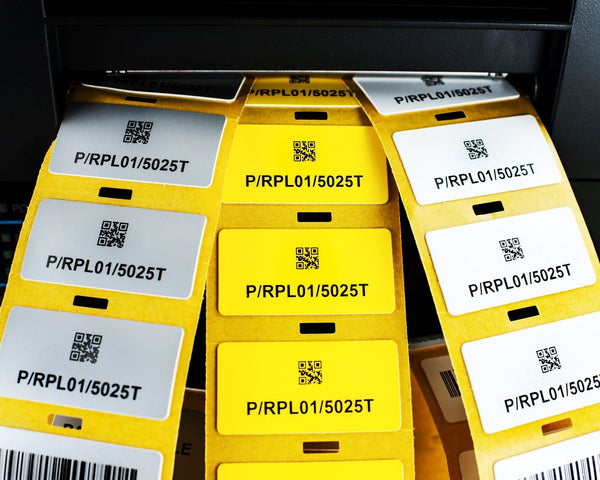
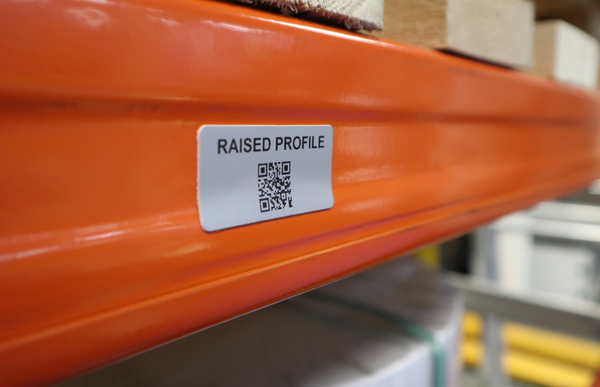
GS1®'s 2D standards are not retail-only. The same symbologies, in particular GS1® Data Matrix, are already used across healthcare and industrial manufacturing, where they are valued for holding a lot of data in a small, robust mark. In an industrial setting, a 2D code on an asset, a panel, a cable run or a piece of plant can do far more than identify it. It can connect a technician, with a single scan from a standard device, to the asset's maintenance records, its installation documentation, its compliance certificates, or its position in an asset management system.

GS1 UK Approved Partner
Silver Fox® is a GS1 UK Approved Partner. Labacus Innovator® Professional generates GS1® Data Matrix codes to the GS1® specification, supporting standardised serialised identification for asset tracking and traceability.
A clear point, kept honest: the 2027 date is a retail point-of-sale milestone. It does not impose a deadline on industrial asset labels, and nobody should specify identification on the basis that they must comply by a fixed date. The relevance to industrial identification is direction and opportunity, not regulation. The momentum behind 2D, the falling cost of generating and reading the codes, and the growing expectation that an asset can be scanned to its record, all point the same way. Planning for it now, rather than being caught behind it, is the sensible position.
4. The label itself
What it means for the labels you specify
The move to 2D raises the bar on the label itself, in two ways that play directly to where Silver Fox® has always focused.
First, print quality. A 2D code packs far more detail into a small area than a 1D barcode, so it needs higher print resolution to stay reliably scannable. A blurred or under-resolved 2D code is a code that fails to scan, and on an asset that may be in service for years, that matters.
Second, durability. An industrial identification label is not on a cereal box for a few weeks. It is on equipment that may face heat, abrasion, chemicals, UV or washdown for the whole of its service life, and the code has to stay readable throughout. A 2D code is only as good as the label carrying it. As a durability reference point, Prolab® Low Profile Asset Labels have been shown to withstand 3,000 hours of accelerated UV exposure, equivalent to approximately five years in a Northern European climate.

Labacus Innovator®
Silver Fox®'s label design software. The Professional level handles spreadsheet imports, barcodes, QR codes and GS1® Data Matrix encoding, with free lifetime updates and support. Available in three levels: Basic, Advanced and Professional.
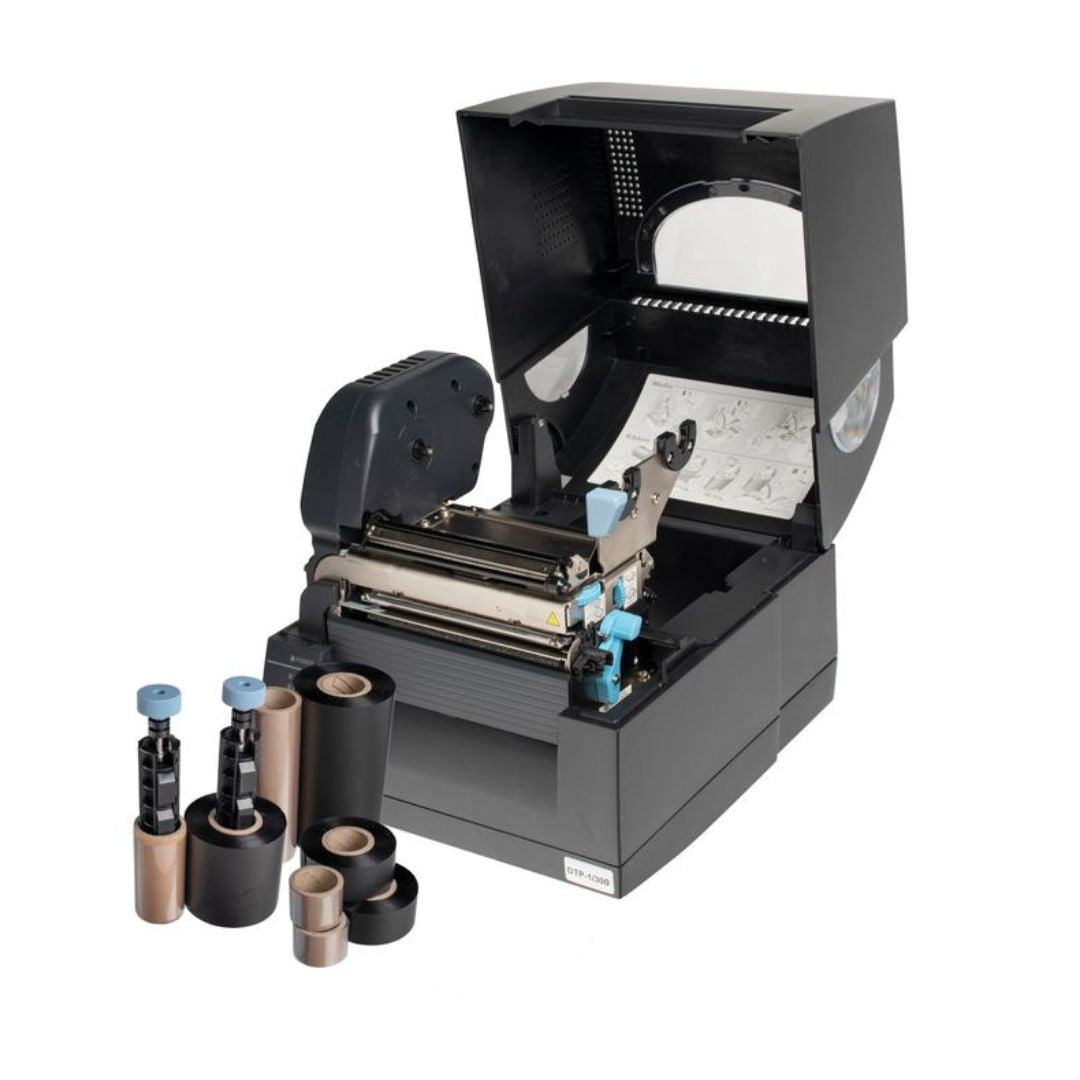
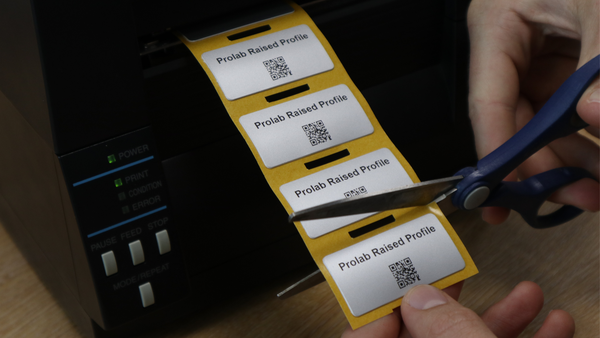
This is where the full Silver Fox® stack matters, because a scannable code starts before it is printed. The Professional level of Labacus Innovator® generates GS1®-compliant Data Matrix codes natively, so the identification you create is built to GS1® standards from the outset rather than retrofitted later. That code is then printed on demand through the Fox-in-a-Box® system, which produces a wide range of label types from one printer, on materials designed to stay legible in demanding environments for the long term. Software that already speaks GS1®, a printer that puts the code on almost any label type, and a label built to survive in service: as more identification moves to 2D, that combination answers the two questions worth asking of any label, will the code print crisply enough to scan, and will it last where the asset lives.
For a practical look at how barcodes and QR codes work on cable and equipment labels day to day, our guide to barcodes and QR codes on cable and equipment labels covers the workflow from data import to printed label.
5. Practical steps
How to prepare
For anyone responsible for specifying or managing asset identification, a few practical steps make sense now, without waiting for the retail timeline.
-
1
Review where identification already exists
Map your current asset and equipment identification and identify where a 2D code linking to records, documentation or certificates would add genuine value, rather than adopting 2D for its own sake.
-
2
Plan for the higher print resolution 2D requires
A code that does not scan reliably is worse than no code, so print method and quality matter more, not less, with 2D. Thermal transfer or laser printing, on a label material suited to the environment, is the starting point.
-
3
Keep your identifier scheme consistent
As with the retail GTIN, the value of identification comes from a stable, well-structured identifier behind whatever carrier you use. Decide on the scheme before you choose the code type.
-
4
Match the label to the environment
Choose a material and print method designed to keep the code legible for the asset's full service life, in the conditions it will actually face: temperature, UV, chemicals, abrasion or washdown.
-
5
Specify both 1D and 2D during any transition
Where you run both code types for a period, make sure both are specified and printed to a scannable standard. A failed 2D code does not fall back to a 1D code unless the 1D is also there.
For teams putting barcode and Data Matrix labelling into practice for the first time, our CPD-accredited "Barcodes in Engineering" training course covers symbologies, GS1® standards and practical label design in a single session.

CPD-Accredited Training
Silver Fox® offers CPD-accredited training in barcode and identification standards for engineering professionals. The "Barcodes in Engineering" programme covers GS1® encoding, Data Matrix best practices, and practical label design workflows.
FAQ
Frequently asked questions
Are 1D barcodes being phased out in 2027?
No. Sunrise 2027 is a capability milestone, not a ban. The goal is for retail point-of-sale systems to be able to read 2D codes by the end of 2027, alongside the conventional 1D barcode. During the transition, many products will carry both a 1D and a 2D code so they scan everywhere. For industrial asset and equipment labels there is no phase-out date at all.
Does Sunrise 2027 apply to industrial asset labels?
Not as a compliance deadline. Sunrise 2027 is a retail point-of-sale event. It does not impose any requirement on industrial asset or equipment identification. The relevance to industry is direction of travel: the wider move to 2D codes, and the growing expectation that an asset can be scanned to its digital record, are both worth planning for. Nobody should specify industrial labels on the basis of a fixed 2027 deadline.
What is GS1® Data Matrix?
GS1® Data Matrix is a 2D code format that follows the GS1® specification for encoding identifiers such as serial numbers, batch codes and dates in a compact, robust mark. It is widely used in healthcare and industrial manufacturing because it holds a lot of data in a small area and remains readable by most industrial and smartphone scanners. The Professional level of Labacus Innovator® generates GS1®-compliant Data Matrix codes natively.
What is the difference between a QR code and a Data Matrix code?
Both are 2D codes that store data horizontally and vertically. QR codes are widely recognised, easy to scan with any smartphone, and well suited to linking a technician to documentation or records. Data Matrix codes pack data into a smaller footprint and are favoured where space on the label is tight or the mark needs to survive a harsh environment. The right choice depends on available space, the scanning method, and how much data the code needs to carry.
What is GS1® Digital Link?
GS1® Digital Link is a standard that lets a 2D code hold a web address as well as a product identifier. Instead of carrying just a number, the code can resolve to an online resource: a record, a manual, a certificate, or an entry in an asset management system. This is what turns a 2D code from a label into a gateway, connecting a physical item directly to its digital information with a single scan.
Next steps
Talk to us about asset and equipment identification
Plan your move to 2D with the labels to back it up
Whether you are reviewing how your assets are identified, planning for richer 2D codes, or making sure your current labelling is suited to where it is installed, our UK team is ready to help you specify the right solution.
Contact us at [email protected] or call +44 (0) 1707 37 37 27.
References
GS1 (2024) Solution Provider 2D Readiness: Ambition 2027. Available at: https://ref.gs1.org/sme-guidance/solution-provider-2d-readiness/
GS1 (2024) GS1 Digital Link standard. Available at: https://www.gs1.org/standards/gs1-digital-link
GS1 UK (2024) Digital Product Passport. Available at: https://www.gs1uk.org/our-industries/digital-product-passport