
Testing & Certification
UV Testing for Cable Labels: What 8,000 Hours Means
A guide to accelerated UV weathering, ISO 4892-3 Method A, and how to read a supplier's UV-resistance claim before you specify.
"UV resistant" appears on the front page of almost every cable label datasheet aimed at outdoor or harsh-environment use. On its own, it tells you almost nothing. A label tested to 1,000 hours and a label tested to 8,000 hours can both carry the same two-word claim, even though the second is designed to outlast the first by an order of magnitude.
This guide explains how UV testing for cable labels actually works, what the ISO 4892 series specifies, what an accelerated test hour translates to in real outdoor years, and the three things to check on a supplier's datasheet before you specify weatherproof labels for a long-life project.
1. The failure modes
What UV does to cable labels
Ultraviolet radiation from sunlight breaks down polymers at the molecular level. The damage starts at the surface and works inward. In practical terms, three failure modes show up on cable labels exposed to direct sunlight without adequate UV stabilisation:
- Print fade. The pigment in the label print loses contrast against the substrate. Letters that were sharp at installation become indistinct, then unreadable.
- Substrate yellowing or chalking. The label material itself discolours, often turning yellow or developing a powdery white surface bloom. This reduces legibility even before the print fades.
- Embrittlement and cracking. Long-chain polymers break down (a process called chain scission), and the label loses flexibility. Tie-on labels start to crack at the cable-tie hole. Wrap-around labels lift at the edges.
A label can look fine for the first few months and then degrade quickly once the protective additives in the substrate are exhausted. This is why short-term outdoor exposure is a poor proxy for long-term performance, and why accelerated laboratory testing has become the standard way to predict how a label will behave over a 10 to 30 year service life.
Standard label materials that are not UV-stabilised, including many general-purpose vinyl and PVC films, may begin to show visible degradation within the first one to two years of direct sunlight exposure. UV-stable materials use additives that absorb or reflect UV energy before it reaches the polymer chains, slowing the degradation process by a factor of years.
2. The test method
How accelerated UV testing actually works
Accelerated weathering is the process of exposing a sample to amplified UV, heat, and moisture conditions in a controlled chamber, so that years of natural outdoor ageing can be reproduced in weeks or months. The international standard for accelerated weathering of plastics is the ISO 4892 series. Two parts of that series are relevant to cable labels.
ISO 4892-2 (xenon arc) and ISO 4892-3 (fluorescent UV)
ISO 4892-2 specifies the use of xenon arc lamps with optical filters to reproduce the full solar spectrum, including ultraviolet, visible, and infrared radiation (ISO, 2013a). The xenon source is closer to natural sunlight across the whole spectrum, but the equipment is more expensive to operate.
ISO 4892-3 specifies the use of fluorescent UV lamps to expose plastics to UV radiation, heat, and water. The lamps used in this method include UVA-340, UVA-351, and UVB-313 types. The UVA-340 lamp is the most commonly used because its spectral distribution closely simulates the short-wave UV portion of natural sunlight, which is the part of the spectrum that drives most polymer degradation (ISO, 2013b).
For cable labels and similar polymer products, ISO 4892-3 is widely used because it accelerates the UV-driven degradation modes that matter most for outdoor labelling: print fade, substrate yellowing, and embrittlement.
What "Method A Cycle 1" specifies
Within ISO 4892-3, different methods and cycles define the precise test conditions. Method A combines UV irradiation and water spray. Cycle 1 sets the irradiance level, the chamber temperature, and the cycle timing of UV exposure followed by water exposure. The combination simulates the weathering pattern of a sample exposed to sunlight, daily heat cycling, and rainfall.
One detail that matters when reading a datasheet: a UV test can be performed on the label substrate alone, or on the printed label. A substrate-only test tells you how the underlying material survives UV. A printed-label test tells you whether the print itself remains legible after the same exposure. The second is the more demanding test and the more useful piece of information for a specifier.
3. From hours to years
What 8,000 accelerated UV hours actually means
The most common question about accelerated UV testing is how to translate a chamber-hours figure into outdoor service life. The honest answer is that the translation depends on climate. Five minutes in a weathering chamber is the same regardless of where the chamber is located, but five minutes of outdoor exposure in northern Scotland in December is not equivalent to five minutes in southern Spain in July.
The conversion uses what is sometimes called a time-compression factor or acceleration factor. For a given climate, the test hours are multiplied by a factor that reflects the average UV irradiance, temperature, and rainfall pattern of the target location. A test result quoted for a Northern European climate will produce a different number of equivalent years than the same test result quoted for a Mediterranean or sub-tropical climate.
Fox-Flo® UV Stable LSZH Tie-On Cable Labels have been tested to 8,000 accelerated UV hours under ISO 4892-3 Method A Cycle 1, with the printed label included in the test. Applied to a Northern European climate, this is broadly equivalent to 12 to 15 years of outdoor exposure. The same test result, applied to a hotter and sunnier climate, would translate to fewer equivalent years because the daily UV dose is higher.
The same UV testing applies to Fox-Flo® UV Stable LSZH Non-Shrink Cable Markers, which use the same LSZH material in a slide-on figure-of-eight format for cables that are already terminated. For most outdoor projects, the choice between the two formats is driven by installation stage (pre-termination versus post-termination) and cable diameter, not by UV durability.
Two points are worth pulling out of that paragraph. First, 8,000 hours is the test exposure, not the label's expected lifespan. The label may last longer in service depending on local conditions, or shorter under extreme exposure. Second, the test was conducted on the printed label, not just the substrate, so the result includes the durability of the thermal transfer print as well as the underlying material.
For context, many UV-tested cable label products in the market are tested in the 1,000 to 3,000 hour range under ISO 4892 conditions, which is a typical exposure for outdoor-rated polymers in cable and electrical applications. Products tested above this range are uncommon, and 8,000 hours represents a deliberately extended test programme.
The grouping above reflects published ISO 4892 test exposures across cable and equipment label products in the market. It is a positioning indicator, not a direct equivalence chart: each manufacturer publishes its own test conditions and acceleration assumptions, so two products quoting the same number of hours can represent different irradiance levels and cycle methods.

Labacus Innovator®
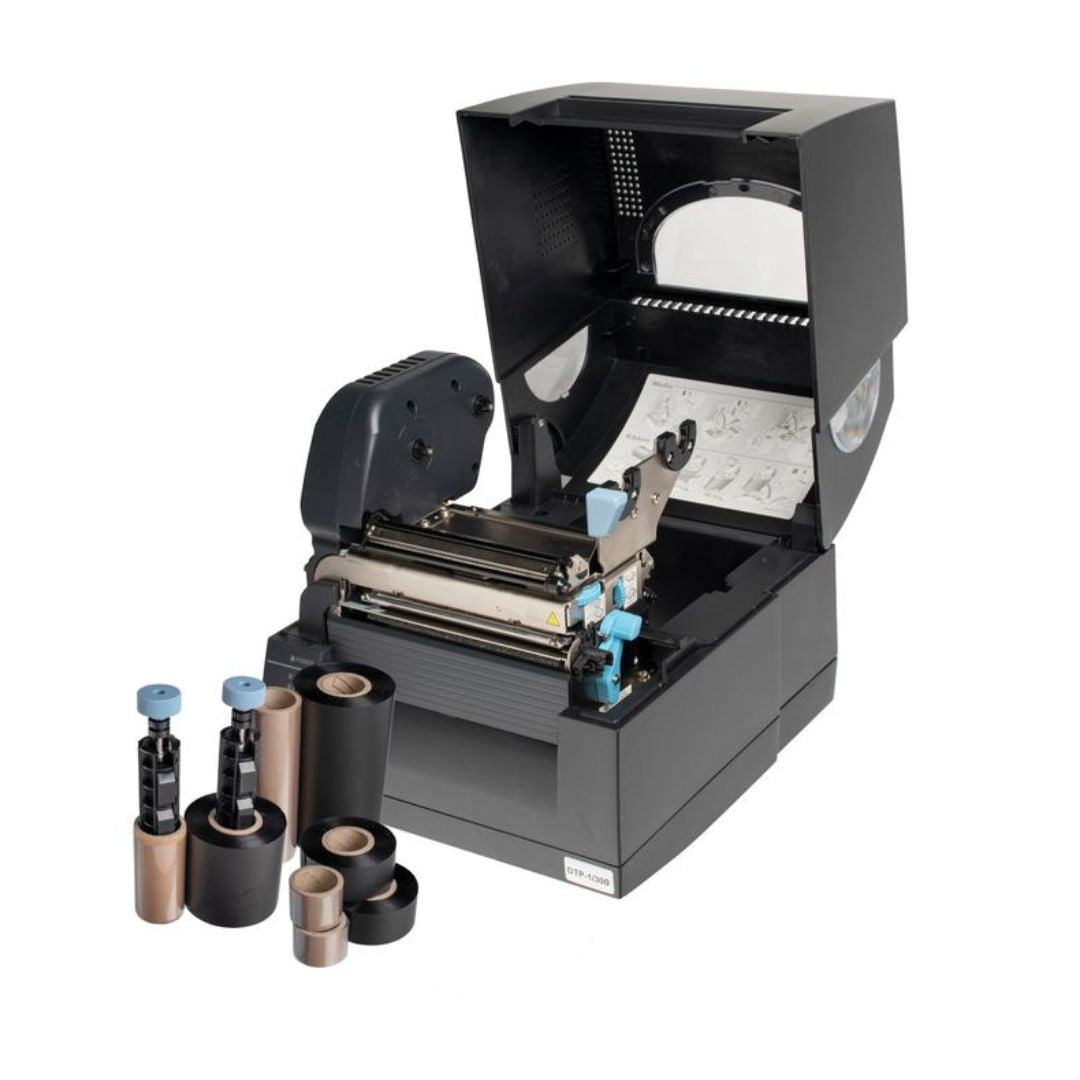
Silver Fox®'s label design software handles everything from simple sequential numbering to full spreadsheet imports, barcodes, QR codes, and GS1® Data Matrix encoding. UV-tested Fox-Flo® labels are designed in the same software interface as every other label in the range, so a project can run UV-exposed and indoor labels through one workflow.
4. Reading the datasheet
What to look for in a supplier's UV claim
A useful UV claim on a cable label datasheet has three pieces of information. A claim missing any of them is incomplete, and any conversion to outdoor years that follows is correspondingly weaker.
-
1
The test standard
Which standard was used. "ISO 4892-3" is the standard most commonly cited for cable labels. "ISO 4892-2" is also valid and uses xenon arc instead of fluorescent UV. Other standards such as ASTM G154 and ASTM G155 cover similar territory in different jurisdictions. A claim that says "UV tested" without naming a standard is not falsifiable.
-
2
The hours and the cycle
How many hours of test exposure, and which method or cycle within the standard. ISO 4892-3 Method A Cycle 1 is a specific combination of UV irradiance, chamber temperature, and water spray timing. Two products both quoted as "tested to ISO 4892-3" can be tested under different methods and cycles, and the results are not directly comparable unless the cycle is named.
-
3
What was tested: substrate or printed label
A substrate-only test tells you about the polymer. A printed-label test tells you about the polymer plus the print system. For a cable label that has to remain readable, the printed-label test is the more relevant result. Datasheets that conduct the test on the printed label typically say so explicitly, often with a "Printed Label" annotation against the relevant test line.
If a datasheet provides all three, the UV claim is verifiable and translatable. If it provides only one or two, the claim is closer to marketing language than test data, and worth a follow-up question to the supplier.
5. Real-world applications
Where UV-tested labels fit in real installations
Not every cable in a project needs the highest UV-rated label. Internal control wiring, indoor data cables, and equipment in temperature-controlled enclosures face very limited UV exposure. The investment in extended UV-tested materials pays back where the label is genuinely going to be exposed to direct sunlight for years.
Three example applications illustrate the point.
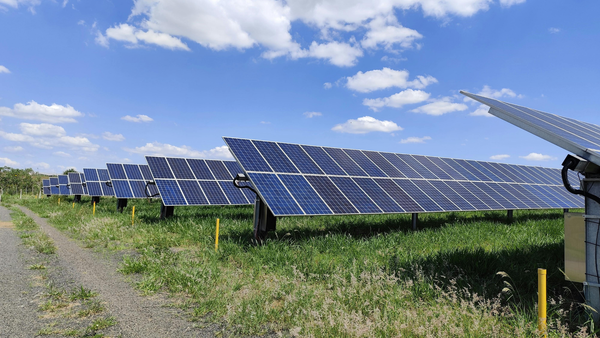
Solar farms and ground-mounted PV
Solar installations are the clearest case. Cables on a solar farm see sustained UV exposure across a 30 to 40 year design life, with battery storage cabinets, string cabling, and inverter station feeds all routed outdoors. The 800MW Springwell Solar Farm consent granted in April 2026 is one of a growing pipeline of UK solar NSIPs where UV-tested labelling is a project-spec requirement, not an optional enhancement. Fox-Flo® tie-on labels are designed for these conditions, combining UV stability with LSZH construction for the BESS enclosures.
Outdoor substations and switchyards
Distribution and transmission substations expose cable labels to UV alongside dust, temperature cycling, and occasional cleaning chemicals. A label that loses legibility on a substation feeder in year five creates a maintenance problem that is disproportionate to the cost of specifying the right label at year zero.
Rail trackside and trackside cabling
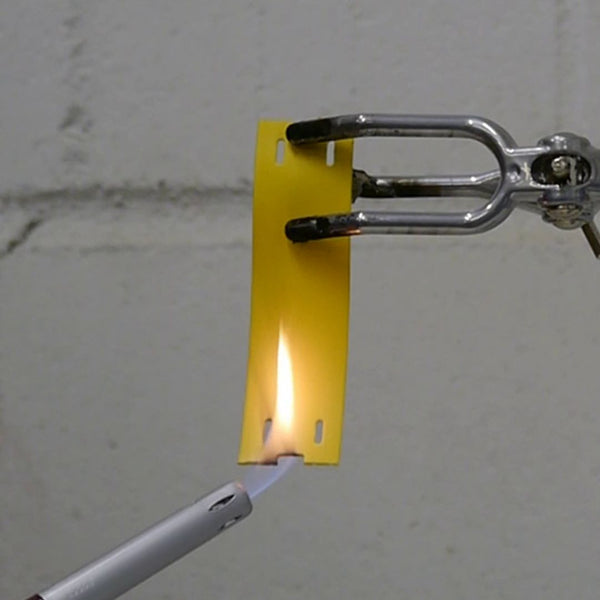
Rail cabling combines UV exposure with strict fire-safety requirements for tunnel and station applications. The Fox-Flo range is tested to LUL1-085, EN 45545-2:2020+A1:2023 requirement set R22 (material), and BS 6853, alongside the ISO 4892-3 UV testing, making both the tie-on and non-shrink formats suitable for outdoor trackside and underground rail environments. The choice between formats follows the cable: tie-on for new harnesses and pre-termination installation, non-shrink for already-terminated cables where the marker has to be applied without heat.
For wire marking on UV-exposed cables where the cable is already terminated and a slide-on format is preferred, Fox-Flo® LSZH Non-Shrink Cable Markers carry the same 8,000-hour UV test data as the tie-on labels and apply without heat. Where heatshrink format is preferred for permanent identification, Legend™ LSZH Heatshrink Rolls are made from a halogen-free, low-smoke-propagation material and are available in continuous roll and ladder formats. For fibre optic patch cords on outdoor-mounted equipment, Prolab® Laser Fibre Optic Flag Labels provide a flag-format identification that can be printed on a standard office laser printer and applied during installation.
For a broader view of how UV interacts with the other environmental threats to cable labels (heat, chemicals, abrasion, moisture), our overview of durable labels for harsh environments walks through the five main failure modes and which materials are designed for each. The difference between LSF and LSZH materials is covered in a sibling explainer for projects where fire-safety material specification sits alongside UV requirements.
FAQ
Frequently asked questions
What does "UV resistant" actually mean for a cable label?
It means the label material includes additives designed to slow ultraviolet degradation. Without a test standard, a number of hours, and a note on whether the printed label was tested, the claim is qualitative rather than verifiable. Datasheets that quote ISO 4892-3 (or equivalent) test hours are giving you data; datasheets that just say "UV resistant" are giving you a label.
How long do UV-resistant cable labels last outdoors?
That depends on the test exposure, the climate, and what is meant by "last." Fox-Flo® has been tested to 8,000 accelerated UV hours under ISO 4892-3 Method A Cycle 1, broadly equivalent to 12 to 15 years of outdoor exposure in a Northern European climate. Hotter, sunnier locations compress that figure; cooler, cloudier locations extend it.
What is the difference between ISO 4892-2 and ISO 4892-3?
ISO 4892-2 uses xenon arc lamps with optical filters to reproduce the full solar spectrum, including visible and infrared. ISO 4892-3 uses fluorescent UV lamps that simulate the short-wave UV portion of sunlight specifically. Both are valid for cable label testing. ISO 4892-3 is the more common choice for accelerated UV screening of polymer products.
Why does the printed-label test matter more than the substrate-only test?
A cable label only does its job if you can read it. A substrate-only UV test tells you how the underlying polymer survives, but not how the print on top of it survives. The printed-label test exposes both the substrate and the print system to the test conditions, so the result tells you whether the label will still be legible at the end of its service life.
Can a label be both UV-stable and LSZH?
Yes. The Fox-Flo® range is manufactured from a low smoke zero halogen material with UV stabilisers built into the formulation, so the same labels meet both fire-safety material requirements and UV durability requirements. The 8,000-hour ISO 4892-3 Method A Cycle 1 test result applies to both Fox-Flo® LSZH tie-on labels and Fox-Flo® LSZH non-shrink cable markers. This combination is particularly relevant for rail trackside cabling, BESS enclosures on solar farms, and offshore platforms where UV exposure and fire-safety material specifications both apply.
Next steps
Specifying for a UV-exposed project
Talk to Silver Fox® about UV-tested labelling
For solar, rail, substation, marine, or any other long-life outdoor project, our technical team can advise on which Fox-Flo® size and format suits the cable schedule, and how to combine UV-tested labels with the rest of the project's identification through one printer and one software workflow. The Fox-in-a-Box® thermal printer produces over 200 label variations from one system, so UV-exposed labels can be batched alongside indoor cabling and equipment labels without changing equipment.
Contact us at [email protected] or call +44 (0) 1707 37 37 27.

References
ISO (2013a) ISO 4892-2: Plastics - Methods of exposure to laboratory light sources - Part 2: Xenon-arc lamps. International Organization for Standardization.
ISO (2013b) ISO 4892-3: Plastics - Methods of exposure to laboratory light sources - Part 3: Fluorescent UV lamps. International Organization for Standardization. (current published edition is ISO 4892-3:2024, Edition 5)
Department for Energy Security and Net Zero (2026) Springwell Solar Farm Development Consent Order. Available at: https://www.gov.uk (Accessed: 6 May 2026).