
Sector Guide
Nuclear New Build and the UK Supply Chain: Where Cable Labelling Fits
The UK's SMR programme is creating a once-in-a-generation demand for industrial labelling across power, control, instrumentation, and safety systems. Here is what the supply chain needs to know.
On 13 April 2026, Great British Energy - Nuclear (GBE-N) and Rolls-Royce SMR signed the contract that formally begins the UK's first small modular reactor programme. Three SMR units at Wylfa on Anglesey will generate at least 1.4 GW of clean electricity, enough to power around three million homes for more than 60 years. The programme is backed by £2.6 billion in government funding and is expected to support approximately 3,000 jobs at peak construction, with thousands more across the wider UK supply chain.
For engineers, contractors, and procurement teams in the energy sector, the implications extend well beyond reactor design. Every nuclear facility contains extensive cable networks spanning power distribution, control systems, instrumentation, data communications, and safety circuits. All of those cables need labelling. So do the pipes, valves, switchgear, distribution boards, and safety-critical equipment throughout the plant. This guide examines the labelling requirements that nuclear new build creates and explains how they connect to materials and capabilities that UK labelling manufacturers already offer.
1. The programme
A UK supply chain moment
The SMR programme is distinctive in its emphasis on domestic capability. Rolls-Royce SMR's modular, factory-built approach means that major components are manufactured in the UK before being transported to site for assembly. GBE-N has already awarded over £350 million in supply chain contracts in 2026 alone, and the government has explicitly framed the programme as a driver of UK industrial growth and long-term skills development.
This supply chain philosophy extends to every tier. When a project specification calls for cable identification, pipe marking, equipment nameplates, or asset labels, the procurement question is not just "which product?" but also "where is it made, and can the supplier demonstrate the quality systems the nuclear sector demands?"
For labelling suppliers, the opportunity sits across every phase: from factory manufacture of modular components, through on-site construction and cable installation, to commissioning documentation and long-term operational maintenance.
2. The labelling brief
What a nuclear facility needs identified
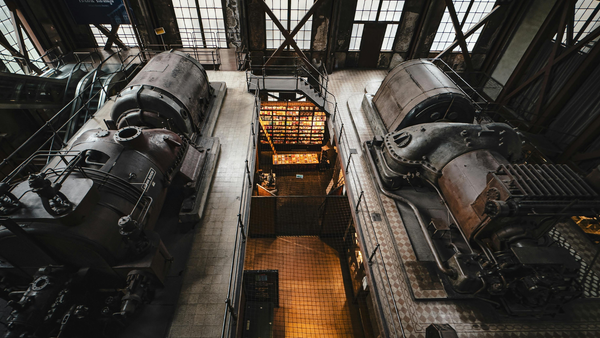
A nuclear power station is one of the most cable-dense environments in any industry. Power cables, control cables, instrumentation wiring, data communications, fibre optics, and safety system circuits all run throughout the facility, and every one of them needs clear, durable identification that remains legible for the life of the plant.
Beyond cables, the labelling requirement covers several distinct categories.
Pipe identification
Nuclear facilities have extensive pipe networks for cooling water, steam, condensate, compressed air, and various process fluids. In the UK, pipe identification follows BS 1710, which specifies colour coding by pipe contents and flow direction markers. The volume of pipe markers on a single facility can run into thousands.
Equipment and switchgear labels
Every distribution board, circuit breaker, motor control centre, transformer, and switchgear panel requires enduring identification. BS 7671 (the IET Wiring Regulations) mandates that all items of isolation and distribution equipment be labelled for ease of identification, typically using engraved traffolyte or stainless steel labels that remain legible for decades.
Safety and warning signage
Nuclear environments require extensive safety labelling: voltage warnings, radiation zone markers, lockout/tagout identification, emergency circuit labels, and hazard signage. These labels must be long-lasting, abrasion-resistant, and manufactured to consistent quality standards.
Valve tags
Every valve in the cooling, steam, and service systems needs a durable tag that withstands the operating environment. Valve tags in nuclear settings are typically engraved from traffolyte, stainless steel, or aluminium to provide long-lasting, corrosion-resistant identification that outlasts adhesive alternatives.
3. Materials
Why low smoke zero halogen matters in nuclear
In nuclear environments, fire safety requirements are among the most stringent in any industry. According to the British Approvals Service for Cables (BASEC), cables used in nuclear infrastructure must be fire-retardant and free from halogens, because halogenated materials can produce toxic and corrosive gases when exposed to fire, posing risks to both personnel and sensitive electronic equipment.
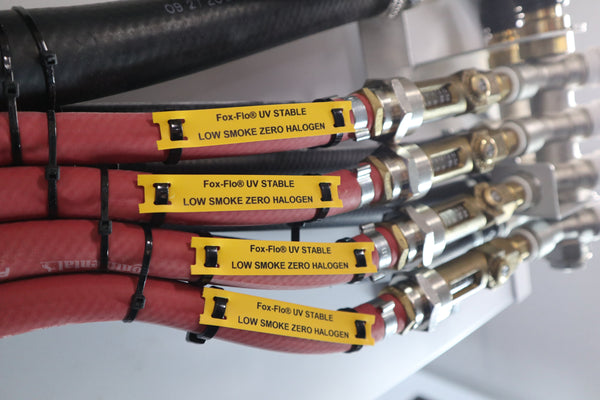
This requirement extends to cable labels and markers. A low smoke zero halogen (LSZH) cable label ensures that the identification material does not introduce a fire safety risk into an environment where every component is specified for worst-case scenarios. In enclosed areas such as cable tunnels, control rooms, and containment buildings, where ventilation may be limited and evacuation routes constrained, LSZH materials are not optional.
Fox-Flo® tie-on cable labels from Silver Fox® are manufactured from LSZH material as standard. They have been tested to 8,000 hours of accelerated UV weathering in accordance with ISO 4892 Part 3 Method A, broadly equivalent to 12 to 15 years of outdoor exposure in a Northern European climate. For areas of a nuclear facility exposed to outdoor conditions, such as switchyards, external cable routes, and cooling system infrastructure, this UV stability provides a measurable basis for specifying label durability.
Fox-Flo® labels are also approved to LUL1-085 and tested against EN 45545-2 and BS 6853 fire safety standards, credentials originally established for rail and mass transit environments but directly relevant to any safety-critical infrastructure where fire performance is specified.
4. Longevity
Enduring identification for 60-year assets
The Rolls-Royce SMR is designed for an operational life of at least 60 years. That design life sets the baseline for every component in the facility, including the labels. A switchgear nameplate that fades or delaminates within a decade creates a maintenance burden and a safety risk. A valve tag that corrodes becomes a source of ambiguity in a system where ambiguity is not tolerable.
For long-lasting plant identification, engraved labels are the established solution in power generation. Endurance® engraved labels from Silver Fox® are produced from traffolyte, stainless steel, and aluminium. The engraving cuts through the surface layer to reveal a contrasting colour beneath (in traffolyte) or creates a lasting mark in the metal itself. This identification method does not rely on ink, toner, or adhesive for legibility, making it suitable for environments where chemical exposure, temperature cycling, or abrasion would degrade printed alternatives.
Typical applications in power station environments include equipment and asset labels for switchgear panels, distribution boards, and motor control centres; valve tags for cooling, steam, and process systems; and safety signage for voltage warnings and hazard identification.
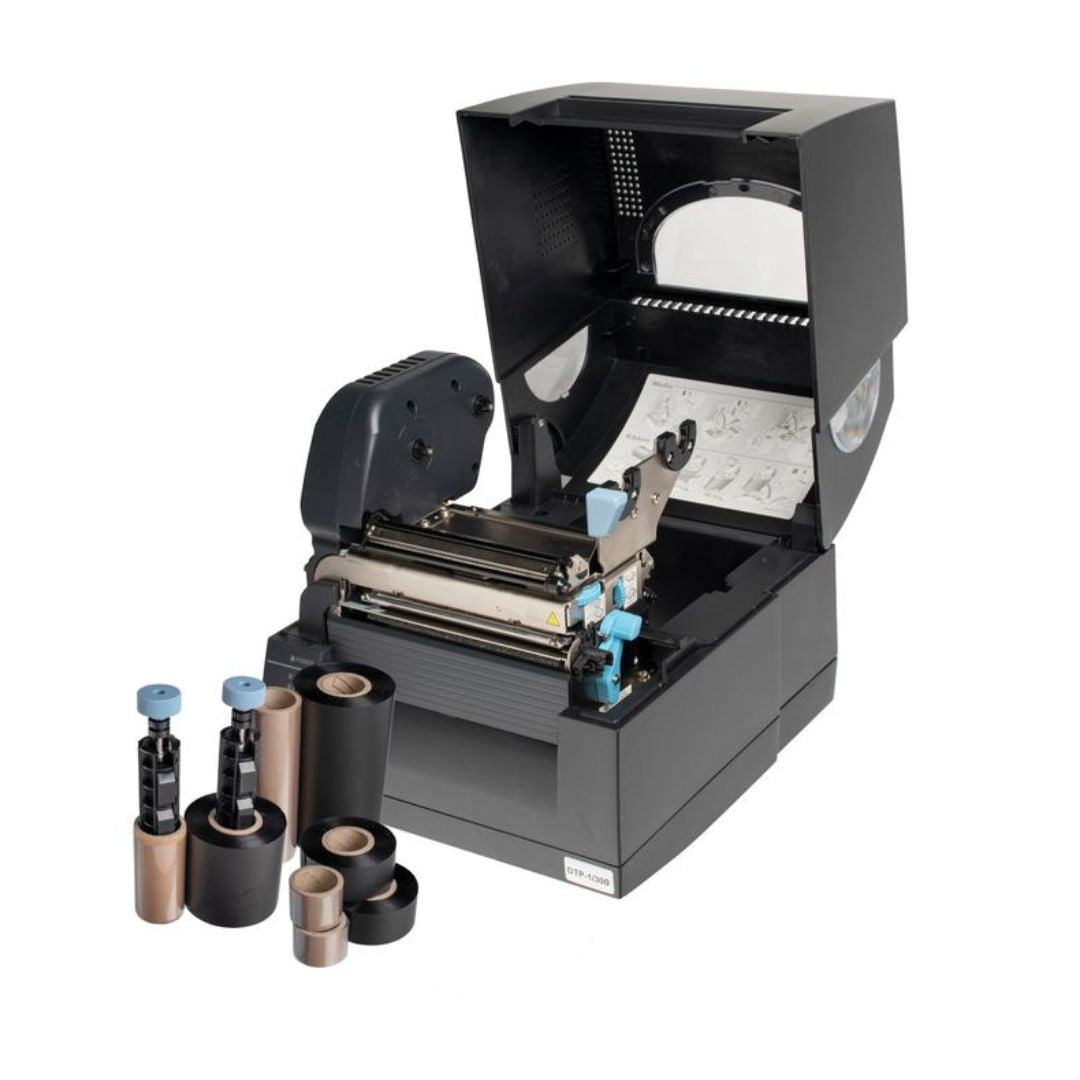
For cable identification that needs to remain legible over decades, thermal transfer printing offers a significant advantage over laser or inkjet methods. The resin-based ribbon used in the Fox-in-a-Box® thermal transfer system bonds pigment into the label surface rather than depositing toner on top, giving it considerably better resistance to UV fading and chemical exposure over time.
5. Traceability
Asset tracking and supply chain traceability
Nuclear construction demands full traceability. Every safety-related component must be traceable to its manufacturer, batch, test certification, and installation location. This traceability requirement applies not just to reactor components but to the broader electrical and mechanical infrastructure: cables, switchgear, valves, instruments, and their associated identification.
Serialised labels with QR codes or Data Matrix encoding provide a practical bridge between physical assets and digital records. A QR code on a valve tag can link directly to the valve's maintenance history in a computerised maintenance management system (CMMS). A Data Matrix on a cable label can encode the cable identifier, circuit reference, and installation date in a format scannable by standard mobile devices.

Labacus Innovator®
Silver Fox®'s label design software generates QR codes, barcodes, and GS1® Data Matrix encoding for serialised asset identification. Spreadsheet import eliminates manual data entry across large cable schedules, and integration with Fluke® LinkWare™ Live enables test-to-label workflows for structured cabling.
For large-scale nuclear construction projects involving tens of thousands of cables, the ability to import cable schedules from a spreadsheet directly into labelling software removes a significant source of transcription error. The same principle that saved Mercury Engineering weeks on a data centre project applies at an even larger scale in nuclear new build, where the cost of a labelling error is measured not just in rework time but in regulatory scrutiny.
6. UK manufacturing
The domestic supply chain argument
The SMR programme has placed UK supply chain participation at the centre of its delivery model. Government statements explicitly reference the programme as a driver of domestic industrial capability, and GBE-N's procurement strategy prioritises suppliers who can demonstrate UK-based manufacturing, quality systems, and long-term capacity.
Silver Fox® is the only fully British-owned and fully British-manufactured industrial labelling company. The Hertfordshire factory produces the full range of thermal and laser-printable cable labels, equipment labels, and engraved identification products. The company holds ISO 9001:2015 certification (NQA, UKAS accredited) covering the design and supply of labels for energy, process, data, and telecommunications industries worldwide.

IET Enterprise Partner
Silver Fox® is an Enterprise Partner of the Institution of Engineering and Technology (IET). Managing Director Nick Michaelson FIET FRSA is a Fellow of the IET, reinforcing Silver Fox®'s commitment to engineering excellence and professional standards in the labelling industry.
The company has been carbon negative since 2020, aligning with the programme's broader clean energy objectives.
When a nuclear new build specification calls for a UK-manufactured, quality-assured labelling supplier with evidenced material testing and established energy sector credentials, that is a description Silver Fox® can meet today.
FAQ
Common questions
Do cable labels in nuclear environments need to be LSZH?
In most areas of a nuclear facility, yes. Low smoke zero halogen materials are specified to prevent the release of toxic or corrosive gases in a fire scenario. This is particularly important in enclosed spaces such as cable tunnels, control rooms, and areas where evacuation may be difficult. Fox-Flo® labels are manufactured from LSZH material as standard.
What service life should labels be specified for in nuclear new build?
The Rolls-Royce SMR is designed for a minimum 60-year operational life. Labels on long-life plant equipment should be specified to match. Engraved traffolyte and stainless steel labels from the Endurance® range are designed for extended service life in demanding environments. Cable labels should be selected based on the specific environmental conditions they will face, including temperature, UV exposure, and chemical contact.
Can labels be printed on-site during nuclear construction?
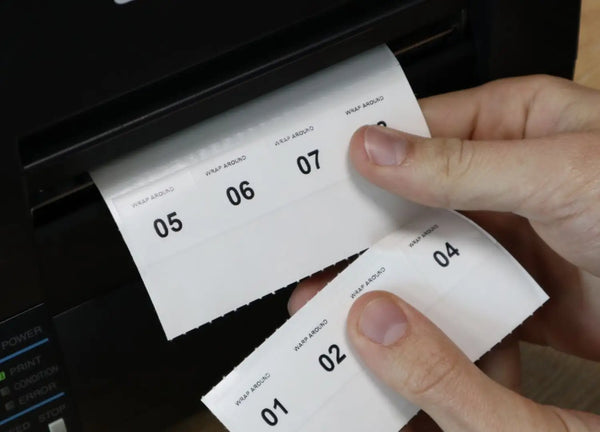
Yes. The Fox-in-a-Box® thermal transfer printer is a portable system designed for on-site use. It prints over 200 label variations from a single printer using one software platform and one ribbon. For large cable installation projects, on-site printing with spreadsheet import removes the delays and error risks associated with ordering pre-printed labels from an external supplier.
What pipe labelling standards apply in UK power stations?
Pipe identification in UK industrial facilities, including power stations, follows BS 1710, which specifies colour coding by pipe contents and flow direction markers. Silver Fox® produces bespoke ISO pipe identification tape with colour-matched backgrounds at its Hertfordshire factory, as well as Prolab® High Performance Tape for on-site printed valve and equipment identification.
Next steps
Talk to us about your project
Labelling for energy infrastructure
Whether you are specifying labels for a nuclear new build programme, a substation upgrade, or a renewables installation, Silver Fox® can help you identify the right materials, formats, and printing methods for your environment. Our technical team provides free guidance on material selection, and our pre-print service can deliver labels ready to apply if you prefer not to invest in printing equipment.
Contact us at [email protected] or call +44 (0) 1707 37 37 27.
References
BASEC (2023) Nuclear: Cable Solutions for the Nuclear Industry. British Approvals Service for Cables. Available at: basec.org.uk/sectors/nuclear.
BSI (2005) BS 1710: Specification for identification of pipelines and services. British Standards Institution.
IET (2022) BS 7671:2018+A2:2022 Requirements for Electrical Installations (IET Wiring Regulations). Institution of Engineering and Technology.
GOV.UK (2026) Great British Energy - Nuclear and Rolls-Royce SMR sign contract. Department for Energy Security and Net Zero, 13 April 2026. Available at: gov.uk.
ISO (2013) ISO 4892-3: Plastics - Methods of exposure to laboratory light sources - Part 3: Fluorescent UV lamps. International Organization for Standardization.