
Explainer
Calculating the ROI of Professional Cable Labelling
How to quantify the time and cost savings of thermal label printing, and build a business case your procurement team can approve.
Most engineers already know that clear cable labelling matters. It speeds up troubleshooting, supports compliance with standards like BS 7671 and BS EN 62491, and reduces the risk of costly disconnection errors. The challenge is rarely convincing the team on site. It is convincing the people who sign off the budget.
Procurement teams, project directors, and finance managers need numbers. They want to see how much time a labelling system saves, what that time costs in labour, and how quickly the investment pays for itself. This guide walks through the calculation step by step, using independently sourced data and a free online tool from Silver Fox® that lets you model savings for your own projects.
1. The problem
The Hidden Cost of Manual Cable Labelling
Traditional cable identification often relies on individual character markers: small plastic letters or numbers selected one at a time from a reel, threaded onto a carrier strip or ferrule, and then attached to the cable. Each label with six characters requires picking six separate pieces from the rack, assembling them in the correct order, and fixing them to the cable.
According to time trial data from the University of Hertfordshire, conducted for Silver Fox®, applying a single six-character label using individual markers takes approximately 1.6 minutes. The same label printed on a thermal transfer printer and applied takes approximately 0.1 minutes (Silver Fox Limited, 2026).
On a small job, 1.6 minutes per label might not seem significant. But consider a typical cable installation project. A control panel with 200 cables needs 400 labels (both ends of each cable). At 1.6 minutes per label, that is 640 minutes, or nearly 10.7 hours, of manual labelling time. With thermal printing, the same 400 labels take approximately 40 minutes.
That difference of over 10 hours represents a meaningful chunk of an engineer's working week. On larger projects with thousands of cables, the cumulative time saving can amount to days or even weeks of labour, as Mercury Engineering found on a recent data centre build where labelling time fell from weeks to days after switching to the Fox-in-a-Box® system.
2. The calculation
How to Calculate Your Time Savings
The Silver Fox® Cable Labelling Time Savings Calculator lets you model the savings for your specific workload. It uses the University of Hertfordshire time trial data and current UK labour rates from Reed.co.uk to produce a personalised comparison. Here is the logic behind it.

The Silver Fox® Cable Labelling Time Savings Calculator compares traditional individual character markers against thermal printing. Enter your label count, characters per label, and labour rate to see personalised time and cost savings instantly.
The formula
The calculation has three inputs: the number of labels you need to produce, the number of characters per label (which affects manual time but has no impact on thermal printing speed), and the hourly labour rate of the person doing the labelling.
Worked example: 500 labels, 6 characters each
- Manual method: 500 labels x 1.6 min = 800 min = 13.3 hours
- Thermal printing: 500 labels x 0.1 min = 50 min = 0.83 hours
- Time saved: 12.5 hours
- At £17.08/hr: approximately £213 saved in labour on a single batch
The default labour rate in the calculator is £17.08 per hour, based on the UK average salary for an engineering apprentice (approximately £35,520 per year, sourced from Reed.co.uk). For a qualified electrical engineer or data technician, the hourly rate will be higher, and the labour cost saving proportionally greater.
The calculator focuses purely on time and labour cost. It does not include the cost of label consumables, printers, or materials. This is deliberate: the time saving alone is typically enough to build the business case, and material costs vary by label type and project.
Why character count matters
With individual character markers, more characters means more time. Each character is picked individually from a reel, adding seconds to every label. With thermal printing via Labacus Innovator® software, it takes the same time regardless of character count, because the printer produces the entire label in one pass. Labels with longer text or complex identifiers therefore show even greater savings compared to the manual approach.
3. The business case
Building the Case for Your Procurement Team
Labour time saved is the headline figure, but it is not the only line item in a well-constructed business case. Here are the other factors that strengthen the argument for switching to a professional cable labelling system.
Error reduction
Manually assembled labels carry a higher risk of transposed characters and misread identifiers. Thermal printing from imported spreadsheet data eliminates re-keying errors and the rework they cause.
Consistency
Saved templates and standardised formats mean every engineer on the project produces identical labels. This reduces handover confusion and supports compliance audits.
Downstream savings
Clear, durable cable identification reduces troubleshooting time on every future maintenance visit. The savings from faster fault finding continue for the lifetime of the installation.
When presenting the case to a project director or finance team, frame the investment against a specific project. Use the Time Savings Calculator to generate a concrete number: "On our upcoming 2,000-cable installation, switching to thermal printing would save approximately X hours of engineering time, worth £Y in labour costs." This approach is far more compelling than a general claim about efficiency.
For organisations managing multiple projects or sites, the cumulative savings become significant. As we explored in our guide to why professional cable identification saves time and money, the return extends well beyond the initial installation phase.
4. Compounding gains
Where the Savings Multiply
The time trial data captures the raw speed difference between manual and thermal methods. In practice, a professional cable labelling system introduces further efficiencies that the per-label calculation does not fully capture.
Data import from spreadsheets
Labacus Innovator® software supports direct import from Excel spreadsheets and CSV files. On projects where cable schedules already exist in digital form, as they do on most modern installations, the entire label run can be populated from the source data without any manual typing. This eliminates a second layer of potential errors and saves additional preparation time. For a detailed walkthrough, see our guide on label design software features including spreadsheet import.
One system for every label type
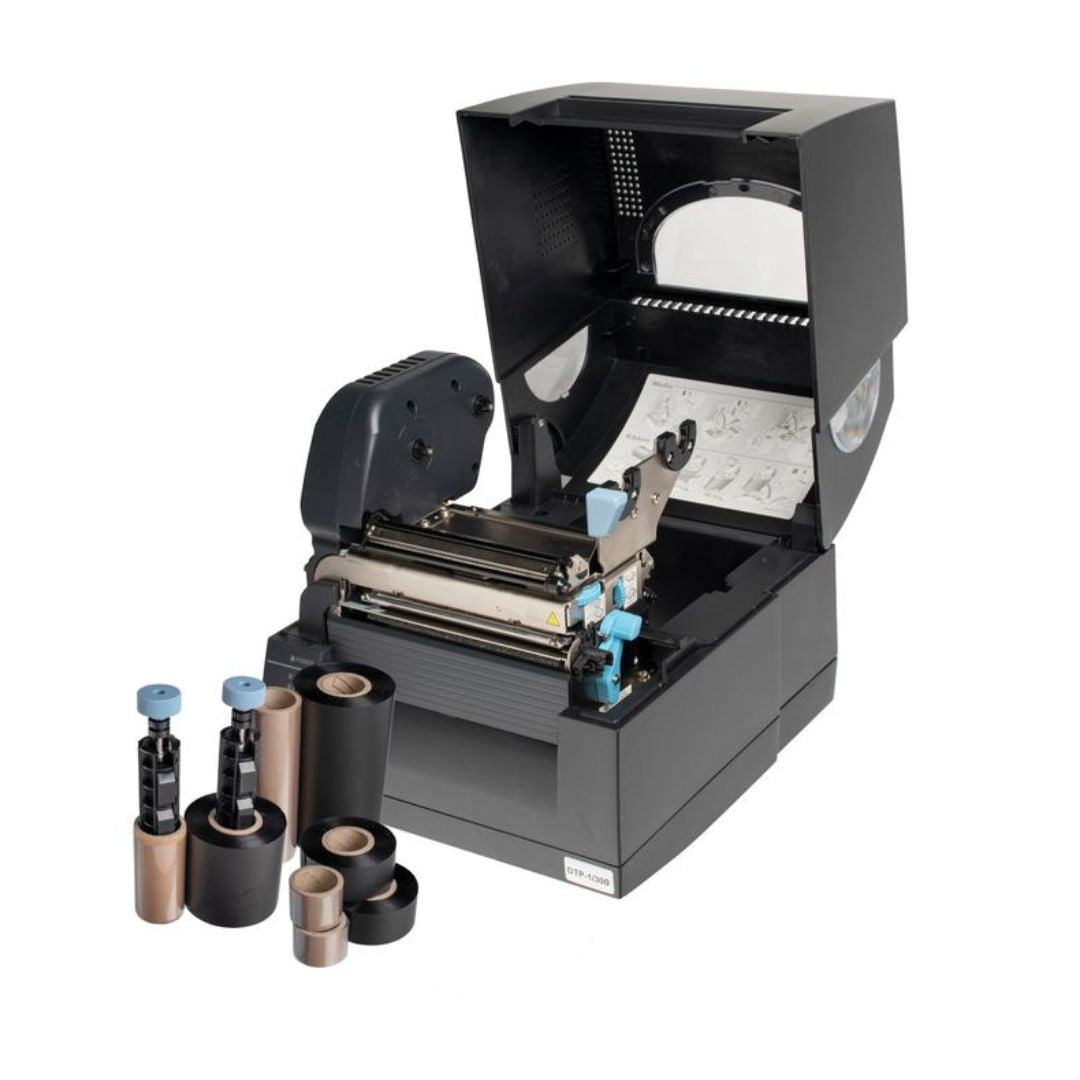
The Fox-in-a-Box® system uses one software platform, one printer, and one ribbon to produce over 200 label variations, from Fox-Flo® LSZH tie-on labels to Legend™ heatshrink and non-shrink markers, to Prolab® High Performance Tape wrap-around labels and equipment tags. Teams that previously managed multiple labelling tools, each with its own consumables and learning curve, can consolidate into a single workflow. This reduces training time, simplifies stock management, and makes it easier to standardise labelling across teams and sites.
Saved templates for repeat work
Once a label layout has been designed and approved, it can be saved as a template for reuse on future projects. This is especially valuable for contractors who work on similar installations repeatedly, and for organisations managing multiple sites where consistent cable identification is a requirement.
Quick business case checklist
- Run the Time Savings Calculator for your next scheduled project
- Multiply the hourly saving by your actual fully loaded labour rate
- Add estimated rework cost of label errors on past projects
- Factor in training time saved by consolidating to one system
- Note compliance benefits (BS 7671 requires clear, legible cable identification at termination points)
5. FAQ
Common Questions
How do I label cables efficiently on a large project?
Import your cable schedule directly into Labacus Innovator® from a spreadsheet or CSV file. The software auto-populates each label with the correct cable identification, and the Fox-in-a-Box® printer produces the full batch in a fraction of the time it would take to assemble individual character markers. For guidance on planning your consumables, see our guide on how to calculate labels per ribbon.
What is the ROI of switching to an industrial labelling system?
The return depends on the volume of labels you produce and your labour rate. As a benchmark, the University of Hertfordshire time trial shows thermal printing is approximately 16 times faster than individual character markers. On a batch of 500 labels, this saves over 12 hours of labour. Use the Time Savings Calculator to model the return for your specific workload.
How does cable marking speed affect project timelines?
On installations with hundreds or thousands of cables, manual labelling can become a bottleneck, especially in the final stages of a build when deadlines are tight. Thermal printing removes this bottleneck by reducing the total labelling time to a small fraction of the manual equivalent. In Mercury Engineering's data centre project, the team reduced cable labelling from weeks to days.
Does the calculator include the cost of the printer and labels?
No. The calculator focuses on time and labour cost savings only. This is deliberate: the labour saving is the clearest and most universally applicable metric, and it avoids the need to estimate material costs that vary by label type, project size, and purchasing terms.
What wire identification method is fastest for control panels?
Thermal transfer printing onto Legend™ non-shrink cable markers or Fox-Flo® tie-on labels is the fastest method for cable identification in control panels and distribution boards. The labels can be printed in bulk from a cable schedule, cut to size automatically, and applied in seconds. This is significantly faster than selecting individual wire markers from a carousel.
Next steps
See Your Savings
Calculate Your Cable Labelling ROI
Use the free Cable Labelling Time Savings Calculator to see how much time and money your next project could save. Enter your label count, character length, and labour rate to generate a personalised comparison you can share with your procurement team.
Ready to see the system in action? Contact us at [email protected] or call +44 (0)1707 37 37 27 to book a demonstration or discuss your labelling requirements.
References
Silver Fox Limited (2026) Cable Labelling Time Savings Calculator. Available at: silverfox.co.uk/pages/cable-labelling-time-savings-calculator
British Standards Institution (2018) BS 7671:2018 - Requirements for Electrical Installations (IET Wiring Regulations). London: BSI.
British Standards Institution (2012) BS EN 62491:2008 - Industrial Cables. Identification Systems for End Connections. London: BSI.